Get Full Government Meeting Transcripts, Videos, & Alerts Forever!
Get email alerts on the Childcare Subsidy Rates topic
No spam. Unsubscribe anytime.
Committee hears debate on shifting childcare subsidy to provider-specific rates under SB 5310
Summary
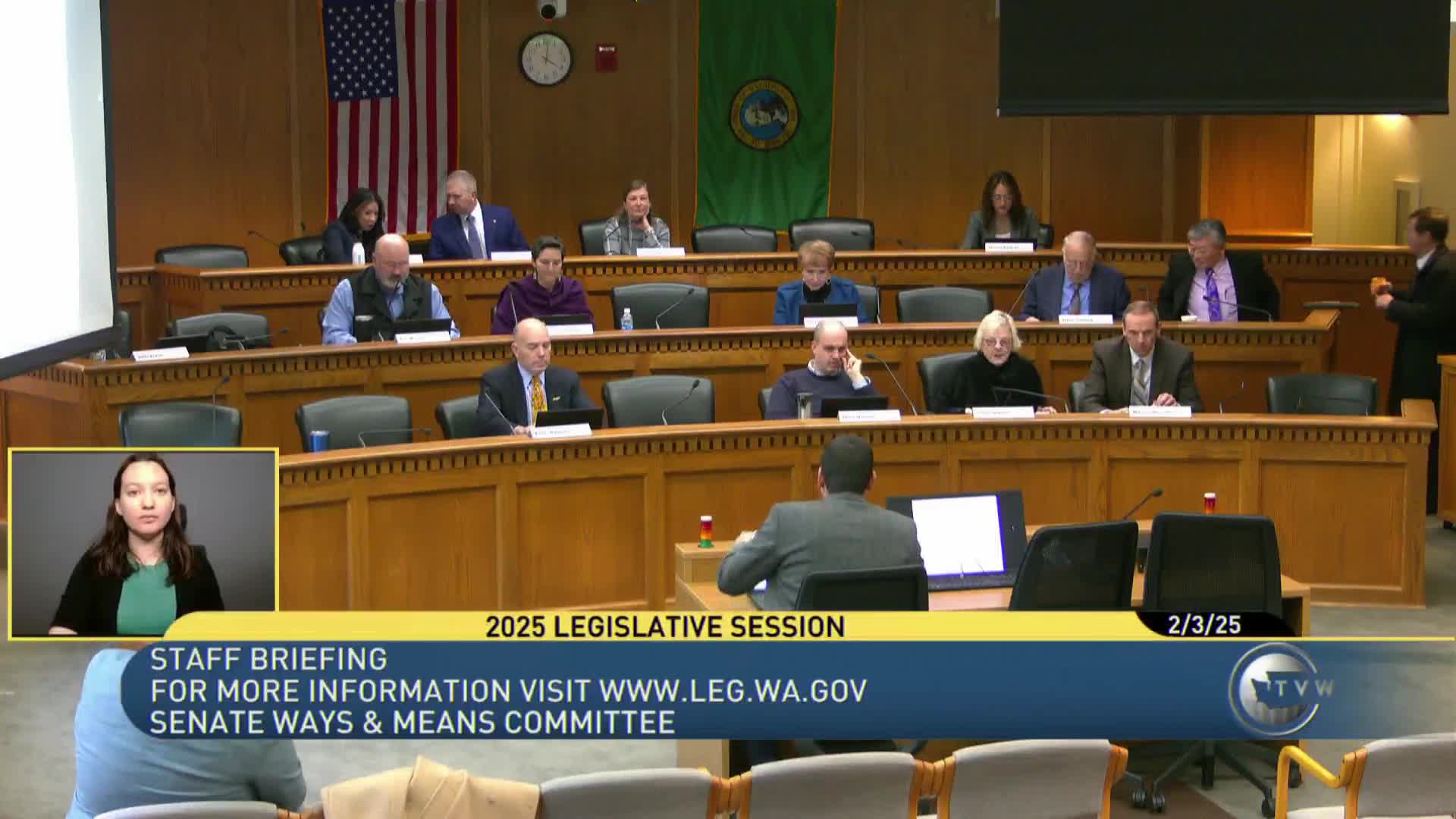
The Ways & Means Committee received a staff briefing and public testimony on Feb. 3 on Senate Bill 5310, which would change how the Working Connections Child Care subsidy reimburses providers by moving from 56 broad rate categories to provider-specific rates and reimbursing at the lesser of a provider’s private pay rate or the 75th percentile of market.
The Ways & Means Committee received a staff briefing and public testimony on Feb. 3 on Senate Bill 5310, which would change how the Working Connections Child Care (WCCC) subsidy reimburses providers by moving from 56 broad rate categories to provider-specific rates and reimbursing at the lesser of a provider’s private pay rate or the 75th percentile of market.
Josh Inman, staff to the committee, briefed members that current statute requires subsidy rates to approximate the 85th percentile of market based on a triennial market-rate survey, and that SB 5310 would lower the program’s reimbursement methodology and make rates specific to each provider. Inman described a fiscal note that shows a potential four-year savings if all providers were reimbursed at the 75th percentile, but he emphasized the overall impact is indeterminate because the Department of Children, Youth, and Families (DCYF) does not track private pay rates.
Alison Kreutzinger of DCYF told the committee implementation would be substantial. “There are over 6,000 licensed childcare providers that it would have rates that varied by age. And so the work would be enormous to understand each unique set of rates,” she said, noting DCYF estimates one-time IT and training costs and ongoing staff to manage provider-specific billing.
Christophe Mayer, policy coordinator for the Washington State Labor Council, AFL-CIO, testified in respectful opposition. “This bill cuts rates even lower, reduces public investment in child care and also limits the ability of the child care workforce to advocate for their own fair compensation,” Mayer told the committee, warning that lower reimbursements could push providers out of the industry and reduce access for working families.
Staff and agency estimates provided to the committee included one-time and recurring administrative costs for DCYF (including an 11.1 FTE estimate noted in the fiscal briefing) and a four-year fiscal-note display that projects savings assuming reimbursement at the 75th percentile for all providers; staff repeatedly cautioned that the savings estimate is uncertain because private-pay rates are not tracked and may change.
Discussion during the hearing centered on implementation workload, the accuracy of cost and savings projections, and the possible effects on provider viability and access. No formal action or vote on SB 5310 was recorded during the hearing; staff and agency witnesses said they were available for follow-up questions.
Why it matters: WCCC is the state’s primary program for subsidizing child care for low-income families; changes to reimbursement methodology affect providers’ revenues, program access for families, and DCYF administrative workload.
The committee did not take a final vote on the bill during the hearing; no amendments were recorded.