Get Full Government Meeting Transcripts, Videos, & Alerts Forever!
Get email alerts on the Education School Improvement topic
No spam. Unsubscribe anytime.
Springfield SD 186 presents progress report on ‘intensive’ schools; district cites early gains, continued work on culture and literacy
Summary
District leaders told the board that five schools designated as "intensive" are making minimal to moderate progress on culture, math and reading goals; learning partners including AVID have begun support and state reporting requires at least three updates per year.
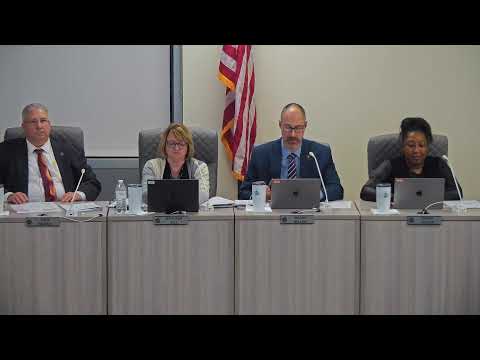
Springfield School District 186 officials on Feb. 3 told the school board that the five schools labeled “intensive” under the state’s accountability system have shown early but uneven progress and will continue to receive targeted support.
Dr. Moody, who presented the report, said the district’s approach pairs three schoolwide SMART goals — culture/equity, math and literacy — with measures that include a Tiered Fidelity Tool, NWEA MAP interim checks and Panorama surveys. “Every student can grow,” she said, summarizing the state guidance the district is following.
The nut graf: The intensive designation follows repeated low performance on state report cards; designation triggers a planning and then an implementation year with a state-approved learning partner. District staff told the board four schools entered intensive status in 2023 and a fifth school was added on the most recent report card. The district is required to report progress to the board at least three times a year.
District leaders walked the board through baseline percentages and expectations. The Tiered Fidelity Tool is the district’s primary measure for SMART Goal 1 (culture and equity); the district expects schools to reach a 70% threshold on that rubric. Dr. Moody said one school — Harvard Park — recorded 83% on last year’s Tiered Fidelity Tool and did not need an autumn reassessment. The remaining intensive schools were described as approaching but not yet at 70% based on the October assessment.
For academics, the district set interim proficiency goals tied to NWEA MAP and state benchmarks: roughly 32% of students at or above the 61st percentile in math and 33% in reading, targets the district called attainable steps toward higher proficiency. Fall data presented to the board showed “minimal to moderate” progress in both math and reading across the five schools; the district will update those figures after the winter MAP window closes.
Learning partners have been assigned to provide external coaching and professional development. Dr. Moody said three of the schools are working with AVID (Advancement Via Individual Determination) and one is working with Catalyst for Educational Change; the high school that was newly designated is in a planning year to select a partner.
Board members pressed for clarity on what “culture” and “culturally relevant teaching strategies” mean in practice. Presenters cited concrete examples: trauma‑informed training modules delivered districtwide (the SEL/trauma series is being rolled out in multiple sessions), AVID coordinators embedded in school schedules to observe classrooms and coach teachers, book-study groups to vet culturally relevant texts, and scheduled school-improvement days devoted to professional learning. Lanphier High School’s principal described establishing an AVID coordinator prep period so the coordinator can visit classrooms and coach teachers.
Superintendent Gill and board members stressed that culture, attendance and instruction are interdependent: improving school climate and reducing chronic absenteeism are prerequisites for stronger academic outcomes, the board said. Dr. Moody said principals and their teams have work plans tied to the SMART goals and that the state requires a midyear update and an end-of-year progress report in May.
The presentation ended with a request for continued board support and for the district to return with trend data at future updates — baseline, current and new measurement points — so the board can track incremental gains.
Looking ahead: district staff said they will present updated MAP and Tiered Fidelity Tool data in the next reporting cycle and continue implementation with learning partners and targeted professional development.