Get Full Government Meeting Transcripts, Videos, & Alerts Forever!
Get email alerts on the Recycling Refund Deposit Return topic
No spam. Unsubscribe anytime.
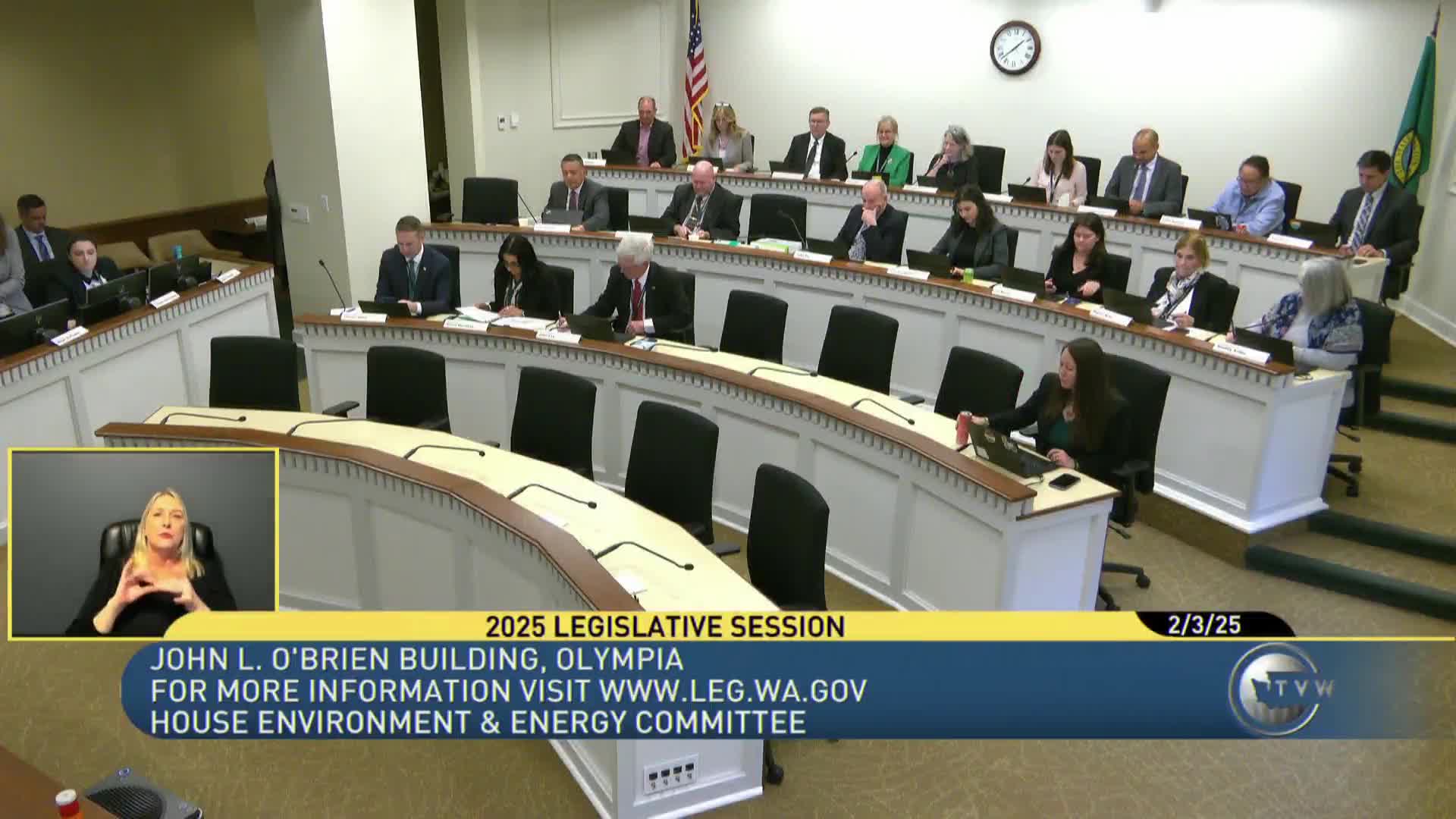
Committee hears competing testimony on HB 1607 to establish a 10¢ beverage container refund and producer‑run system
Summary
House Bill 1607 would create a statewide 10¢ recycling refund for most beverage containers and require brand owners to fund a producer responsibility organization to implement and administer the program.
House Bill 1607 would establish a 10¢ recycling refund on glass, plastic and metal beverage containers and require beverage brand owners to appoint a producer responsibility organization to implement and operate the return system, committee staff and witnesses said.
Under the bill as presented in committee, participating producers must fund a Producer Responsibility Organization (PRO) that would file a plan and annual reports with the Department of Ecology, set a fee structure for producers, establish performance targets and convenience standards for redemption sites, compensate redemption sites and material recovery facilities (MRFs), and run education and outreach. The PRO would also be permitted to use unredeemed deposit funds for specific program activities. The bill includes an express redemption option that would allow producers to operate drop-off sites that do not handle cash on site but instead credit refunds after processing.
Supporters — including recycling and materials organizations, manufacturers, beverage producers, cities and environmental groups — argued the system can substantially raise recycling rates, produce higher‑quality recovered material for domestic manufacturers, reduce litter and support reuse systems. Dylan DeThomas of the Recycling Partnership said the measure pairs well with extended producer responsibility (EPR) and can build the “circular economy” by providing a reliable supply of high‑quality feedstock for U.S. processors. Industry witnesses from bottle and aluminum recycling firms, glass trade groups and beverage producers testified that a deposit return improves recovery and recycling quality for PET, aluminum and glass.
Opponents from the hospitality, grocery retail, solid‑waste, and municipal recycling sectors said the bill would create a duplicative system that removes valuable materials from curbside streams, could be regressive for people without easy access to redemption sites, and would shift costs to retailers and consumers. Samantha Louderback of the Washington Hospitality Association said the industry operates on thin margins and that the added 10¢ cost could be embedded in products, increasing costs for businesses and customers. Several waste haulers and materials processors said curbside systems already collect substantial volumes and that a separate deposit network could create inefficiencies or increase overall costs for ratepayers.
Legal and fiscal issues were also raised. Sam Spiegelman of the Citizens Action Defense Fund argued section 24 raises constitutional concerns under the Washington Constitution’s requirement that amended laws be set forth at full length (article II, section 37, as cited in testimony) and that the bill may not adequately describe changes to existing consumer protection law. County and solid‑waste officials said the state's current landfill‑funding structure could be affected, and some local government witnesses sought a mechanism to allocate a portion of unredeemed deposits or other funds to county programs.
Key provisions discussed in testimony and staff summary: - A 10¢ refundable value for covered beverage containers; retailers would be required to separately state the refund on receipts at purchase. - A producer responsibility organization responsible for planning, reporting, setting fees and arranging redemption infrastructure; Dept. of Ecology oversight and enforcement. - Redemption sites must accept covered containers but may reject contaminated containers; producers would compensate redemption sites by mutual agreement and the PRO must propose a quantitative convenience standard for site distribution. - Express redemption sites would not do on‑site cash handling, instead crediting refunds after centralized processing. - For the first five‑year plan period, the PRO must make monthly payments to MRFs equal to at least 50% of the refund value of covered containers furnished to that facility. - The refund value is deductible for B&O tax purposes and exempt from the state's litter tax (as noted by staff testimony).
Witnesses on both sides submitted studies and operational experience from Oregon, British Columbia and other jurisdictions. Proponents cited high recovery and reuse rates and economic benefits; Megan Lane of CHIPR told the committee the bill could enable a 75% recycling rate by 2028 and up to 90% by 2030 and estimated substantial economic benefits. Several opponents cited Oregon’s experience with site congestion, local costs of operating redemption locations and concerns about crime and public‑safety impacts near some depots; opponents provided video materials and written examples for committee review.
The committee heard more than three hours of pro and con testimony. Lawmakers asked detailed questions about convenience standards, retailer compensation, the interaction with an EPR bill (HB 1150), treatment of commercial sales, how unredeemed deposits are allocated, and constitutional or statutory drafting concerns. No vote was taken at the hearing; sponsors said they will continue to refine the bill language with stakeholders.
Selected direct quotes from the hearing (attributed to speakers who testified): "We've studied and visited the systems around the world and identified the key ingredients to growing and improving recycling and achieving a circular economy," said Dylan DeThomas of The Recycling Partnership. "We urge you to support this bill," said Maggie Hughes of Seattle Public Utilities. "It is a 10¢ fee on every container, which, if not redeemed by consumers, goes to the producer or run organization," said Brian Coddington (Sunshine Disposal) describing the mechanics and potential consumer impact.
Provenance and next steps: Committee staff presented the bill and dozens of organizations and businesses provided testimony. Sponsors and staff indicated continuing negotiations on convenience standards, reimbursement language for redemption locations, allocations of unredeemed deposits, and constitutional drafting issues raised by opponents. The committee did not take a vote at the hearing.