Get Full Government Meeting Transcripts, Videos, & Alerts Forever!
Get email alerts on the Special Education topic
No spam. Unsubscribe anytime.
Committee hears bill to let parents audio-record IEP meetings, split reactions from educators and advocates
Summary
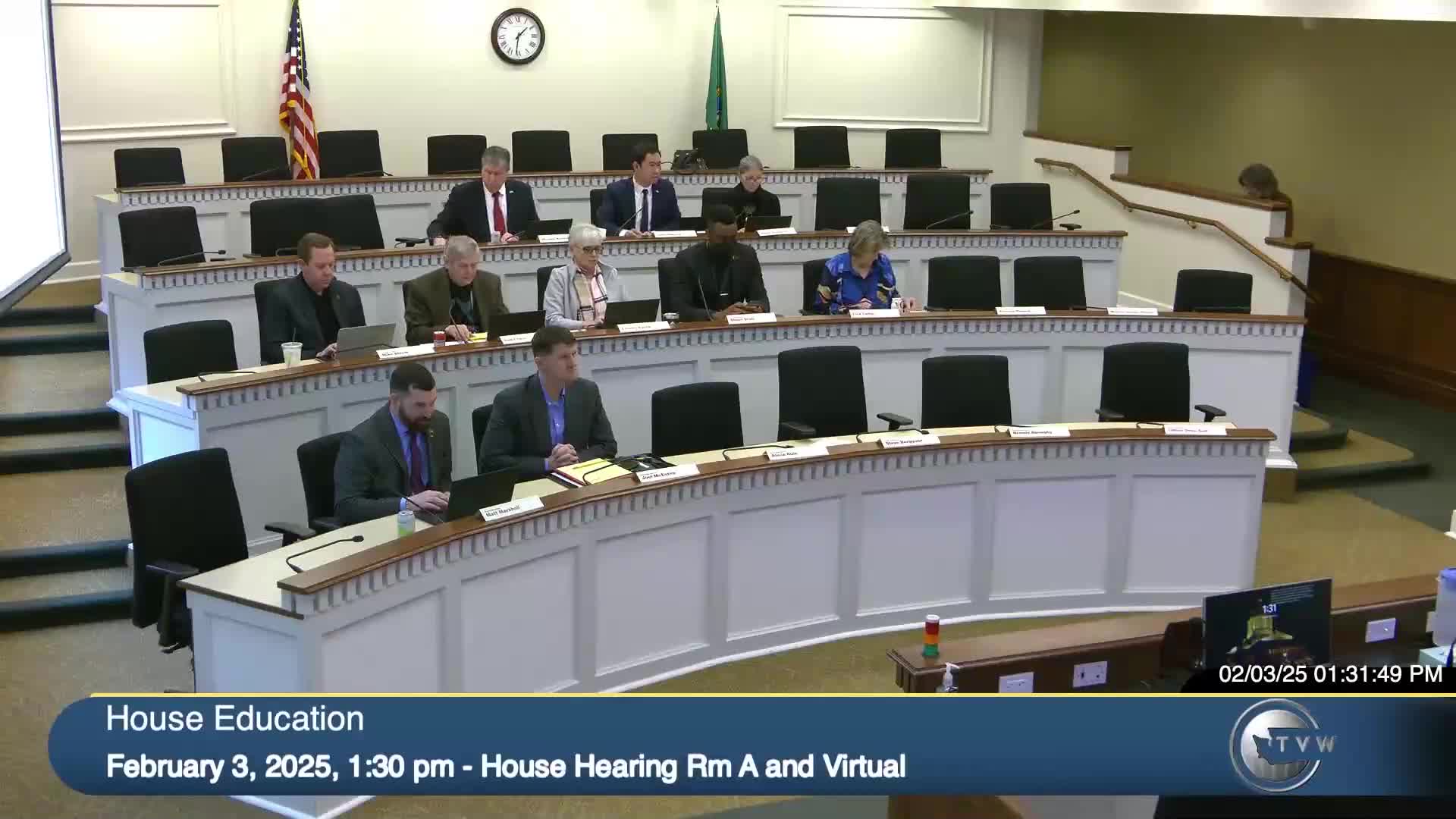
The House Education Committee heard testimony on HB 1051, which would expressly permit parents and guardians to audio record individualized education program (IEP) team meetings. Supporters said recordings improve transparency and access; educators voiced privacy and chilling-effect concerns. The committee left the bill open for amendment.
House Bill 1051, which would explicitly authorize parents and guardians to audio record individualized education program (IEP) team meetings, drew sharply mixed testimony at a House Education Committee hearing.
The bill’s sponsor and staff said the measure aims to increase parent participation and clarity. "House Bill 1051 permits the recording of individualized education program team meetings," Megan Wardacki, counsel to the committee, told lawmakers during the staff briefing. Staff explained that Washington law generally restricts recording private communications and that the bill seeks to reconcile those rules with parents’ interest in capturing IEP discussions.
Representative Paul Walsh, the bill’s prime sponsor, said families approached him asking to record meetings so they could review technical language later or share it with relatives and interpreters. "They wanted to be able to slow it down and listen to it and really understand completely, point by point, what was being discussed," Walsh said.
Parents and advocates who testified in support said recordings help people with limited English proficiency, caregivers with disabilities, and families facing complex medical or behavioral discussions keep an accurate record. JD Sumski, a Bainbridge Island parent, said, "It is difficult to understand and absorb complex information about our students… The ability to record meetings increases transparency, and this benefits both school districts and the families." Arzu Voro of the Washington Autism Alliance testified that recordings "equip parents with a reliable record of discussions, decisions, and agreed-upon actions."
Educators and unions argued the change risks student privacy and will chill candid discussion. Jared Mason of the Washington Education Association said the bill is unnecessary and could "stifle conversation and lead to poor quality IEP meetings." Gina McLaughlin, a special-education teacher and parent, warned that once a meeting is captured digitally it can be shared broadly and harm a child's dignity.
OSPI’s Assistant Superintendent of Special Education, Tanya May, said the agency supports the bill’s intent but suggested an amendment requiring parents to provide 24 hours' notice before recording so other IEP team members can be alerted. "A notification period like this is in line with how other state systems have approached this practice," she told the committee.
Committee members heard advocates describe recordings as a tool that can reduce later disputes and reduce the need for mediated hearings, while teachers said the current documentation and procedural safeguards already provide accountability.
The committee kept HB 1051 open to consider amendments and to allow additional remote testimony after technical difficulties disrupted part of the hearing.