Get Full Government Meeting Transcripts, Videos, & Alerts Forever!
Get email alerts on the Transit Safety topic
No spam. Unsubscribe anytime.
Bill would add Washington State Ferries to unlawful transit conduct statute; sponsors say no fiscal impact expected
Summary
House Bill 1616 would add Washington State Ferries to the list of transit authorities where the misdemeanor of unlawful transit conduct applies; bill proponents say it grants ferry staff protections similar to bus and rail operators and that initial fiscal estimates show no impact.
House Bill 1616 would add Washington State Ferries to the statutory definition of a transit authority for the misdemeanor offense of unlawful transit conduct, bringing ferry vessels and ferry facilities within the law’s protections for transit workers.
Under current law, unlawful transit conduct is a misdemeanor punishable by up to 90 days in jail, a fine up to $1,000, or both, for prohibited behaviors committed in or on a transit vehicle or at a transit station owned or operated by a transit authority. The bill would define a "transit vehicle" to include ferry boats operated by a transit authority and would treat ferry facilities as transit facilities for purposes of the misdemeanor statute.
Michael Hirsch, representing the bill sponsor, told the committee that the proposal "adds Washington State Ferries to the list of places where the misdemeanor crime of unlawful transit conduct can occur," and noted that initial inputs from the Caseload Forecast Council, Washington State Patrol, and Department of Transportation anticipate no fiscal impact. Representative Reid, who sponsored the bill, said the Maritime Caucus developed the idea after ferry staff described rising incidents of abusive conduct, including thrown objects and assaults. "It is a low cost way to show ferry workers that we have their back," Reid said, and urged committee support.
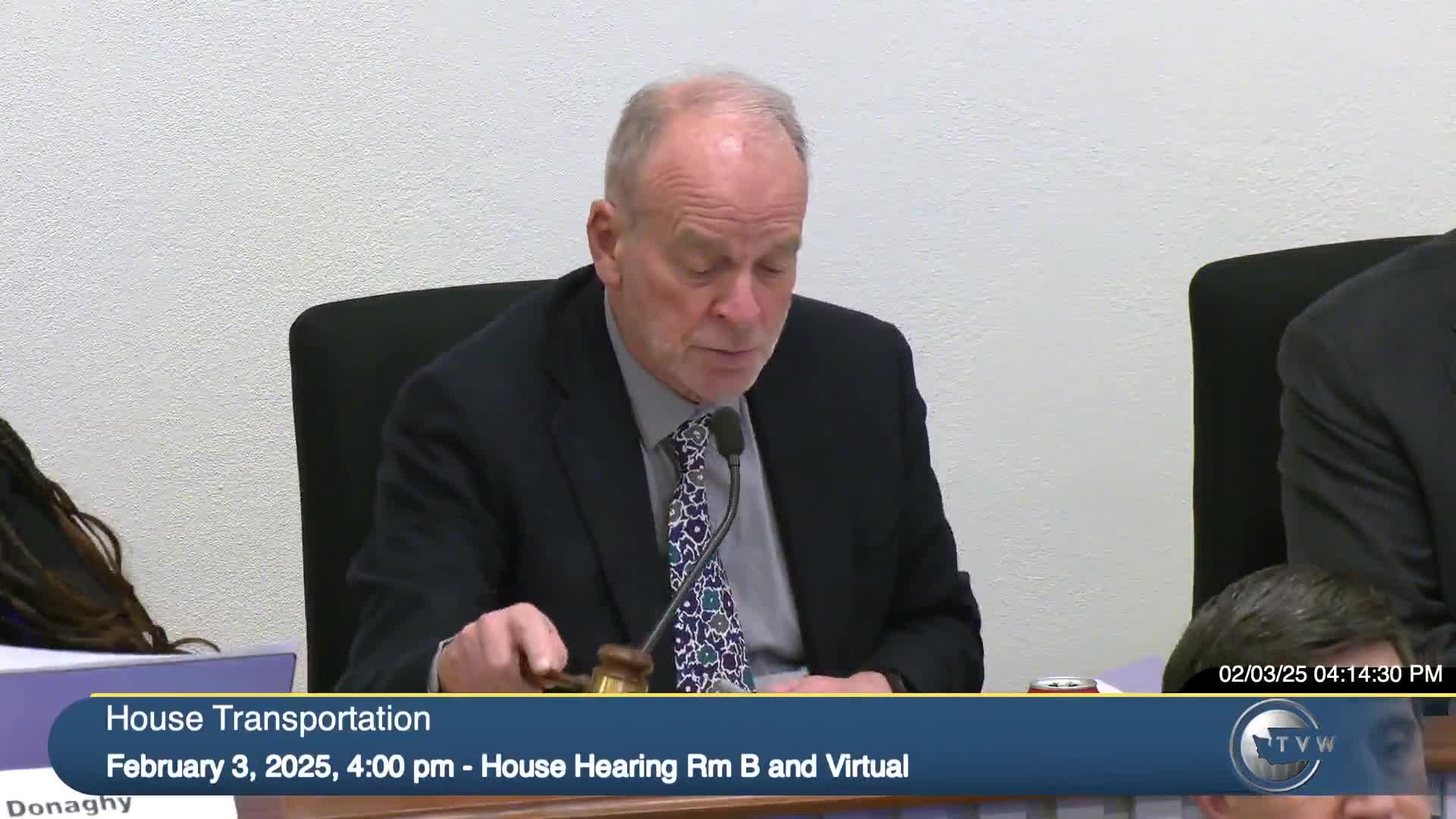
Committee members asked no substantive questions during the hearing, and no public testimony was offered. The committee closed the public hearing on House Bill 1616 without a recorded vote.
The bill’s proponents emphasized it is intended to align ferry worker protections with those already afforded to bus and train operators and to address enforcement challenges when incidents occur on ferry vessels or facilities.