Get Full Government Meeting Transcripts, Videos, & Alerts Forever!
Get email alerts on the Legislation State Policy topic
No spam. Unsubscribe anytime.
Wyoming Senate approves package of bills; debates noncompete ban, anesthesia licensing, anti‑money‑laundering and wildfire measures
Summary
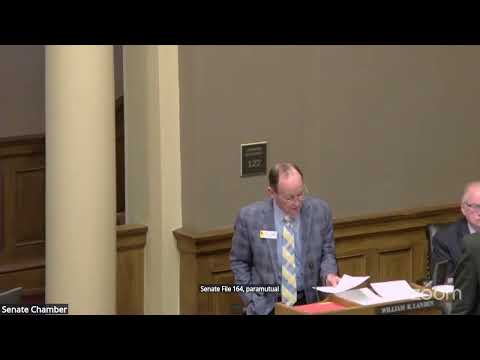
CHEYENNE, Wyo. — The Wyoming Senate on Monday passed a wide‑ranging set of bills affecting employment, health care licensing, criminal law and wildfire management after hours of debate, amendments and committee action.
CHEYENNE, Wyo. — The Wyoming Senate on Monday passed a wide-ranging set of bills affecting employment, health care licensing, criminal law and wildfire management after hours of debate, amendments and committee action.
The Senate approved a package of bills on third reading and cleared several other measures through the committee of the whole. Major actions included passage of a bill to restrict mandatory noncompete agreements, adoption of licensing for anesthesiologist assistants with an amendment that changed supervision rules, enactment of a state anti‑money‑laundering offense, and measures to fund and study wildfire management and to allow the Game and Fish Commission to set trap setbacks on state lands.
Why it matters: The voted measures touch on immediate state policy priorities — workforce mobility and business formation (noncompetes), health‑care staffing (anesthesia licensing), criminal enforcement capacity (anti‑money‑laundering), and wildfire preparedness and public‑lands recreation conflicts (wildfire task force and trapping setbacks). Several bills also moved by consent, clearing a long consent calendar that the majority leader described as “the longest I’ve seen.”
Noncompete ban (Senate File 107)
The Senate passed Senate File 107, titled “Freedom to Work and to Build Business,” after adopting an amendment that phased repayment obligations employers could seek when they subsidize an employee’s education or relocation. Sponsor Senator Nethercott said the bill “protects the free market, by allowing employees the freedom to work and build competing businesses,” arguing it prevented employers from “trapping” lower‑paid workers. Opponents called the bill government intrusion into voluntary contracts; Senator Ihde said the state should not insert itself into voluntary marketplace agreements.
Senator Scott, speaking for supporters, told the Senate that the bill would particularly help health‑care access by limiting noncompetes that can block practitioners from staying in communities that need them. The bill passed on third reading.
Anesthesia assistants (Senate File 112)
Senate File 112 creates a licensing pathway for certified anesthesiologist assistants to practice in Wyoming. The Senate adopted an amendment, moved by Senator Scott, that allows anesthesiologist assistants to be supervised by physician anesthesiologists and, in limited circumstances described in the amendment language, permits certified registered nurse anesthetists (CRNAs) to supervise a smaller number of assistants.
Sponsor Senator Schuler opposed letting CRNAs supervise anesthesiologist assistants, arguing federal Medicare rules and national certifying bodies do not recognize a nonphysician (CRNA) supervising an anesthesiologist assistant and that doing so would expose hospitals to federal compliance risk. Senator Schuler said, “CMS and major insurance companies … do not reimburse for this” supervision model and urged caution. Supporters said the amendment preserved flexibility and would expand access to anesthesia providers in underserved communities. The bill passed after the amendment was adopted.
Anti‑money‑laundering measure (Senate File 116)
Senate File 116 establishes a state anti‑money‑laundering offense and related reporting penalties. Senator Nethercott, sponsor of the bill, told colleagues the measure mirrors federal reporting standards under the Bank Secrecy Act and aims to prevent Wyoming from becoming a “safe haven” for sophisticated criminal money‑laundering schemes tied to gaming and other industries. Senator Scott raised questions about the bill’s use of the term “suspicious” in the reporting provisions and asked for clarity, saying he worried about creating a new felony with vague definitions. Nethercott replied that the referenced federal standards already guide financial institutions and that the state measure tracks those established rules. The Senate enacted the bill after debate.
Wildfire management and state forester duties (Senate File 152)
Senate File 152, drafted after an intense wildfire season, clarifies and adds duties for the state forester, establishes a wildfire management task force, and authorizes temporary borrowing and emergency funding to refill exhausted suppression accounts. Sponsor Senator Barlow said the bill “amends the duties of the state forester” and creates a task force to collect lessons learned and recommend improvements for prevention, prepositioning of resources and contracting standards for private fire‑suppression resources.
The Senate adopted a standing committee amendment (moved by Senator Hicks) that expanded legislative membership on the task force to provide geographic representation, added a subject‑matter seat for the forest products industry, moved the task force reporting date to November 15, and increased interim budget authority for the task force and governor’s borrowing limit for emergency suppression costs. Senators who opposed parts of the amendment said it risked overburdening legislators; proponents said increased borrowing authority and broader representation were prudent after the resource exhaustion seen this past season.
Trapping setbacks on state lands (Senate File 139)
Senate File 139 directs the Game and Fish Commission to promulgate rules to set trap setbacks on public and state lands; the bill passed after a standing committee amendment narrowed the scope to public and state lands and placed rulemaking authority with the commission. Sponsor Senator Dockstader said the change was requested by the commission to allow it to hold hearings and design practical setbacks. Opponents raised concerns that recreational users already violate leash rules and that broad setbacks could effectively curtail lawful trapping on public lands; supporters said setbacks could reduce accidental captures of pets and protect public trails and parking areas. The bill returned from committee of the whole with a favorable recommendation.
Other actions and the consent calendar
The Senate also adopted a long consent list of bills on third reading (those bills were announced en bloc by the majority floor leader and recorded as passed). The consent list included measures on data privacy for government entities, water‑planning, alternative teaching certificates, large project funding, protections for petroglyphs and pictographs, trust code revisions, agritourism recreation safety, inclusion of crossing guards under the governmental claims act, expedited professional licensure for military members, a rodeo license plate, charter school leasing, an energy‑impact study, an Ireland trade commission, consumer rental purchase agreement changes, service dog training and crimes, and others. These bills were called and recorded as passed by roll call.
Votes at a glance (selected)
- Senate File 64 (prohibiting mandatory electronic ID devices for livestock; amendment adopted) — Passed (30 yes, 1 no). - Senate File 107 (Freedom to Work; limits on noncompetes; amendment on repayment schedules) — Passed (30 yes, 1 no). - Senate File 112 (Anesthesiologist assistant licensing; amendment on supervision) — Passed (29 yes, 2 no). - Senate File 116 (Anti‑money‑laundering offense) — Passed (21 yes, 10 no). - Senate File 139 (Trapping setbacks; directs Game and Fish to adopt rules for public/state lands) — Committee of the whole: Pass recommendation. - Senate File 149 (Wildlife conservation license plates; county distribution) — Committee of the whole: Pass recommendation. - Senate File 152 (Wildfire management task force; state forester duties; emergency authorities) — Committee of the whole: Pass recommendation. - Consent list (includes SF 65, 82, 86, 88, 91, 97, 108, 110, 113, 119, 120, 121, 130, 131, 135, 138, 144, 146, 147, SJ 7) — Passed (final roll calls recorded on consent list).
What's next
Several measures now move to the House or to the governor as appropriate. The wildfire and trapping measures call for further rulemaking and task‑force work; sponsors and committee reports signaled additional interim work and potential follow‑up legislation. The Senate also announced numerous committee meetings and hearings connected to education, public lands, revenue and appropriations for the coming days.
Sources and quotations in this report are drawn from the Feb. 3, 2025 Senate floor transcript and roll‑call records of the Wyoming Senate. Direct quotes are attributed to senators who spoke during the listed items.