Get Full Government Meeting Transcripts, Videos, & Alerts Forever!
Get email alerts on the Charter Finance Bills topic
No spam. Unsubscribe anytime.
Representative Walter seeks funding to expand charter school credit enhancements and revolving facility loans
Summary
Representative Walter asked the Education Committee to approve two charter finance proposals: a $4 million recapitalization of a credit-enhancement reserve (HB218) and a proposed $50 million one-time capitalization of a revolving facility loan fund (HB219).
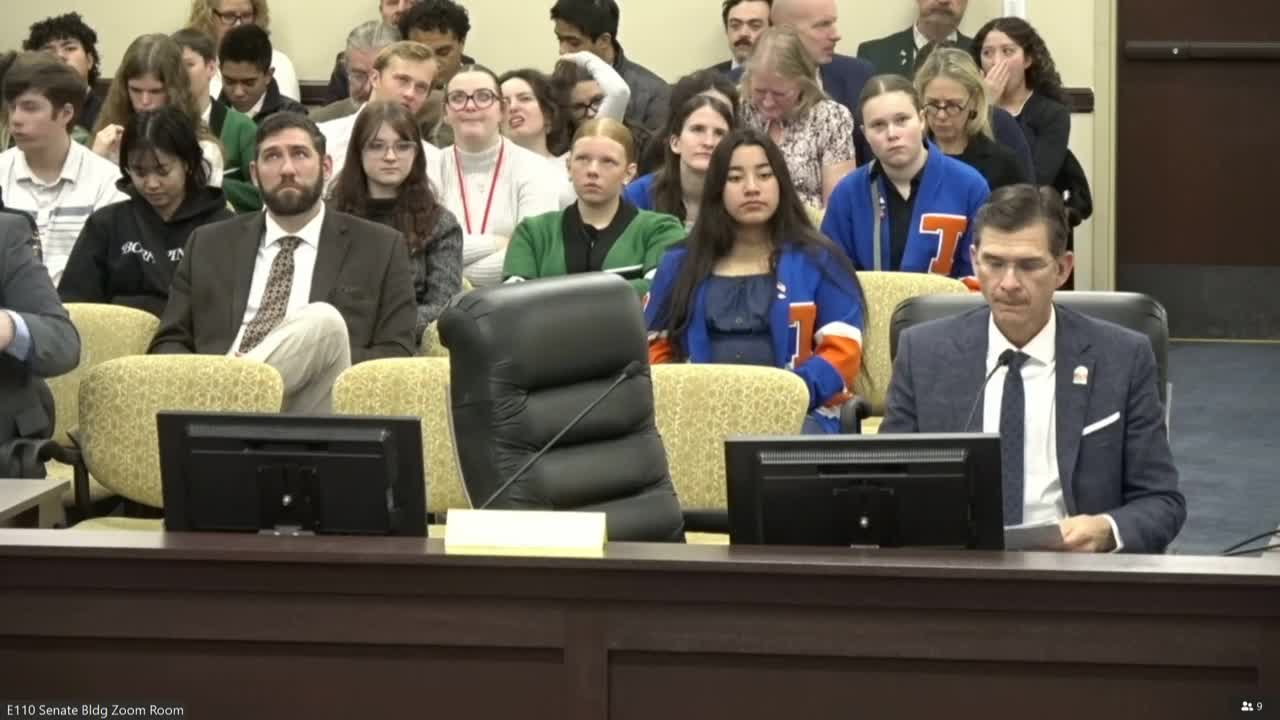
Representative Walter presented two charter finance proposals to the Education Committee designed to lower borrowing costs and expand facility financing options for charter schools.
HB218: credit enhancement recapitalization. Walter described a 2012 credit-enhancement (moral obligation) program that helped creditworthy charter schools obtain lower-cost debt. He said standards used to qualify schools were unchanged in statute, but rating-agency requirements have tightened, making it harder for schools to qualify. HB218 would place $4 million into the program's reserve fund to enable more schools to access the credit enhancement under the original program standards. Walter said the program has never recorded a default and that the $4 million infusion is expected to generate $3—4 million annually in interest-cost savings to schools over multiple years.
HB219: charter facility revolving loan capitalization. Walter also sought $50 million one-time from the Education Stabilization Fund to capitalize a revolving facility loan program for charter school capital needs (portable classrooms, lunchroom expansions, small renovation projects). He said loans would be repaid to the fund (it is not a grant program) and would expand access to capital for charters that otherwise cannot secure financing for facility improvements; the bill also includes provisions to coordinate bonding options and credit enhancements to reduce borrowing costs.
Nut graf: Walter said HB218 targets charters nearly investment-grade now excluded by market changes; HB219 creates a scalable revolving loan pool to meet capital needs that are difficult to finance otherwise. He emphasized both proposals aim to lower borrowing costs, returning savings to schools rather than investors.
Committee members asked about repayment and scale. Walter said HB219 loans would be repaid into the revolving fund, making the program reusable; HB218 is a one-time capitalization of the existing reserve and would enable new debt issuances under legacy eligibility rules. The committee did not take an immediate vote on either bill during the hearing.
Ending: Representative Walter said both proposals are scalable and welcomed further questions on details and fiscal models.