Get Full Government Meeting Transcripts, Videos, & Alerts Forever!
Get email alerts on the Child Exploitation Legislation topic
No spam. Unsubscribe anytime.
Committee advances HB 207 to increase penalties for repeat child‑exploitation offenders
Summary
The committee adopted a substitute to House Bill 207 and voted to send the measure to the House floor; the bill increases statutory penalties and clarifies CSAM-related offenses and procedures for repeat child‑exploitation offenders.
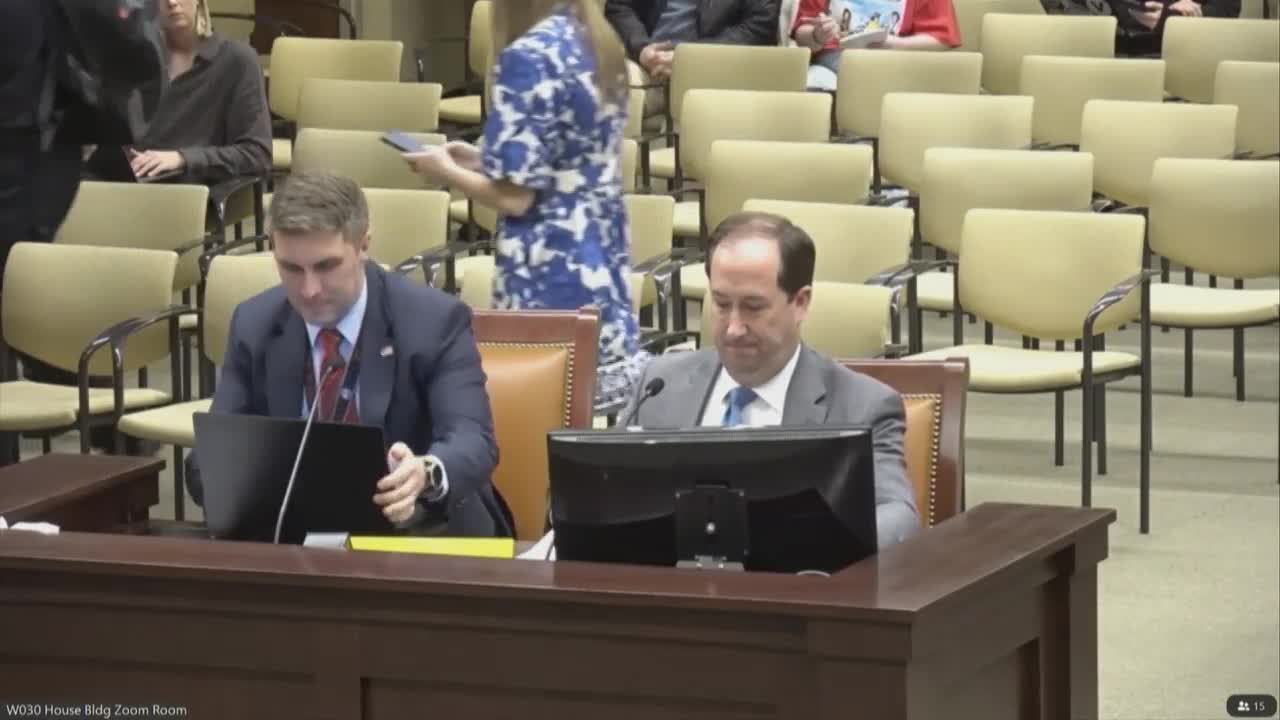
The House Law Enforcement and Criminal Justice Committee adopted the substitute to House Bill 207 and passed the measure out favorably after extended testimony from prosecutors, the attorney general’s office and victim‑service organizations.
Sponsor and agency rationale Representative White said HB 207 clarifies definitions related to child sexual exploitation, updates child‑sexual‑abuse‑material (CSAM) provisions, enables Children's Justice Center interviewers to view (but not possess) CSAM when appropriate for forensic interviews, and increases minimum and maximum sentencing ranges for repeat offenders. He and the attorney general’s office emphasized that neighboring states have longer mandatory terms for repeat offenders and that Utah currently lacks an effective statutory increase for recidivists.
Attorney general and task-force input Carl Holland, assistant attorney general and director of the Internet Crimes Against Children Task Force, explained that current Utah law does not practically distinguish first‑time and repeat CSAM production/distribution offenders; prosecutors sometimes refer repeat offenders to federal authorities because federal law provides higher penalties. Holland and the AG’s office urged statutory changes to allow Utah authorities to pursue repeat offenders under state law.
Support and opposition Victim‑service groups and many county prosecutors supported the bill, including the Victim Services Commission, the Utah Coalition Against Sexual Assault, Davis County and Utah County attorneys, and local victim advocates who described repeat victimization and calls for stronger tools to protect children. Defense representatives, including Mark Moffett and Steve Burton, opposed some provisions and warned that changing mandatory minimums could increase prison populations and remove judicial discretion. Defense counsel said negotiated changes from earlier legislation two years ago were still settling and expressed concern about reinstating mandatory minimum-like enhancements.
Committee actions The committee adopted the first substitute and then passed HB 207 out favorably to the House floor. The record shows the bill was extensively discussed and will continue to be monitored by prosecutors, defense counsel and victim advocates as it moves forward.