Get Full Government Meeting Transcripts, Videos, & Alerts Forever!
Get email alerts on the Rulemaking Process topic
No spam. Unsubscribe anytime.
Staff brief committee on rulemaking steps, committee authority and annual reauthorization process
Summary
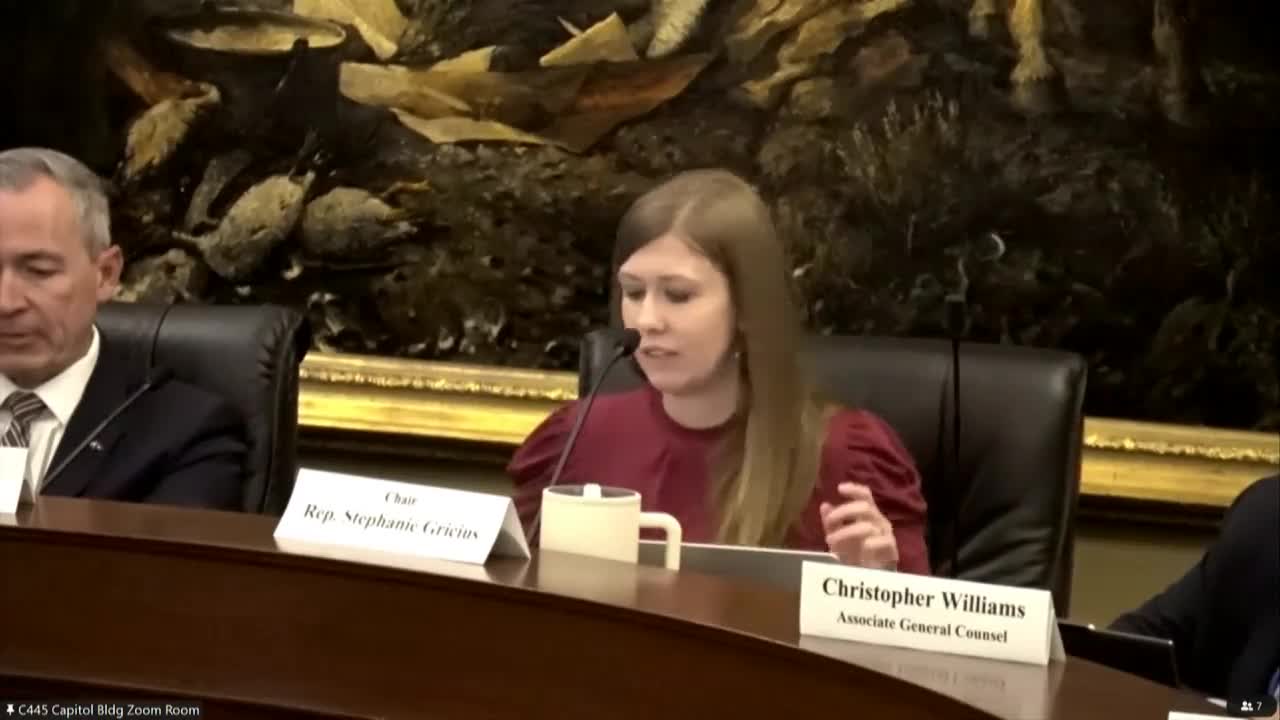
At a meeting of the Administrative Rules and General Oversight Committee, staff from the Office of Legislative Research and General Counsel outlined the state rulemaking process and the committee's authority, including its role in the annual rules reauthorization bill.
At a meeting of the Administrative Rules and General Oversight Committee, staff from the Office of Legislative Research and General Counsel outlined the state rulemaking process and the committee's authority, including its role in the annual rules reauthorization bill.
The staffers said statute determines when agencies must adopt rules and listed the standard elements agencies must submit when filing rules: the initial rule text, a comprehensive rule analysis summarizing the rule, an explanation of legal authority, any fiscal impact, a proposed effective date and public comment procedures. "When an agency decides to file a rule, they provide it to the office of admin rules, the governor's office of planning and budget, interested parties who have requested notice," said Chris Williams, Office of Legislative Research and General Counsel.
Williams told members that the Office of Administrative Rules publishes rules and analyses in a twice-monthly bulletin and that every rule must be available for public comment for at least 30 days and no more than 113 days. He said agencies may hold public hearings at their option, and are required to hold hearings if another agency, 10 members of the public, or a trade association with more than 10 members requests one. After public comment closes, agencies must review input and may revise proposed rules; agencies normally provide an effective date that is then published in the next bulletin.
Ronan Randalls, a policy analyst with the Office of Legislative Research and General Counsel, summarized the committee's statutory basis and powers. "This committee is a statutory committee. It's created in Title 36, Chapter 35, which outlines the membership, the duties, and the powers of the committee," Randalls said. He said the committee is composed of five House members and five Senate members, and that its actions include recommending statutory changes, recommending that an agency modify or repeal a rule, opening bill files like other interim committees, and preparing the annual rules reauthorization bill. Randalls noted that judicial rules were added last legislative session to the committee's purview.
Williams also summarized emergency-rule limits: emergency rules can be used only where the normal process would cause imminent public health, safety or welfare harms, urgent budget reductions, or a risk of violating federal or state law; they are temporary unless later processed through the regular rulemaking steps.
Committee members asked clarifying questions about whether revised proposed rules must be re-noticed (Williams: they do not need to start over; agencies incorporate changes and continue) and about timing and statutory requirements. Both staffers urged ongoing outreach between agencies and regulated communities so stakeholders see proposed rules early in the public-comment phase.
The briefing closed with a reminder that the committee annually prepares legislation to reauthorize rules (the staff referenced the draft reauthorization bill as House Bill 75), and that rules automatically expire on May 1 unless reauthorized by the Legislature.