Get Full Government Meeting Transcripts, Videos, & Alerts Forever!
Get email alerts on the Fireworks Regulation topic
No spam. Unsubscribe anytime.
Committee advances House Bill 59 to align fireworks classifications with federal standard
Summary
A Utah Senate committee unanimously adopted a first substitute to House Bill 59, a technical cleanup that changes state fireworks classifications to match federal designations, and moved the bill to the Senate floor and consent calendar.
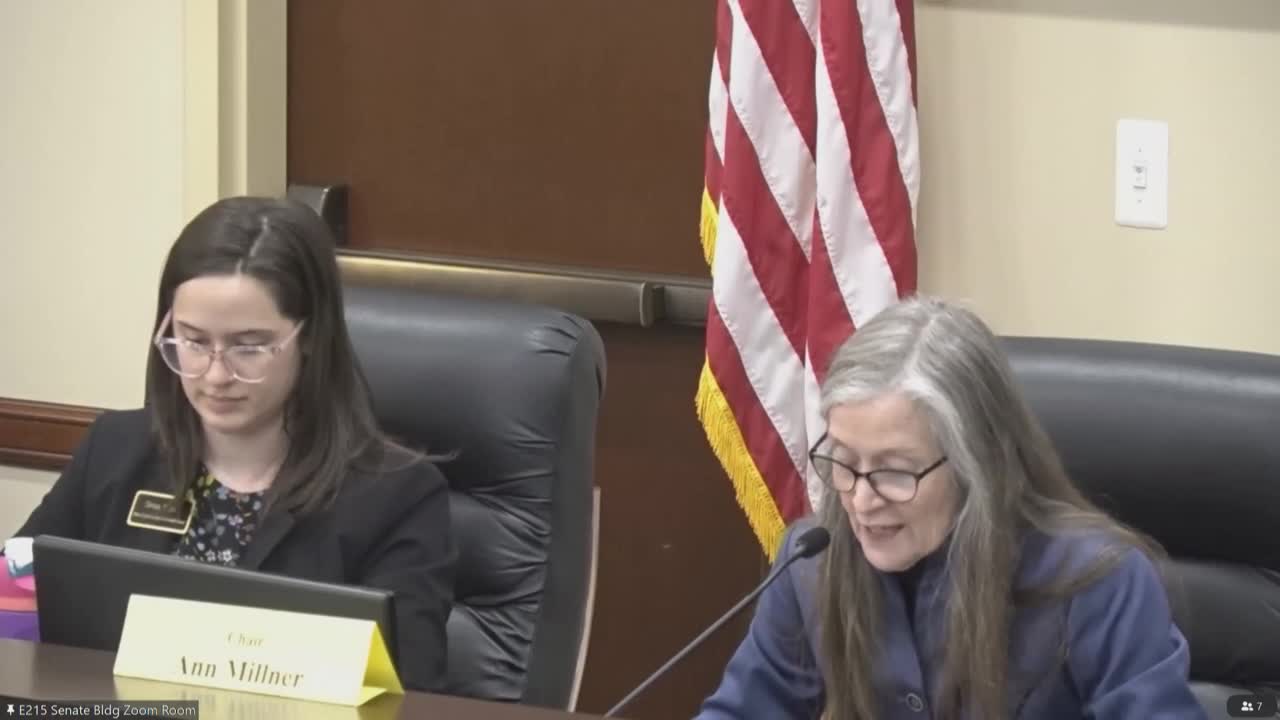
A Senate committee on Tuesday unanimously adopted a first substitute to House Bill 59 and sent the measure to the Senate floor with a favorable recommendation and placement on the consent calendar.
Representative Dunnigan, sponsor of the bill, told the committee the measure is a technical cleanup. “This is a true cleanup bill,” she said, and that the substitute “includes some additional technical cleanup.” The bill replaces the state's existing Class C designation for fireworks with the federal-style designations (for example, 1.1, 1.2, 1.3, 1.4), a change Dunnigan said corrects how the statute refers to fireworks.
The committee first voted to adopt the first substitute after Senator Quan moved to “delete title and body of HB 59 and replace it with first substitute HB 59.” That procedural motion passed unanimously. The committee then voted to pass the first substitute to the full Senate with a favorable recommendation; the motion passed unanimously. Members also voted to place the bill on the consent calendar.
Committee members offered no substantive debate on policy changes; presenters and committee members described the bill as technical and limited to statutory wording changes to “meet the federal standard.” No members of the public spoke on the bill during the committee hearing.
The committee chair announced that two other bills (Senate Bill 166 and Senate Bill 181) were pulled from the agenda and would not be heard at this meeting because sponsors were working on substitute language.
With the committee’s unanimous votes, the first substitute to House Bill 59 advances to the Senate floor for further consideration under the Senate’s calendar procedures.