Get Full Government Meeting Transcripts, Videos, & Alerts Forever!
Get email alerts on the Federalism topic
No spam. Unsubscribe anytime.
Committee endorses bill to publish federal guidance letters received by state agencies
Summary
Senate Bill 198 would require state agencies to publish informal federal guidance letters they receive and submit them to the legislature; the committee voted to forward the bill after witnesses described disclosure practices and raised concerns about sensitive information.
Senator Stratton presented Senate Bill 198, the federal guidance letter amendments, saying the legislation emerged from the interim federalism commission and aims to increase transparency about informal guidance state agencies receive from federal agencies.
Bill Duncan of the Sutherland Institute told the committee those documents — often informal letters or memos interpreting federal law — can influence state implementation though they are not formally adopted rules. He said the bill would require agencies to post guidance letters on agency websites and the state's open‑data portal and submit them to the Legislative Management Committee and federalism committee chairs.
Nut graf: Sponsors and witnesses framed the bill as a modest, process‑oriented step to help state lawmakers and the public see what federal agencies are asking state agencies to do. Stakeholders urged careful drafting to avoid inadvertently publishing sensitive facility or security information.
Mary Anne Christensen of Utah Legislative Watch supported the bill as closing a gap between federal advice and state oversight. Ricky Ranco Browning, president of the Utah Petroleum Association, agreed with the principle but warned the definition of "federal guidance letter" could sweep in private or security‑sensitive material, such as facility operational details, which should be exempted or redacted.
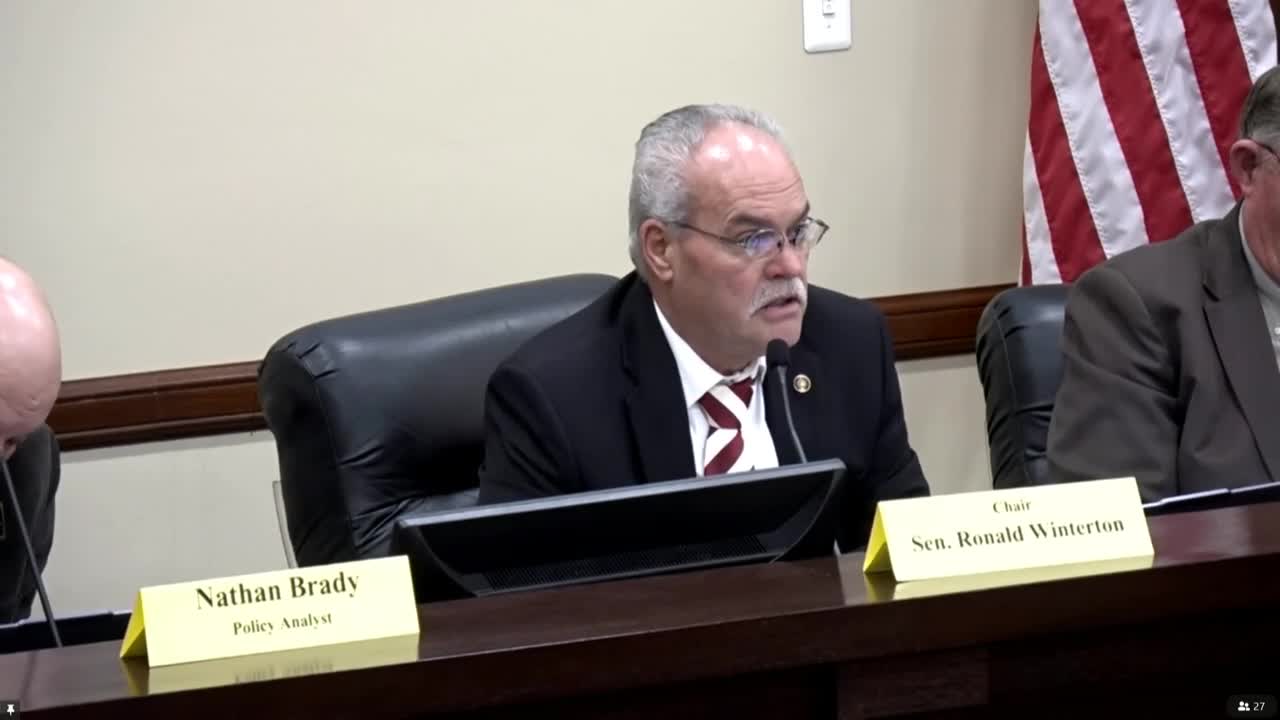
Nathan Brady of Legislative Research and General Counsel said GRAMA (the Government Records Access and Management Act) likely provides exemptions for protected records, but staff would confirm whether redaction language or exemptions are necessary. Senator Stratton confirmed a fiscal note of about $16,700 ($900 in 2025 and $16,700 in 2026) and said sponsors would refine language to address privacy and proprietary concerns.
The committee moved the bill favorably to the floor by motion; the vote was unanimous as recorded in committee.
Ending: The bill advances to the full Senate with bipartisan committee support; sponsors plan to work with industry and staff to narrow definitions and preserve legitimate confidentiality.