
Bill to require identification when officers are not in uniform draws objections from State Police
Get AI-powered insights, summaries, and transcripts
Sign Up Free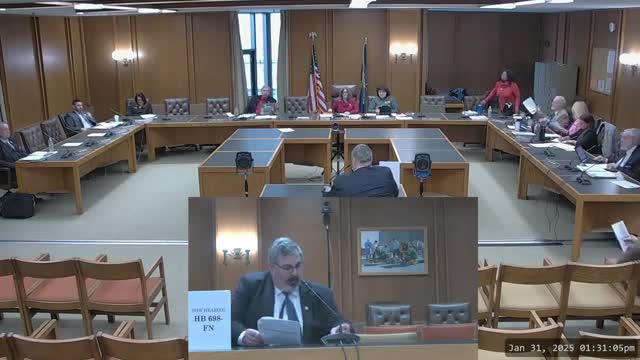
Summary
House Bill 698 would clarify criminal penalties for impersonating or failing to identify as law enforcement when not in uniform. Supporters described scams and dangerous impersonation incidents; the Department of Safety cautioned the bill would hamper legitimate undercover and exigent operations.
Representative Dennis Mannion told the committee that House Bill 698 would tighten statute language governing when a person claims to be an officer while not wearing a uniform, and would create a penalty for someone who represents themselves as law enforcement without producing identification on request. Mannion said the change was aimed at preventing impersonators who pose as officers to commit crimes, and to give ordinary citizens a simple right to ask for identification.
Major Christopher Ball of the New Hampshire State Police and Major Brendan Davey (Operations Bureau) testified against the bill as drafted. They said existing impersonation statutes (for example, current provisions for falsely exercising the powers of a public officer) already criminalize impersonation and that the proposed text could interfere with legitimate law-enforcement tactics. Major Davey warned the bill could impede off-duty officers who must act quickly in emergencies, and said there are lawful circumstances (undercover assignments, exigent operations) where producing identification immediately would be unsafe or tactically harmful.
Representative Scherer and other committee members pressed for clarity on whether the bill would replace or supplement existing impersonation statutes (Representative Scherer noted RSA 104:28(a) and asked how subsection (b) differs). Representative Mannion said the new language was intended to address scenarios in which nonuniformed people claim authority without clear intent to exercise formal powers — situations that create confusion for members of the public — but several members and witnesses said the draft was ambiguous and could create enforcement problems.
Ending: Department of Safety and State Police representatives urged the committee to reject or substantially rewrite the measure; committee members suggested the bill needs clearer drafting and may duplicate existing felony impersonation statutes. No vote was taken.