Get Full Government Meeting Transcripts, Videos, & Alerts Forever!
Get email alerts on the School Meals Farm To School topic
No spam. Unsubscribe anytime.
MSD Wabash County Schools expands farm-to-school gardens, pilots Impact Pantry at Southwood
Summary
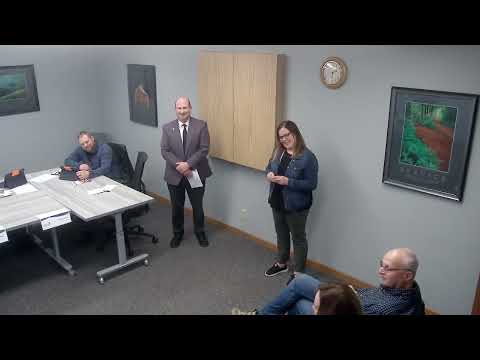
At a meeting of the MSD Wabash County Schools Board of Trustees, Food Service Director Becky Bradley and a Purdue Extension educator described an expansion of the district’s farm-to-school work and a pilot food-and-wellness “Impact Pantry” at Southwood Elementary.
At a meeting of the MSD Wabash County Schools Board of Trustees, Food Service Director Becky Bradley and a Purdue Extension educator described an expansion of the district’s farm-to-school work and a pilot food-and-wellness “Impact Pantry” at Southwood Elementary.
Bradley said the district’s food program earned positive remarks in a recent state inspection and that produce grown in school gardens and tower gardens is already appearing on student salad bars. Carrie, who identified herself as working with Purdue University’s nutrition-education program, described grant funding and partnerships that have supported gardens and pantry operations.
The presentations outlined three linked initiatives: a classroom and courtyard garden pilot at Southwood that supplied produce to the cafeteria; tower gardens placed in each school to extend the growing season; and an Impact Pantry at Southwood that provides food and wellness items for families.
Bradley said the district’s state inspection reviewer was “very impressed with the quality of food, the quantity of food,” and with how the salad bar and a la carte options were presented. She described staff and students helping to harvest and serve garden produce. Carrie said an initial small grant of $1,500 funded the first courtyard conversion, and that the project later received $3,000 from the Whole Kids Foundation to sustain the program.
Carrie said the tower gardens — shorter-season, high-yield vertical planters — were obtained in part through a Community Foundation partnership and are being used “very differently” across schools: some for classroom lessons, others in commons areas to support salad parties and cross-curricular activities such as statistics lessons.
On the pantry pilot, Carrie said impact-pantry funding and local partnerships have allowed the district to supply not only fresh fruits and vegetables but also meat, eggs and basic household items (laundry soap, hygiene products and feminine care). She identified community partners providing regular product contributions and support.
Carried statistics presented by staff: the pilot pantry is serving roughly 22 families per week (with weekly highs near 32 and lows near 14), about 132 individuals served weekly overall, and distributions of roughly 800 pounds of food each week. Carrie and Bradley credited Southwood nurse Amy Long with leading daily operations and noted existing partnerships with local producers and food banks.
Bradley and Carrie said additional grant funding is in place to extend Impact Pantries to more schools: they reported an award described in the presentation as $75,000 from a Wabash County community grant program to help expand Impact Pantries throughout the county.
Board members and administrators congratulated staff for the pilot’s early results. No board action was requested at the meeting; the presentation closed with staff inviting follow-up and continued partnership-building.
The district said it will continue piloting tower-garden and garden-based lessons over coming months and evaluate expansion of the Impact Pantry model to other schools.