Get Full Government Meeting Transcripts, Videos, & Alerts Forever!
Get email alerts on the Bridges topic
No spam. Unsubscribe anytime.
County engineers report steady bridge conditions, identify 9 scour‑critical spans
Summary
A contractor presented the county's annual bridge inspection under National Bridge Inspection Standards, reporting 10 inspections in 2024, 195 total county bridges on the inventory, nine scour‑critical bridges and several priority replacements and rehabilitation projects.
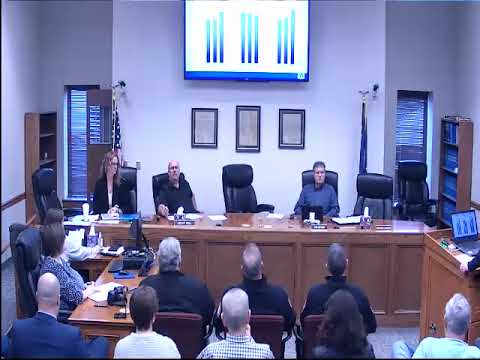
Joe Clark, a bridge inspection team leader with BS Engineering, told the Boone County Commissioners on the county's annual National Bridge Inspection Standards review that inspectors performed 10 targeted bridge inspections in 2024 as part of an "off year" cycle focused on structures on a 12‑month schedule.
The presentation said Boone County has about 195 county‑owned bridges and that, since 2021, the program has delivered two rehabilitations and 14 full replacements, averaging roughly 3½ bridge replacements a year as new routes and assets have been added.
"Part of that too is new bridges have been added because of new routes," Clark said. He pointed to improvements in deck conditions compared with statewide county averages and said the county's superstructure ratings are largely in line with statewide figures.
Clark highlighted several technical findings: one truss span (identified in the county inventory as Bridge 32) is classified as fracture‑critical (nonredundant tension members); the county has nine scour‑critical bridges that require inspection after high‑flow events; and a small percent of bridges remain in "poor" condition and therefore require 12‑month inspections. He recommended riprap and other scour countermeasures at some foundations to remove the scour‑critical designation where appropriate.
He described low‑cost preservation measures the highway crews have adopted, including surface sealing six decks last year and targeted repairs to piles and abutments. "One of the biggest issues with bridge deterioration is if water gets into the deck, gets down to the beams," Clark said. "Surface sealing is one of the best ways to preserve your bridges at a very, inexpensive cost." He credited Jerry Larson of the highway department with leading the sealing program.
Clark and Bentley Spear, another inspection team leader with BS Engineering, reviewed the county's priority replacement list, noting bridges currently under contract (bridges 70, 185, 229 and 285) and several future candidates. Clark said the county submits a bridge asset management package to the Local Technical Assistance Program (LTAP) to support federal funding applications and that the striping/bridge work will be timed to meet LTAP and Federal Highway Administration requirements.
Commissioners asked about upcoming coding or weight‑rating changes; Clark said a new coding guide implementing NBIS condition definitions took effect Jan. 1 and that weight‑rating changes have been frequent in recent years but that he was not aware of pending new ratings. He also noted particular access issues on Windermere Lane and Monaghan Lane where replacing an arch bridge serving a handful of homes could be costly and would require coordination with INDOT and federal highway officials.
The presentation closed with an offer to invite commissioners to ride along on future inspections so they can observe field methods and better understand the inspection results and recommendations.
No formal action was taken during the presentation; commissioners thanked the inspection team and moved to the next agenda item.