Get Full Government Meeting Transcripts, Videos, & Alerts Forever!
Get email alerts on the Traffic Calming topic
No spam. Unsubscribe anytime.
Neighbors, engineers debate roundabouts, speed tables for Pine Tree Drive safety
Summary
Miami Beach and Miami‑Dade County transportation staff presented three traffic‑calming options for Pine Tree Drive at a public meeting Wednesday and heard persistent concerns from residents that large roundabouts, removal of parking and narrowing the roadway could worsen safety or impede hurricane evacuation.
Miami Beach and Miami‑Dade County transportation staff presented three traffic‑calming options for Pine Tree Drive at a public meeting Wednesday and heard persistent concerns from residents that large roundabouts, removal of parking and narrowing the roadway could worsen safety or impede hurricane evacuation.
City project manager Herman Fung said the project began under a joint participation agreement with the county. “A joint participation agreement, JPA was executed with the county of the city back in February,” Fung said, describing the effort to correct traffic flow and safety along Pine Tree and the 40th Street corridor.
The options presented included a larger dual‑lane roundabout previously developed by the city’s consultant, a pair of single‑lane roundabouts, and a county‑led option to realign the horizontal curve with chicanes and median adjustments. Alejandro Salueda, the county’s plans review and design manager, said both roundabout models “comply with standard design” and would improve safety from an engineering standpoint, but acknowledged residents had opposed the roundabout footprints shown in earlier drafts.
Why it matters: Pine Tree Drive is a major collector roadway on Miami Beach used by both local traffic and drivers traversing the barrier island. Residents told officials they experience repeated high‑speed crashes, including one recent collision where a vehicle entered a living room. That history and the street’s status as a designated evacuation route framed much of the public comment.
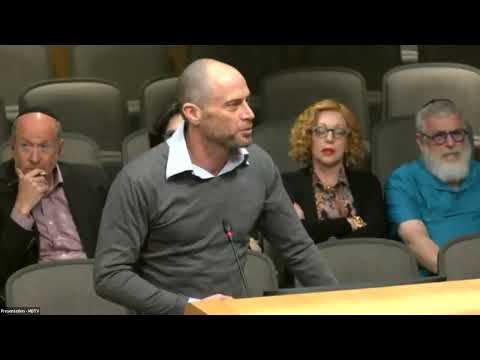
Residents at the meeting and on Zoom urged lower‑cost, testable measures before committing to large construction. Jamie Lefrac, a civil engineer and resident, suggested temporary lane delineators or water‑filled barriers to test behavior and said “we certainly do need to resolve the safety issue.” Several residents and Vice Mayor Tanya Bott noted a nearby one‑block‑over test case — La Gorce Drive/La Gorce area speed tables and chicanes — that they said has reduced speeds and improved safety.
County staff explained limits on some measures. Miguel Soria, assistant director of project delivery for the county Department of Transportation and Public Works, and Alejandro Salueda said Pine Tree carries high volumes — county staff cited an overall average daily traffic figure “over 20,000” for a segment of the corridor and lower but significant counts (about 3,000 and 6,000) for some directional lanes — and that traditional speed humps are designed for low‑speed local streets. Salueda warned speed humps on a major collector can cause abrupt braking, rear‑end collisions and problems for emergency vehicles.
Parking, enforcement and the curve geometry were recurring themes. County engineers said parked cars close to the apex of the curve are non‑compliant with safety standards and likely contribute to crashes; staff said on‑street parking “is not recommended” in the area regardless of the chosen design. Several residents urged closing a blind south‑to‑north U‑turn and increasing enforcement late at night when, they said, most crashes occur.
Evacuation concerns surfaced repeatedly. Resident Irving Khan told the meeting that Pine Tree’s role as a designated disaster evacuation route made narrowing or obstructing the roadway potentially dangerous during a hurricane evacuation. County and city staff said evacuation operations are managed differently during emergencies, but they did not commit to or rule out specific measures tied to evacuation performance.
Next steps and staff commitments: County and city staff said they will not make a final decision at the meeting. Staff committed to provide the presentation and recording to attendees, distribute a project survey, and continue coordination between Miami Beach and county transportation engineers. Officials said they will evaluate alternatives that could be implemented sooner (landscaping, chicanes, temporary delineators) while larger options (a multi‑lane roundabout) would require more time and funding. Commissioner David Suarez said funding for a full roundabout would likely require several million dollars and could take years to program into the city budget.
Public sentiment at the meeting was mixed but strongly skeptical of a large roundabout. Many residents and neighborhood leaders argued for testing speed tables/chicanes on a limited basis and for prioritizing lower‑footprint options that would preserve parking and minimize construction time. County staff expressed safety concerns about speed humps on a major collector and recommended studying design options, including the curve realignment and roundabouts, to determine which would best reduce collision severity.
The meeting closed with staff posting contact information and a QR code for residents to sign up for updates, receive the presentation, and take the project survey. Staff said they will return with data and refined recommendations after additional study and community feedback.