Get Full Government Meeting Transcripts, Videos, & Alerts Forever!
Get email alerts on the Coastal Management topic
No spam. Unsubscribe anytime.
Town environmental manager details renourishment funding, schedule and bird protections
Summary
Town environmental manager Chad Shoots briefed council on the beach renourishment project: over $10 million in HRRGP/other grant funds have been awarded, a $14 million local-government grant will fund the South End construction, and the contractor is managing nesting-season contingencies with FWC-approved monitors.
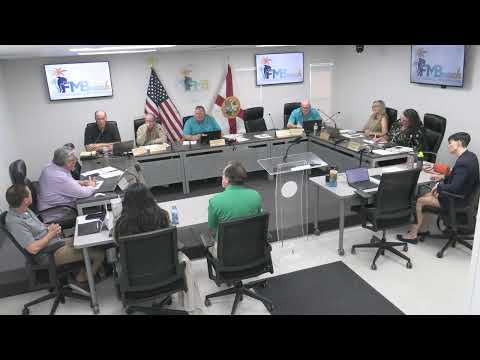
Fort Myers Beach — Chad Shoots, the town’s environmental manager, updated the council on the ongoing beach renourishment work and related funding on Feb. 3. Shoots said the town and partners have secured several state and federal grants totaling more than $10 million to supplement town and county funds and that contingency and environmental-monitoring plans are in place to address shorebird nesting constraints.
Shoots said the town’s grant-winning effort brought an additional HRRGP award that adds $8.3 million for the Bridal/Brig area, on top of an earlier $1.8 million award used for prior phases. He said a separate $14 million Local Government Funding Request (LGFR) grant will fully fund the South End construction portion, with the central portion expected to require a town cost share of roughly 15 percent. The town’s initial budget for the project incorporated about $2 million in town funds; Shoots said the grant awards have substantially reduced the town’s net cost exposure.
Shoots described an operational update: mechanical issues affected the booster pump early in the week but crews were building the beach on the central segment and planned to resume South End pumping by mid-week. To limit impacts to nesting shorebirds, the town has been coordinating with Florida Fish and Wildlife Conservation Commission (FWC) on an incidental-take/monitoring plan; Shoots said the plan calls for daily monitors beginning Feb. 15, non-injurious deterrence measures when approved, and turbidity monitoring by contractor environmental staff. As an additional contingency, the contractor will truck in about 30,000 cubic yards of sand to create a buffer in a sensitive nesting zone.
Shoots told council staff and residents that FWC has been cooperative and that the monitoring and mitigation program aims to allow construction to continue while protecting sensitive species; he said staff anticipates completing the work before the next hurricane season if equipment issues are managed. Councilors asked staff to communicate directly with condominium associations and nearby property managers about sequencing and timing; Shoots agreed to outreach.
Why it matters: The project will reshape beach areas used for recreation and protect infrastructure; grant awards reduce the town’s direct cost but the project must reconcile construction with bird-nesting protections and local concerns about timing and staging.