Get Full Government Meeting Transcripts, Videos, & Alerts Forever!
Get email alerts on the Search And Seizure topic
No spam. Unsubscribe anytime.
Appeals court weighs whether police approach and short chase amounted to a seizure in Palmer case
Summary
In Commonwealth v. Palmer the panel questioned when an officer approach or brief chase becomes a Fourth Amendment seizure, with defense counsel arguing six officers and a police wagon made the encounter coercive and Commonwealth counsel arguing officers did not command the defendant to stop.
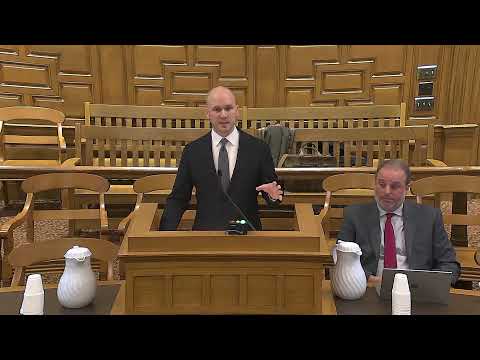
The Massachusetts Appeals Court heard argument in Commonwealth v. Palmer (24p365) over whether Boston police seized Byron Palmer when officers approached him 12 days after a robbery. Defense counsel Trey Collins urged the panel that the eyewitness description relied on by police was “so vague…meaningless” and that the officers’ conduct — six officers converging on a group and a police wagon nearby — created a coercive encounter under Mendenhall and related precedent.
Collins said the officers approached displaying badges and that multiple officers moving toward the group prompted people, including Palmer, to run. He argued officers objectively communicated an intent to compel Palmer’s compliance, so the initial approach was a seizure or, minimally, the chase that followed converted the encounter into one. Collins stressed that charges ultimately proved were unrelated to the robbery and arose from drugs Palmer discarded while fleeing.
Assistant Attorney Henry Drembis (supervised by Ian MacLean) for the Commonwealth responded that officers did not command Palmer to stop and pointed to testimony that the officers simply called out and did not make repeated attempts to detain him. Drembis told the panel “they never commanded him to stop,” and argued any seizure occurred only after Palmer discarded drugs and officers had reasonable suspicion to pursue and detain him.
The panel pressed both sides on case distinctions about following versus chasing, the duration and abruptness of the pursuit, and whether Graham/Warren‑type flight analysis should limit reliance on flight as evidence of guilt. The court heard argument on whether the suppression‑hearing record established a seizure as a matter of law or created disputed facts suitable for trial.