Get Full Government Meeting Transcripts, Videos, & Alerts Forever!
Get email alerts on the Electric Utility Consumption Tax topic
No spam. Unsubscribe anytime.
Committee approves higher commercial/industrial electric consumption caps to support SCC funding
Summary
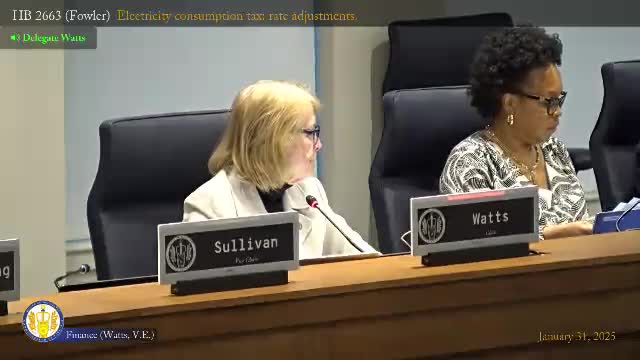
HB2663 raises statutory caps on electric-utility consumption taxes for commercial and industrial customers to sustain funding for the State Corporation Commission’s utility divisions; the committee reported the bill 12-5 after hearing from the SCC, utilities and industry groups.
The House Finance Committee voted to report HB2663, which raises statutory caps on the electric-utility consumption tax for high-usage commercial and industrial customers, saying the change is intended to preserve funding for the State Corporation Commission’s utility divisions.
Delegate Fowler presented the bill, which increases special utility tax rate caps for commercial and industrial electricity consumers in two high-usage tiers. Joe D’Amico of the State Corporation Commission told the committee the SCC’s non-general fund accounts have absorbed increased operating costs since the last statutory adjustment in 2020 and that the commission may need additional statutory cap room to maintain its regulatory mission.
D’Amico said the bill does not change household caps; it affects larger commercial and industrial consumers. In response to a question, D’Amico said the SCC worked with electric utilities to identify typical consumers in the affected tier: the commission cited an average consumption example of about 15,000 kilowatt-hours for many small commercial consumers in the tier and estimated the effect at that usage level would be less than $1.20 per month on the bill if the upper rate applied.
Support came from Dominion Energy’s representative, who said the company supports the SCC’s ability to carry out regulatory responsibilities. The Virginia Manufacturers Association expressed concern that successive increases to electricity-related charges since 2020 make manufacturing less competitive; the group urged restricting how commission funds are used and suggested statutory limits on spending for studies that are not core regulatory functions.
After debate the committee reported HB2663 by recorded vote 12–5. Proponents said the change preserves regulatory staffing and preparedness for utility-related legislation emerging from recent sessions; opponents said the proposal increases cost pressures for manufacturers and large users and urged safeguards on fund use.