Get Full Government Meeting Transcripts, Videos, & Alerts Forever!
Get email alerts on the Data Centers Grid Reliability topic
No spam. Unsubscribe anytime.
North Dakota committee hears wide debate on requiring large energy users to seek CPCN; no vote taken
Summary
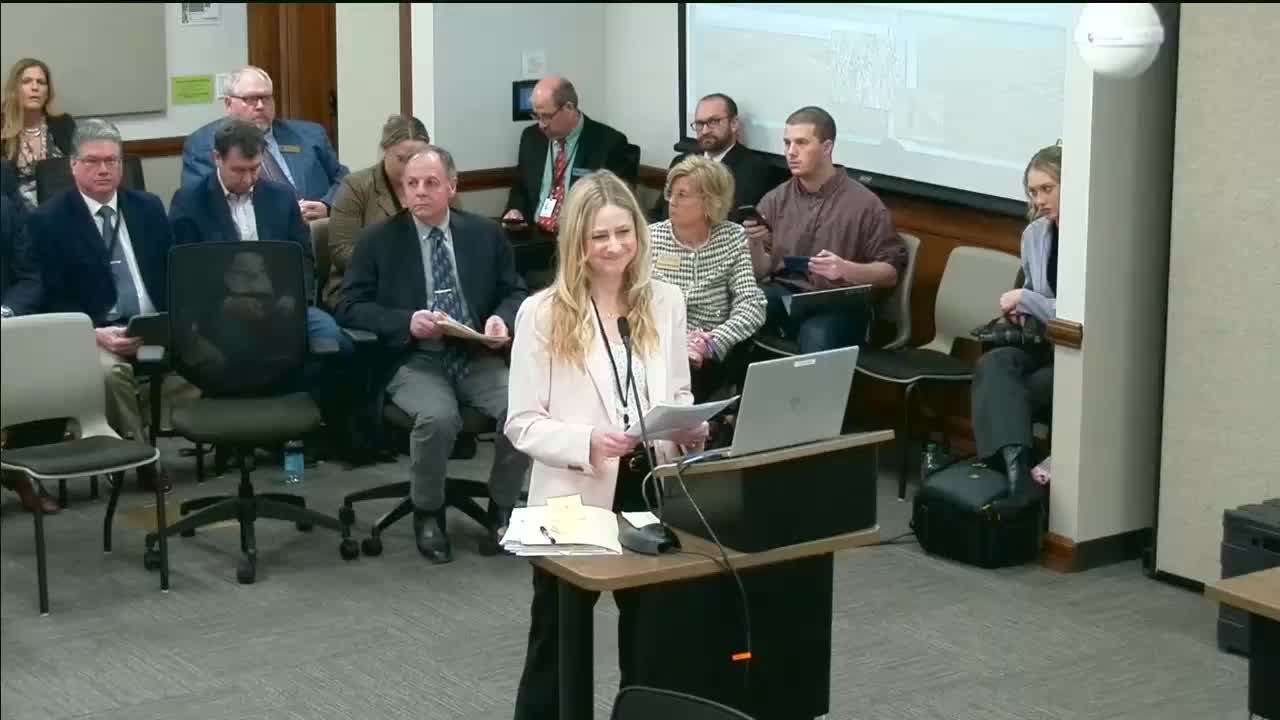
Representative Anna Novak introduced House Bill 1579, which would require owners of large electricity loads to obtain a certificate of public convenience and necessity from the Public Service Commission before operating.
Representative Anna Novak introduced House Bill 1579, which would require owners of large electricity loads to obtain a certificate of public convenience and necessity from the North Dakota Public Service Commission before placing the load into service.
The bill’s sponsor, Representative Anna Novak, said the measure is intended to protect reliability and keep electricity rates from rising for North Dakotans as ‘‘data centers . . . need anywhere from 1 to 300 megawatts of electricity,’’ and because ‘‘they absolutely cannot have a blackout situation.’’
Nut graf: The committee heard lengthy, often technical, testimony from a wide set of stakeholders — the Public Service Commission (PSC), data center developers, investor‑owned utilities, rural electric cooperatives and economic development groups — reflecting competing priorities: grid reliability and consumer protection versus speed and certainty for economic development.
Randy Christmann, a Public Service Commissioner speaking on his own behalf, framed the bill as a transparency and reliability tool following congestion charges assessed to utilities after a large load came online. Christmann said the congestion charges led to an average MDU residential increase of about $7.40 a month during a six‑month period that is being recovered over two years, and argued that requiring CPCNs for loads of 50 megawatts or more would give the PSC a formal venue to consider impacts on reliability, rates for nonserving utilities and ‘‘unreasonable transmission congestion.’’
Representatives of data center developer Applied Digital emphasized economic benefits and urged care in crafting regulation. Etienne (Eitan) Steinman, Applied Digital’s executive vice president of power, said the company has invested ‘‘over $1,000,000,000’’ in North Dakota and expects additional investments; he cautioned that the bill as drafted could have unintended consequences and urged more time to evaluate the approach. He told the committee the Ellendale and Jamestown projects have returned millions to local ratepayers and that Applied Digital conducts interconnection and price‑impact studies prior to siting.
Opposition came from utilities and cooperatives. Dennis Pathroff, speaking for the Power Companies of North Dakota (investor‑owned utilities), urged a do‑not‑pass, warning that adding CPCN requirements creates regulatory uncertainty that could deter large investors. Zach Smith, for the North Dakota Association of Rural Electric Cooperatives, and multiple cooperative managers including Todd Seiler and Matt Hanson described existing planning, interconnection and coordination practices and said cooperatives have invested heavily in regional transmission and generation; they argued the bill would duplicate or expand PSC authority into areas cooperatives now manage.
Other PSC commissioners were split: Randy Christmann supported the bill’s approach; Commissioner Sherry Hogan Hufford testified in opposition on her own behalf, saying the state lacks evidence of a systemic problem and that the bill would give the commission effectively a veto over new large loads and could create delays.
Multiple witnesses suggested alternatives: further interim study, improved RTO or transmission planning, or mechanisms to guarantee that impacted parties (including other large customers) can intervene in any process. Applied Digital and others urged that any process allow large customers to intervene directly. Several cooperative witnesses described that existing interconnection and delivery point processes already flag potential problems and that additional state control risks slowing needed infrastructure.
The committee did not take a final committee vote on House Bill 1579 during the hearing. The chair appointed a subcommittee to work the bill: Representatives Novak, Olson, Johnson and Foss were named to the subcommittee and given a February 21 deadline for work to be complete and reported back to the full committee.
Ending: The testimony showed broad agreement that large, fast‑moving loads deserve attention but deep disagreement about whether a CPCN requirement is the right tool. The committee’s subcommittee will review technical details and stakeholder options before the bill proceeds.