Get Full Government Meeting Transcripts, Videos, & Alerts Forever!
Get email alerts on the Ethics Enforcement topic
No spam. Unsubscribe anytime.
Committee hears bill to replace ‘complaint’ process and change North Dakota Ethics Commission enforcement
Summary
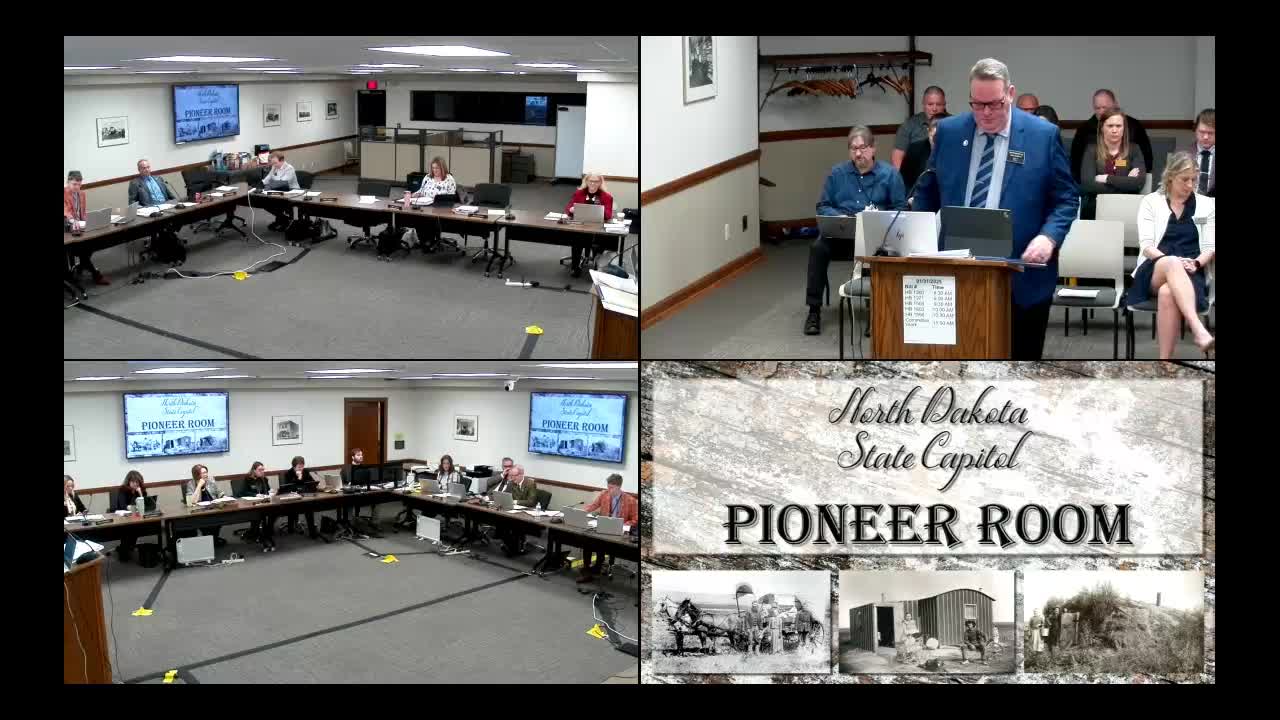
A House Government and Veterans Affairs Committee hearing on House Bill 1360 focused on changes to how the North Dakota Ethics Commission would handle allegations of ethics violations, replacing the current complaint-driven system with an enforcement process.
A House Government and Veterans Affairs Committee hearing on House Bill 1360 focused on changes to how the North Dakota Ethics Commission (NDEC) would handle allegations of ethics violations, including replacing the current complaint-driven system with a formal “enforcement process.”
Representative Josh Christie introduced the measure and said the bill “aims to refine and enhance the enforcement process of the North Dakota Ethics Commission by amending multiple sections of the North Dakota Century Code and repealing certain outdated provisions.” Rebecca Vinstak, the commission’s executive director, told the committee the proposal came from five years of data and would emphasize education, streamline steps and protect due process.
“The enforcement process serves four main goals,” Vinstak said. “First, the new enforcement process will address concerns brought to the commission through education first, instead of having a punitive ‘gotcha’ effect. Second, the enforcement process reduces red tape. Third, the enforcement process will bolster due process by allowing more opportunities for a respondent to interact with the five commissioners and defend him or herself publicly. Fourth, the enforcement process addresses ethical concerns in an efficient way and makes good use of taxpayer resources.”
Nut graf: Supporters described the rewrite as intended to make investigations faster, less politically exploitable and more educational; the attorney general’s office urged caution, saying the bill removes statutory guardrails and raises constitutional questions about delegation of enforcement authority.
Vinstak walked the committee through the proposed flowchart for the new system. Under the bill, anyone could submit “relevant information” — in person, by email or via a required hotline — rather than filing a formal complaint. Commission staff would first attempt informal outreach and education with the respondent; if unresolved, staff could conduct an informal investigation, produce a report and recommend that the commission close the matter, issue an alleged violation, or seek additional follow-up. A formal investigation, hearing and appeal process would remain for cases that progress that far. Vinstak said the commission expects most matters would settle with guidance or informal resolution.
Attorney General Chief Deputy Claire Ness testified in opposition, saying the bill would repeal statutes that currently protect due process rights and other safeguards. Ness told the committee the legislation removes statutory requirements such as notice provisions, rights to respond, and protections for having counsel present during proceedings — and she warned some of those protections overlap with constitutional due process.
“The bill basically takes away any of the legislative guardrails on their rule making process and gives complete discretion to the ethics commission,” Ness said, adding the bill’s repeated use of the term “enforcement action” could be read to give the commission broad authority to impose sanctions that the constitution reserves to the legislative assembly.
Committee members pressed both sides with questions about timing, confidentiality and scope. Representative Vetter asked when information would be public under the new system; Vinstak replied that records would remain confidential until a final commission order is issued and any appeals are resolved, and that settlements or closed matters would stay private unless the respondent or the person who submitted the information agreed to disclosure. Vinstak told the committee that pending matters would be transitioned into the new process under companion administrative rules.
Ness raised additional constitutional concerns: she said the bill’s definition of “regulated individual” would sweep in private contributors and others who are currently treated differently in law, and she urged the committee to clarify definitions by cross-referencing existing code (for example, chapter 16.1-08.1 for contribution definitions). Ness also recommended the committee consider narrower statutory changes rather than repealing protections from statute entirely.
The commission and its executive director said they had modeled parts of the proposal on other constitutional ethics commissions, including the Texas Ethics Commission, and that the proposed changes would reduce political exploitation of investigations and let respondents speak publicly sooner in limited circumstances.
Ending: Committee members heard supporters and opponents but did not take a vote. Several lawmakers flagged the need for additional drafting and cross-reference to existing code sections. The hearing record shows the committee will consider related bills (including 1505) and companion rules before any final action.