Get Full Government Meeting Transcripts, Videos, & Alerts Forever!
Get email alerts on the Cybercrime Investigations topic
No spam. Unsubscribe anytime.
Appropriations committee recommends 'do not pass' on bill to fund two BCI cybercrime agents for Grand Forks region
Summary
The Appropriations — Education and Environment Division voted to recommend “do not pass” on House Bill 1102, which sought state funding for two Bureau of Criminal Investigation cybercrime agents to be embedded in Grand Forks.
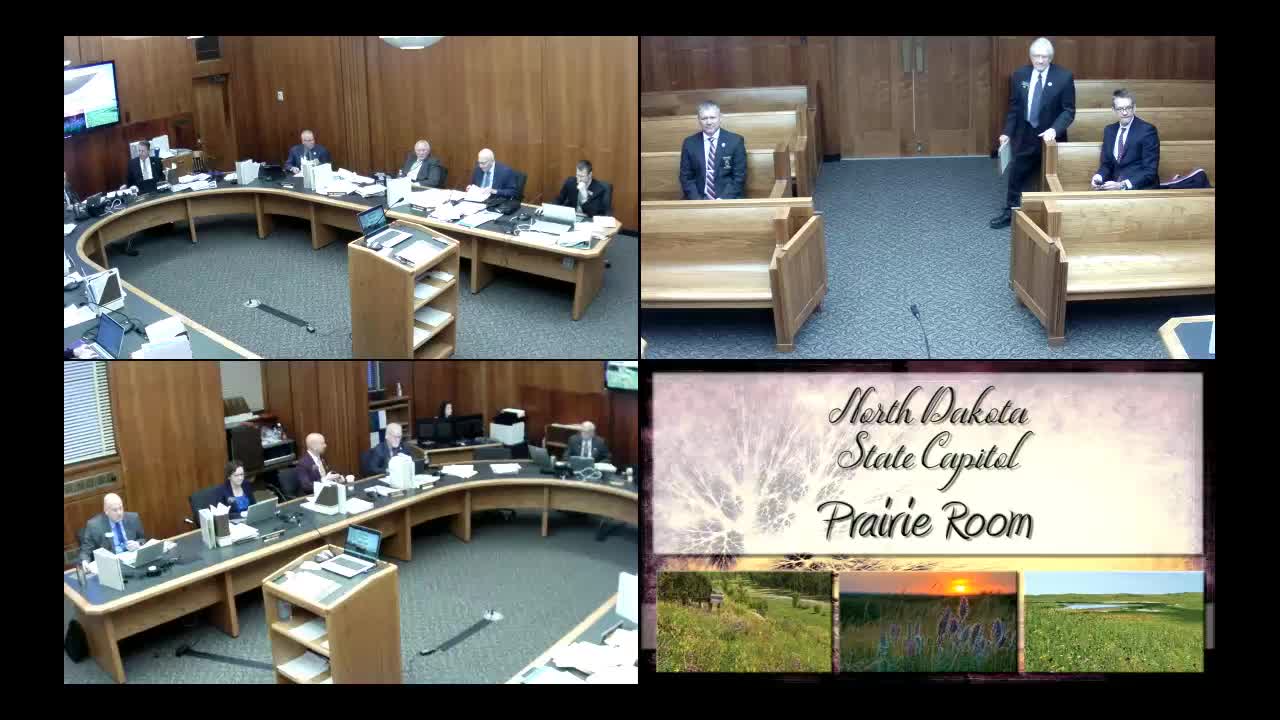
The Appropriations — Education and Environment Division voted to recommend “do not pass” on House Bill 1102, an appropriation to the attorney general for two Bureau of Criminal Investigation cybercrime agents to be embedded in the Grand Forks Police Department. Representative Martinson made the motion and Vice Chair Representative Swiatek seconded it; the committee chair said the motion passed and would be carried to the floor.
The bill would have provided an appropriation to place two full-time BCI agents in Grand Forks and funding to support equipment, training and recurring costs. Todd Field, city administrator for the City of Grand Forks, told the committee the city and the region support embedding the agents and that Grand Forks would provide office space and “about $200,000 annually” in local support for the two agents’ office, equipment and training.
Committee members pressed why the positions were not included in the attorney general’s original budget request. The attorney general, appearing before the committee, said the BCI had prioritized other deployments and that the agency’s budget request reflected its assessed needs; he told the panel, “I can assure the committee … there are not investigative tips or needs coming from the community of Grand Forks … that are going unmet by our resources.” He said the BCI had already placed additional agents in Fargo and other locations in prior sessions and had requested funds in the last session for retrofitting secure space for cyber work.
Several lawmakers said they did not question the local need but were reluctant to add off-cycle FTEs and appropriations when they were not in the attorney general’s formal budget submission. Representative Martinson said the attorney general’s office “dropped the ball” by not including the request in the initial budget; Representative Sanford asked that an explanation be provided by the attorney general’s office before acting. Committee members also pointed to alternative requests in the AG’s wish list—such as an administrative assistant for the cyber unit intended to speed report turnaround—as possible lower-cost ways to increase BCI capacity.
The City of Grand Forks described the arrangement as regional: the two agents would be embedded in Grand Forks but serve Northeast North Dakota. Grand Forks officials said some start-up costs and continuing in‑kind support would come from the city. Lawmakers asked for detailed cost breakdowns for equipment items listed in testimony (cell-phone forensic software, forensic workstations, laptops, internet/firewall costs) and for an explanation of why the AG’s budget did not originally include the positions.
Votes at a glance: House Bill 1102 (appropriation to the attorney general for two BCI cybercrime agents) Motion: Committee recommendation — do not pass Mover: Representative Martinson Second: Vice Chair Representative Swiatek Outcome: Committee motion passed; chair said he will carry the bill to the floor (committee reported motion as “do not pass”).
The committee closed the hearing on HB 1102 after debate and planning to revisit the request later in the day; members asked the attorney general for further clarification of why the positions were not on the agency's original budget and for a full cost breakout before any further appropriations decision.
Provenance: first related transcript remarks appear when the clerk read HB 1102 and Representative Killeen summarized prior testimony; later discussion and the committee vote are captured in the transcript during the afternoon session. Ending: The committee recorded a do-not-pass recommendation and said it would carry the bill to the floor for further consideration.