Get Full Government Meeting Transcripts, Videos, & Alerts Forever!
Get email alerts on the Libraries Explicit Materials topic
No spam. Unsubscribe anytime.
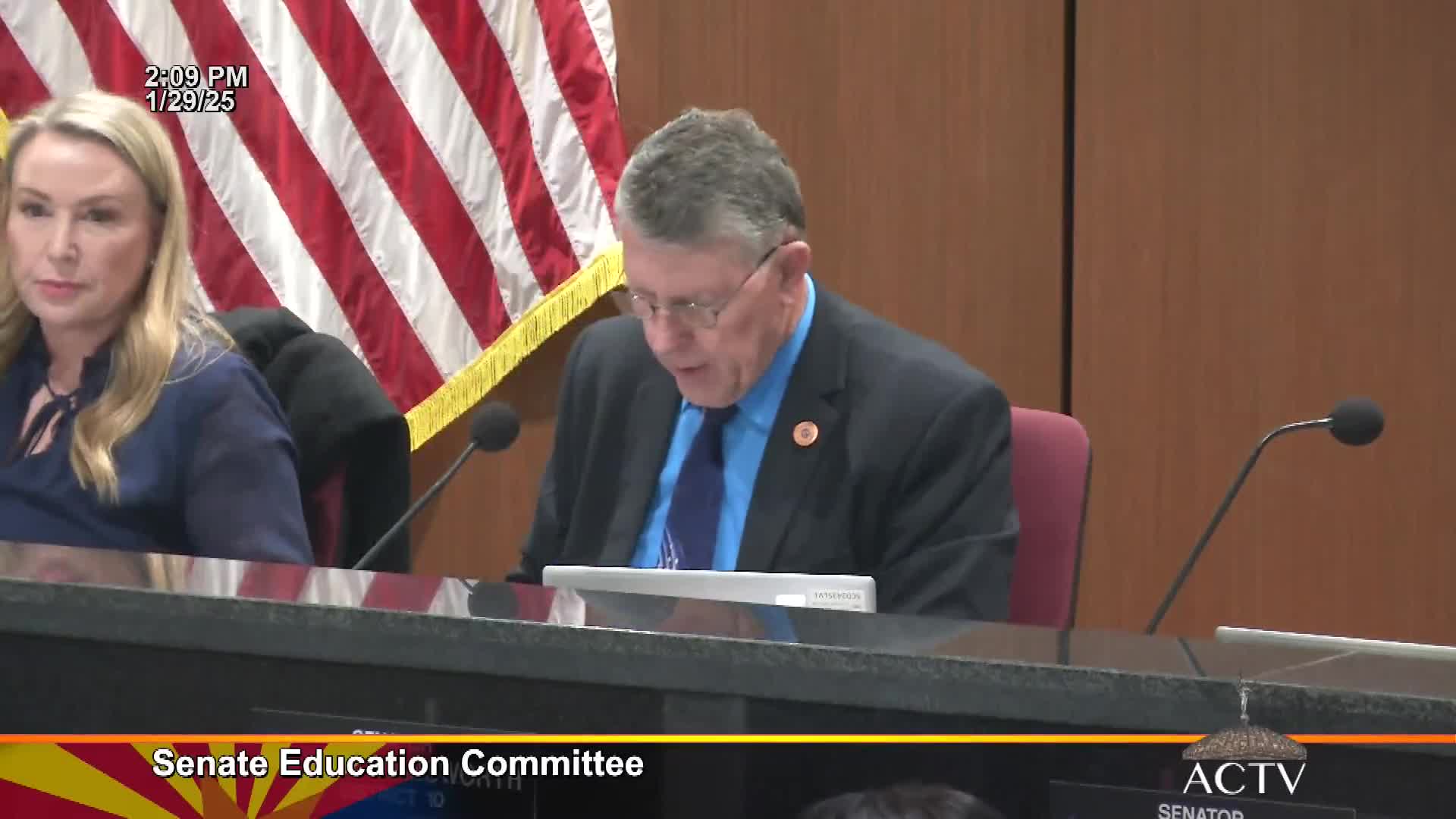
Senate committee advances bill to criminalize providing minors with certain explicit materials at public libraries and schools
Summary
Senate Bill 1090 would expand an existing ban on showing certain explicit materials to K–12 students to cover public libraries and would create a criminal penalty for some negligent referrals to such material.
Senate Bill 1090 would expand an existing prohibition on showing “explicit materials” to minors in K–12 public schools to also cover public libraries supported by public monies and would add a criminal penalty in some cases.
Sponsor Senator Anthony Hoffman (sponsor designation in transcript) told the committee the bill is “about protecting the innocence of children,” and said the measure adds “teeth” to prior law by making a negligent referral to explicit material a felony in specified circumstances. He said the bill uses the same definition of explicit material that appears in the state’s obscenity chapter and would make a class 5 felony for a public school or public library employee or contractor who, with criminal negligence, refers a minor to such material.
The bill text presented by staff says a “public library” includes any library supported in whole or in part by public monies, including city and county free public libraries and the Arizona State Library. The staff summary also describes the criminalization provision for referrals made with criminal negligence.
Opponents at the hearing warned of broad First Amendment and free‑speech consequences. Caitlin Contreras of the ACLU of Arizona said the bill “criminalizes the sharing of age‑appropriate written and visual materials by teachers, librarians, and other educators” and predicted it could chill instruction on sexual health and cause removal of classic literature. Rosie Stewart, senior public policy manager for Penguin Random House, told the committee the bill’s definition of explicit material is “excessively expansive” and could sweep in works of widely recognized literary value.
Committee members questioned application and scope. Senator Miranda asked whether the bill would criminalize conduct when a parent accompanies a child to the library; Hoffman said a parent may choose materials for their own child. Several senators debated whether the statute merely extends prior school‑related prohibitions or whether the proposed criminal penalty was new; Hoffman said his earlier bill in 2022 barred explicit material in schools but did not add the penalty now proposed and that enforcement failures motivated the current measure.
After public testimony and discussion, the committee moved the bill with a due‑pass recommendation. The recorded committee vote was 4 ayes, 3 noes, 0 not voting.
Why it matters: The bill seeks to extend criminal exposure rules to library staff and contractors and to add criminal penalties for some referrals. Supporters cast it as protecting children and ensuring compliance; opponents said it risks censoring educational and literary materials and could have constitutional problems.
Votes at a glance: Committee gave SB 1090 a due‑pass recommendation (vote: 4–3–0).