Get AI Briefings, Transcripts & Alerts on Local & National Government Meetings — Forever.
Senate committee advances bill raising local tax and fee vote threshold to two-thirds
Loading...
Summary
The Arizona Senate committee recommended passage of SB 1013, which would require a two-thirds vote before a municipality or county could increase certain assessments, taxes or fees. Supporters described the measure as a taxpayer protection; opponents said it unduly limits local control and could hinder services in smaller jurisdictions.
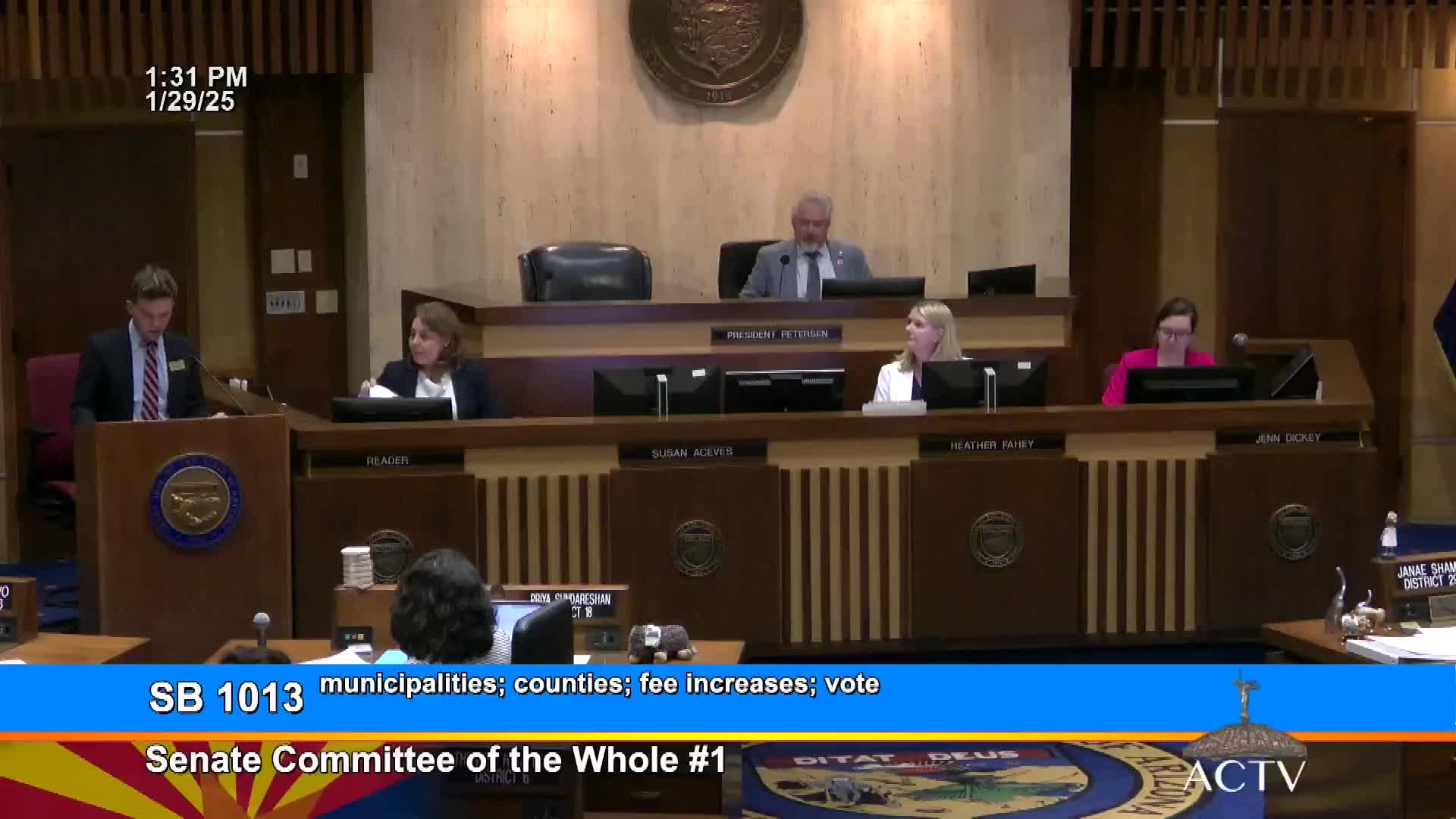
The Arizona Senate committee of the whole recommended passage of Senate Bill 1013 on Jan. 29, 2025, advancing a proposal that would require two-thirds approval before a municipality or county may increase specified assessments, taxes or fees.
Supporters framed the change as an additional safeguard for taxpayers. “It means that they can't change the legislation that's being passed. So the two-thirds requirement — it's statute that cannot be amended by a council,” said President Peterson during committee consideration.
Opponents said the language is overbroad and infringes on local control. Senator Epstein argued the bill “stomps on freedom” and warned it could prevent cities from funding basic services. “This bill would end the freedom of cities to choose whether to have parks or streets repaired,” Epstein said, urging a no vote. Senator Coopee, speaking as a former council member, said the higher threshold could be especially damaging to small or rural municipalities that already face shrinking tax bases.
Committee debate focused on whether the bill's text was narrowly tailored to block only changes to the vote threshold or whether it might also prevent municipalities from adopting procedural rules (for example, public notice requirements or explanations of how a tax would be used). The sponsor responded that the bill is limited to preventing local bodies from changing the statutory vote percentage.
The committee approved a recommendation that SB 1013 do pass; the outcome was taken by voice vote and recorded as the ayes prevailing. The record in the hearing does not include detailed roll-call tallies for the final committee voice vote.
Why it matters: If enacted, SB 1013 would change the legal standard for approving certain local revenue increases and could alter how cities and counties set priorities for local services, especially in small jurisdictions with tighter budgets.
Votes at a glance: Committee recommended SB 1013 do pass (voice vote; tally not specified).