Get Full Government Meeting Transcripts, Videos, & Alerts Forever!
Get email alerts on the Budget topic
No spam. Unsubscribe anytime.
Weston Board of Education reviews FY2026 budget amid questions on capital jumps, insurance and staffing
Summary
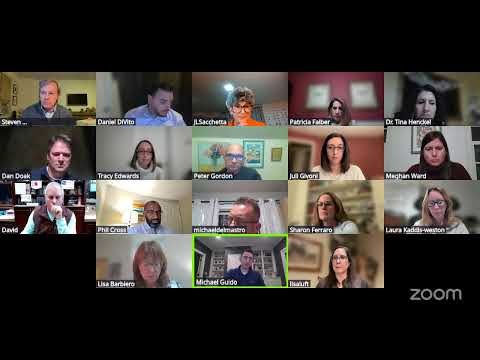
The Weston Board of Education held a Jan. 23 special public forum to review its proposed fiscal 2025–26 budget, focusing on large capital increases, an unsettled health‑insurance estimate and questions about staffing and per‑pupil costs.
WESTON — The Weston Board of Education held a special public forum on Jan. 23 to review the proposed fiscal 2025–26 budget, with members of the public and board members urging more detail on large capital spending items, urging caution about an unresolved health‑insurance estimate and asking for analysis of staffing and per‑pupil costs.
The forum, which the board conducted as a second public comment session on the budget, focused on three recurring concerns: a capital budget the public characterized as higher than in recent years, a health‑insurance cost estimate that remains unsettled and the district’s high spending per pupil and staffing utilization.
Resident Alex Staley opened public comments by challenging the timing and transparency of material changes to the capital plan, saying the district posted revised capital figures late and without explanatory notes. “The budget is too high,” Staley said, identifying a proposed capital total he described as about $3,300,000 and pointing to a single HVAC line that rose from an earlier estimate of about $400,000 to $1,750,000 in the new materials.
The magnitude of that line, and the absence of an explanation in the written materials, underscored broader transparency concerns, Staley told the board: “You’re basically asking the taxpayer to front the bill, not knowing what’s going on with it until later.”
Kelly James, a parent of two elementary‑school students, thanked the board for preserving smaller class sizes in the proposal. “Class size plays such a pivotal role in the quality of education, and I’m so relieved that our district recognizes this,” James said.
Board members spent much of the forum clarifying process and timing. Phil Cross, speaking for district finance staff, said the charter requires delivery of the board’s budget to the Board of Selectmen by Feb. 3, and that the board has historically continued to refine budget details up through the Board of Finance review. Board members were told the Board of Finance schedules a review (noted in the forum as March 5, with March 13 listed as an alternate date) that also includes public comment.
Several board members said they were not yet prepared to vote next week and asked staff for additional documentation before a final vote. Superintendent Barbiero told the board staff would post supplemental materials and additional analyses before the next workshop, including historical enrollment and staffing charts, enrollment projection scenarios and a technology survey correlated to staffing and program questions.
Discussion of operating costs noted the district’s current total budget (as discussed at the meeting) of roughly $61 million and a per‑pupil spending figure the board described as “just north of $30,000 per pupil.” Several members urged staff to return utilization metrics — for example, caseloads for counselors and the number of students served per position — to help the board evaluate whether and where sustainable savings could be found without increasing class sizes.
Board members also raised transportation and long‑term capital concerns. The electrification of the bus fleet was discussed as a future cost that is not yet in the district’s budget because of uncertainty around federal policy, vendor recommendations and facility constraints. District staff said there is no first‑cut allocation for bus electrification in FY26; the board and town must resolve questions about where buses would be housed and charged before accounting for those costs in capital planning.
No formal votes or motions on the budget were taken at the Jan. 23 special meeting. Board members asked staff to provide additional documentation and analysis ahead of another board workshop and the scheduled board meeting where the board may vote on advancing the budget to the Board of Selectmen.
Members of the public who want to comment further were told they may appear at the Board of Education meetings on Jan. 28 and Jan. 30 (if a further session is needed) and at Board of Finance public meetings in March. Staff said they would send the supplemental materials to board members and post them on the budget web page by the next day.