Get Full Government Meeting Transcripts, Videos, & Alerts Forever!
Get email alerts on the Tourism Economic Impact topic
No spam. Unsubscribe anytime.
Arizona Office of Tourism: Visitors drove $29 billion in spending in 2023, agency shifts focus to international markets
Summary
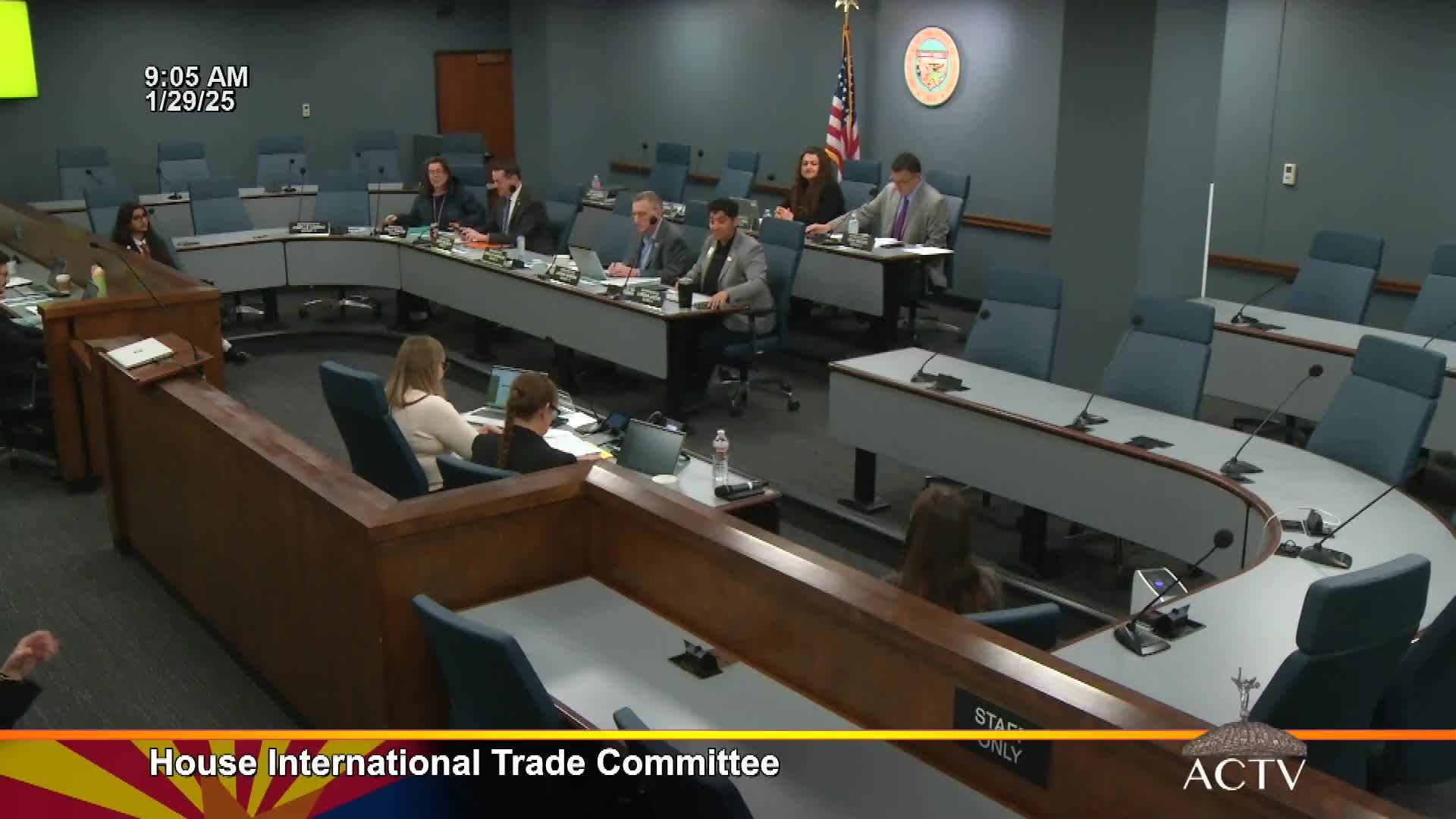
Alex Scalpza, interim director of the Arizona Office of Tourism, told the Arizona House Committee on International Trade that tourism generated more than $29 billion in direct spending and roughly $4.2 billion in tax revenue in 2023; the agency plans to direct more resources to international marketing and air-service development.
Alex Scalpza, interim director of the Arizona Office of Tourism, told the Arizona House Committee on International Trade that tourism generated more than $29 billion in direct visitor spending and about $4.2 billion in state, local and federal tax revenue in 2023.
Scalpza said the industry directly supports about 187,000 jobs and roughly 400,000 additional indirect jobs statewide, and that the office’s mission is “to grow Arizona’s economy through travel and tourism promotion.” She said the office will prioritize international outreach in fiscal year 2026, dedicating half or more of marketing funds to that effort.
Why it matters: Tourism is a statewide economic driver that feeds general fund receipts and local revenues used for essential services, Scalpza told the committee. International visitors tend to stay longer and spend more, she said, and the office argues that boosting overseas travel and air service will increase economic impact beyond the Phoenix metro area.
Scalpza opened with a data caveat: “I also wanna just caveat all the data I talk about today is gonna be in terms of 2023. Our 2024 data will be received this summer.” She summarized the agency’s recent metrics: Arizona welcomed about 45.6 million domestic and international overnight visitors in 2023, including about 4.8 million international visitors who contributed roughly $2.9 billion in visitor spending. International visitation placed Arizona sixth among U.S. destinations for international travelers, the presentation said.
The office emphasized markets and motivators: Mexico and Canada are the largest international markets (about 3.2 million and 822,000 visitors, respectively), and the U.K., Germany and France are the top overseas markets. Scalpza said the office maintains full-time representation in the U.K., Germany, France and Australia and is considering market entry in India given apparent alignment between Arizona’s “personas” (culinary, outdoor adventure, history, health and wellness, multigenerational travel and luxury) and Indian travelers’ top motivators.
Air service and marketing: Scalpza said international flights contributed about $3 billion to Arizona’s economy and noted Phoenix Sky Harbor now serves a record number of destinations. She described the office’s role in air-service development—providing market data, partnering on announcements and targeting marketing dollars to support new routes—and cited Air France’s growing Paris–Phoenix service as a recent success: the flight is scheduled to increase from three to five days a week in May, which Scalpza said is expected to bring $100 million in economic impact.
The office also described marketing results for its “Here You Are” campaign: Scalpza said the campaign influenced about 1.2 million trips and generated roughly $3.1 billion in visitor revenue, with a media investment of about $4.7 million. She reported an advertising return of $654 in visitor spend per dollar invested and a tax return of $51 per dollar invested; she offered to provide the committee a detailed data report on attribution methods when asked how those figures were calculated.
Budget and funding sources: Scalpza told committee members the agency’s operating budget is about $21 million drawn from three buckets: general fund (about $8.2 million), tribal gaming/Proposition 202 (about $11.5 million, restricted to tourism marketing), and Proposition 302 (a Maricopa County voter initiative that yields about $12 million this year, of which the office keeps roughly 10% for statewide marketing while most funds have historically been distributed to destination marketing organizations in Maricopa County).
Rural and tribal outreach: The office described a rural and tribal cooperative marketing program that uses a 50/50 match to extend resources to destination marketing organizations, regional partners and tribal entities; the program has 44 participants, Scalpza said. She also highlighted more than 60 recognized Arizona visitor information centers that provide first-stop services for incoming travelers.
Committee exchange and follow-up: Committee members asked about coordination with other state trade offices, sports-event marketing and whether sports betting has affected tourism revenue; Scalpza said the office coordinates informally with trade offices, is expanding work on youth and amateur sports, and has seen higher revenue since sports betting’s passage though the agency has not directly marketed sports betting. Representatives also requested the agency’s detailed attribution report for the advertising metrics; Scalpza agreed to provide that report.
Scalpza closed by saying the agency is focused on promoting the full state—naming Bisbee, Wickenburg and Arizona’s three AVA wine regions as examples—rather than relying solely on the Grand Canyon.
Looking ahead: Scalpza asked the committee for collaboration on international outreach; members signaled interest. The presentation concluded and the committee moved on to remaining business.