Get Full Government Meeting Transcripts, Videos, & Alerts Forever!
Get email alerts on the Public Safety Children topic
No spam. Unsubscribe anytime.
Committee advances bill to bar public entities from exposing minors to pornographic materials, classify violations as felony
Summary
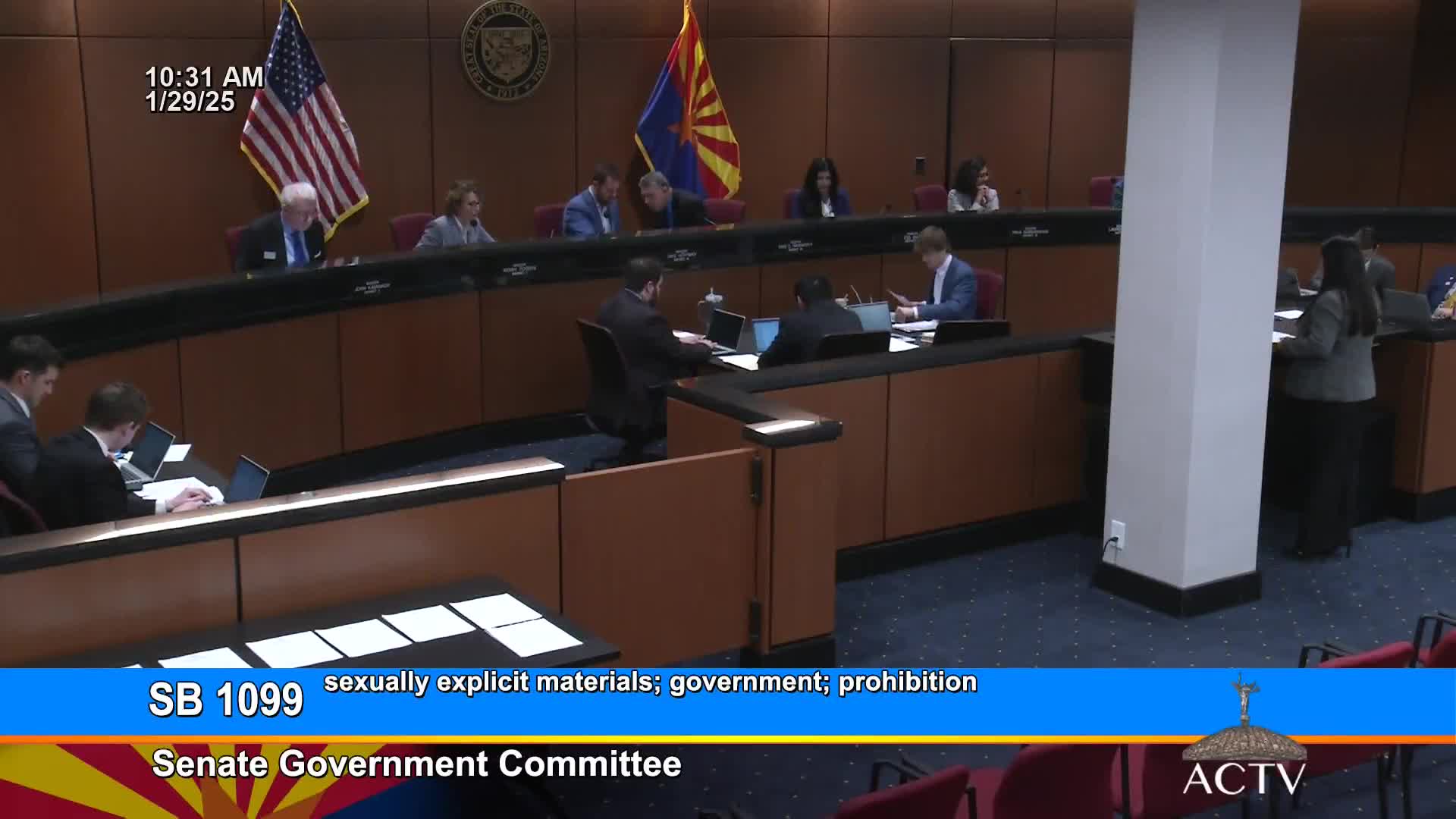
SB 1099 would prohibit state and local governments and their contractors from exposing minors to pornographic materials or using public facilities to film sexual acts; the committee advanced the bill 4–3 after testimony from advocacy groups that urged opposing the bill because of vagueness and possible overreach in public libraries.
The Senate Government Committee gave SB 1099 a due‑pass recommendation after debate about the bill’s scope and implementation. The measure would bar the state, local governments and their contractors from exposing minors to pornographic materials and from allowing public facilities to be used to film sexual acts; the bill classifies violations in the public‑entity context as a felony (as drafted).
Supporters said SB 1099 would protect children from being shown explicit material in government programs, citing prior incidents involving public‑school employees. The sponsor stated that taxpayer‑funded buildings should not be used to film explicit acts. Several senators described the bill as a response to documented cases and an attempt to close gaps outside the school context.
Opponents warned that parts of the bill are vague and could lead to over‑enforcement, especially in public libraries where adult materials are normally available to adults but must be shielded from minors. Gene (as transcribed) Woodbury, representing Planned Parenthood Advocates of Arizona, urged the committee to vote no and said implementation in school libraries has produced over‑enforcement and removal of books that are not pornographic. Woodbury cautioned that the bill’s language could make compliance impractical for librarians and chill access to educational materials.
Committee members asked staff to clarify statutory definitions and whether the existing criminal code defines “explicit acts.” Staff said text for explicit materials was previously defined in Title 15 for school‑related rules and that committee staff would research any remaining statutory definition gaps for “explicit acts.” The sponsor said the language was intended to be narrow and to protect children and public property.
The committee approved SB 1099 by roll call, 4 ayes and 3 nos, and the bill now moves forward. Members voting against raised vagueness and First Amendment concerns; supporters emphasized child protection and the use of taxpayer properties.
(End)