Get AI Briefings, Transcripts & Alerts on Local & National Government Meetings — Forever.
Arizona committee advances bill requiring online age verification for sites with ‘material harmful to minors’
Loading...
Summary
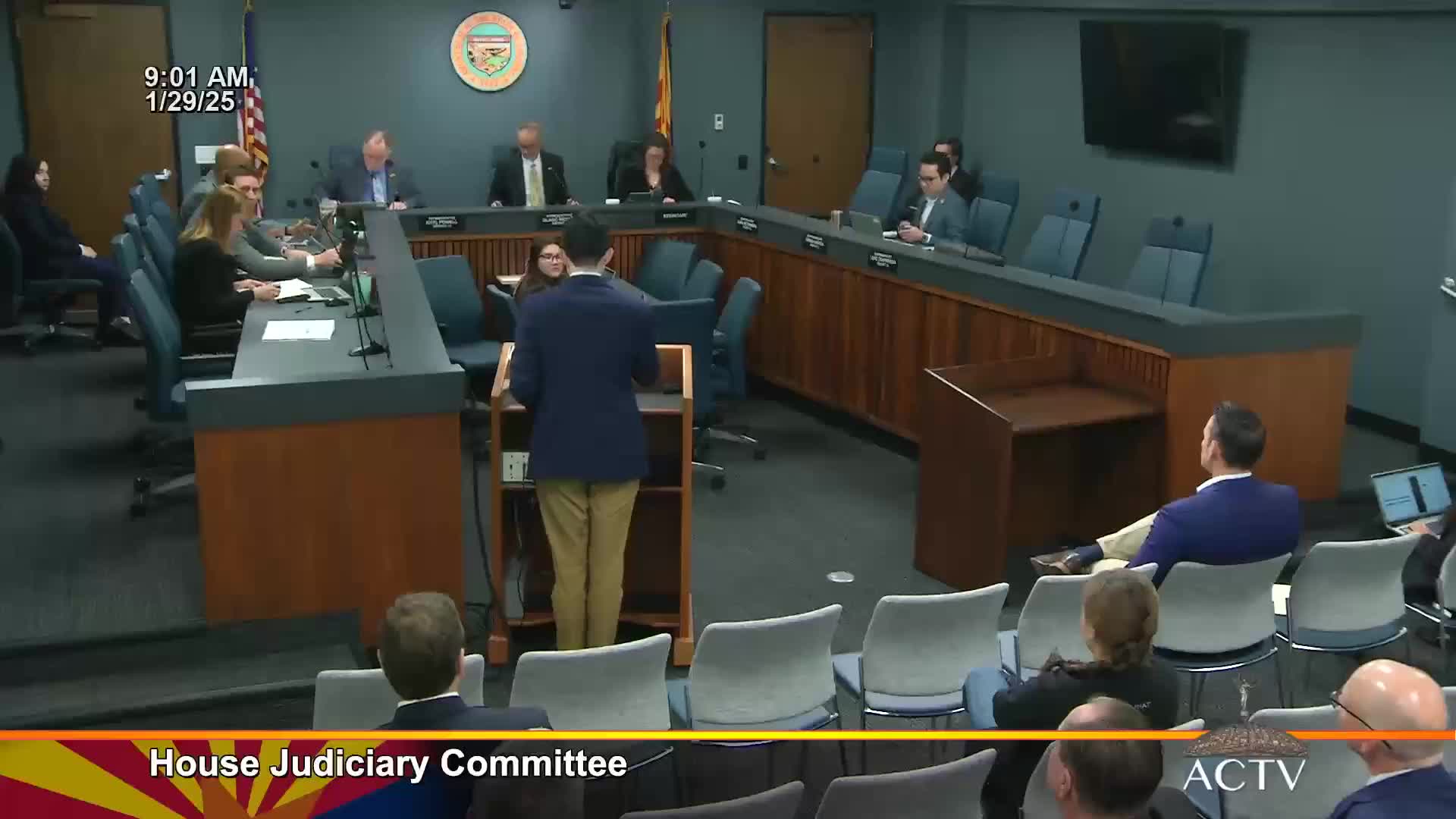
House Bill 2112, as amended, drew hours of testimony and a 6–3 committee vote Friday advancing it to the full House.
House Bill 2112, as amended, drew hours of testimony and a 6–3 committee vote Friday advancing it to the full House.
The bill requires commercial websites that contain a threshold amount of “material harmful to minors” to implement age‑verification measures using government‑issued digital identification or commercial age‑verification systems and bars those verification firms from retaining or transmitting users’ identifying information. The Culligan (committee) amendment that the committee adopted removed a separate requirement for health warnings, tightened restrictions on retention of identifying information and rewrote enforcement to give parents a private right of action to sue for penalties rather than leaving enforcement to the Arizona Attorney General and private “pre‑tam” plaintiffs.
Why it matters: Sponsors said the bill is intended to reduce minors’ access to sexually explicit online material in a way similar to laws banning sale of alcohol or tobacco to minors. Opponents — including privacy and free‑speech advocates and civil‑liberties groups — warned the measure is likely to push users to unregulated or foreign sites, will not meaningfully reduce access, and risks chilling lawful speech and privacy.
Supporters’ case Representative Kuppert, the bill sponsor, told the committee the bill “protect[s] minors from accessing *********** in a similar manner that we protect minors from alcohol, tobacco, marijuana.” He said the bill goes “far, far more than what we currently have in place” by requiring verifiable age checks rather than a simple “Are you 18?” prompt.
Sherry Lopez, a survivor who testified later on other bills during the hearing, spoke in favor of measures to shield children from exposure to harmful material; she argued for age verification as a protection for young people.
Opponents’ concerns Mike Stebayo of the Free Speech Coalition said his organization supports age verification in principle but opposes the bill’s approach. “What we find is that consumers do not comply with this law,” he told the committee, adding that the experience in other states has been that users leave compliant sites and traffic shifts to non‑compliant or illegal sites. He recommended device‑level solutions that verify age once on a device and block access broadly, which he said are more effective and raise fewer constitutional issues.
Marilyn Rodriguez, speaking on behalf of the ACLU (via Bridal Partners), told the committee the bill’s vague and expansive language could sweep in non‑pornographic sites — including reproductive‑health and LGBTQ resources — and “erode privacy rights.” She said the amendment narrowed some concerns but did not eliminate constitutional and vagueness problems.
Constitutional and legal context Witnesses and several members referenced litigation in other states. Committee testimony noted parallel litigation over a Texas law and actions in the 5th U.S. Circuit Court of Appeals; witnesses told the committee the U.S. Supreme Court has heard challenges to similar laws and has not yet issued a final ruling.
Committee action and vote Representative Colligan (amendment sponsor) offered a five‑page amendment that was adopted by voice vote. After debate, the committee voted 6 ayes, 3 nays to give HB 2112, as amended, a due‑pass recommendation.
What the amendment does and next steps The adopted amendment replaces enforcement by the Attorney General or private pre‑tam plaintiffs with a parental right of action to sue for assessed penalties; it removes the bill’s health‑warning requirement and further restricts retention/transmission of identifying information. The bill now moves toward a floor vote with the committee recommendation recorded.
Votes at committee: 6 ayes, 3 nays. (Recorded ayes and nays were entered on the record during the roll call.)
Ending: The bill remains contested. Supporters say it will reduce minor exposure to explicit content; opponents say device‑level approaches and tighter drafting are better ways to protect children without creating broad privacy or free‑speech risks.