Get Full Government Meeting Transcripts, Videos, & Alerts Forever!
Get email alerts on the Ahcccs Speech Therapy Cochlear Implants topic
No spam. Unsubscribe anytime.
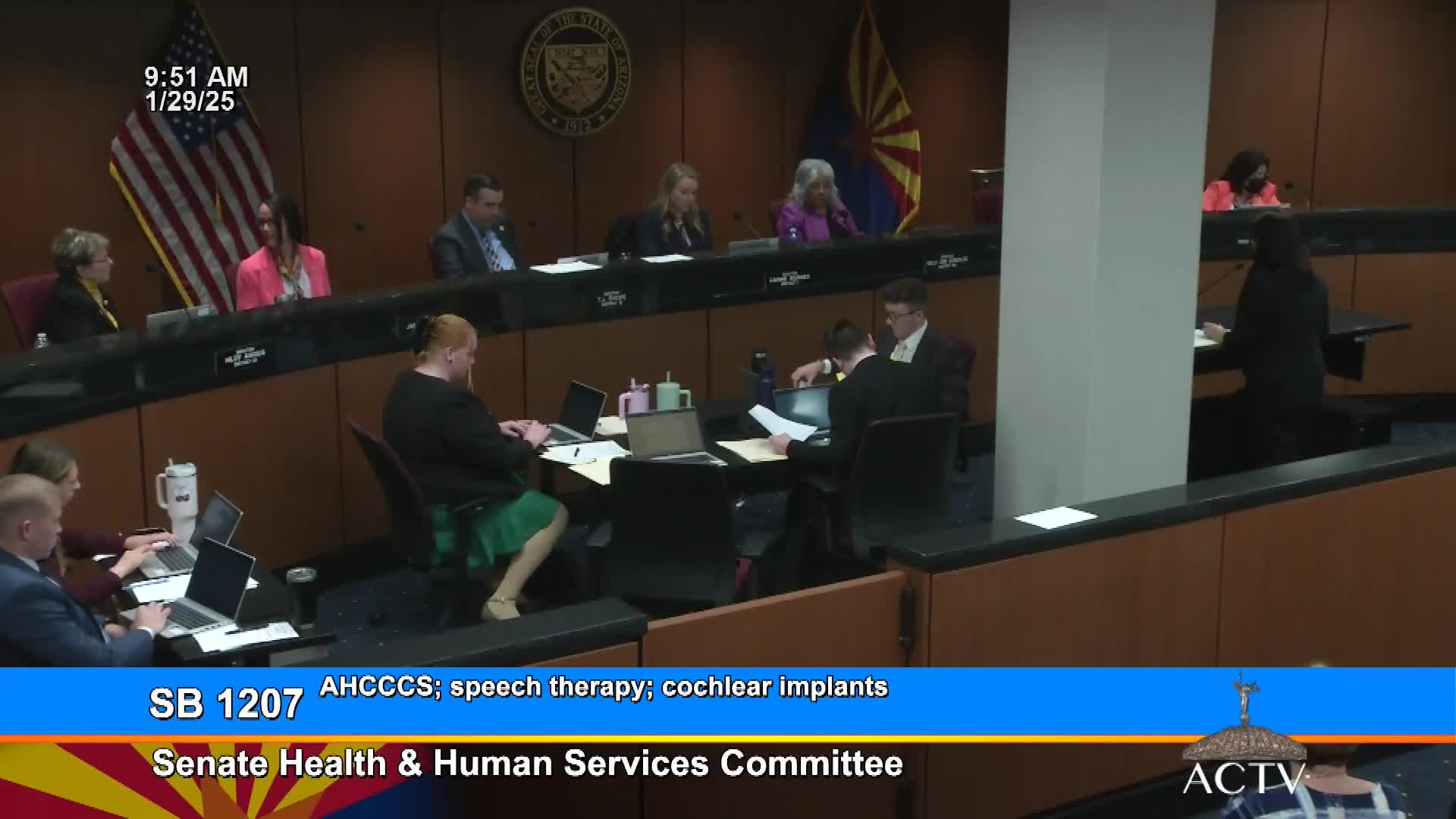
Committee gives due-pass to bill expanding AHCCCS coverage for speech therapy and cochlear implants for adults
Summary
SB 1207 would require AHCCCS to provide outpatient speech therapy services and cochlear implants to eligible persons age 21 and older; proponents said coverage would prevent costly hospitalizations and long-term feeding-tube dependence, while clinicians described clinical and economic benefits
The committee gave SB 1207 a due-pass recommendation after testimony from speech-language pathologists, surgeons and oncologists who described clinical and fiscal benefits of restoring outpatient speech and swallowing coverage and cochlear-implant access for adults on Arizona’s Medicaid program.
Leah Mackie, a speech-language pathologist who specializes in head and neck cancer, told the committee that speech therapy can prevent aspiration pneumonia and reduce hospitalizations and long-term feeding-tube dependence. Mackie provided cost comparisons, saying post-operative feeding-tube costs and related care can far exceed the cost of a short course of therapy. Gary Walker, chief of radiation oncology at Banner MD Anderson Cancer Center, and Dr. Sean Stevens, an ear-nose-and-throat surgeon at Barrow Neurological Institute, both urged coverage because the therapies and implants can restore swallowing, speech and hearing and thereby improve employment outcomes and quality of life.
Proponents said current AHCCCS rules do not cover outpatient speech therapy for adults 21 and older regardless of medical necessity, and that cochlear implants for adults previously were covered prior to cuts in the aftermath of the 2008–2010 budget reductions. Testimony noted clinical guidelines (National Comprehensive Cancer Network and other clinical standards) that support therapy and interventions for eligible patients.
Committee action: the vice chair moved SB 1207 with a due-pass recommendation; the roll call recorded 7 ayes, 0 noes and 0 not voting. Supporters framed the proposal as both clinically indicated and cost-saving over time for conditions that, left untreated, can lead to emergency care and prolonged support services.
Ending: SB 1207 advanced from committee with a due-pass recommendation; supporters urged inclusion of coverage and funding in subsequent budget and policy discussions.