Get Full Government Meeting Transcripts, Videos, & Alerts Forever!
Get email alerts on the Transportation Vmt topic
No spam. Unsubscribe anytime.
Arizona Senate committee advances bills to ban vehicle‑miles‑traveled taxes and mileage tracking
Summary
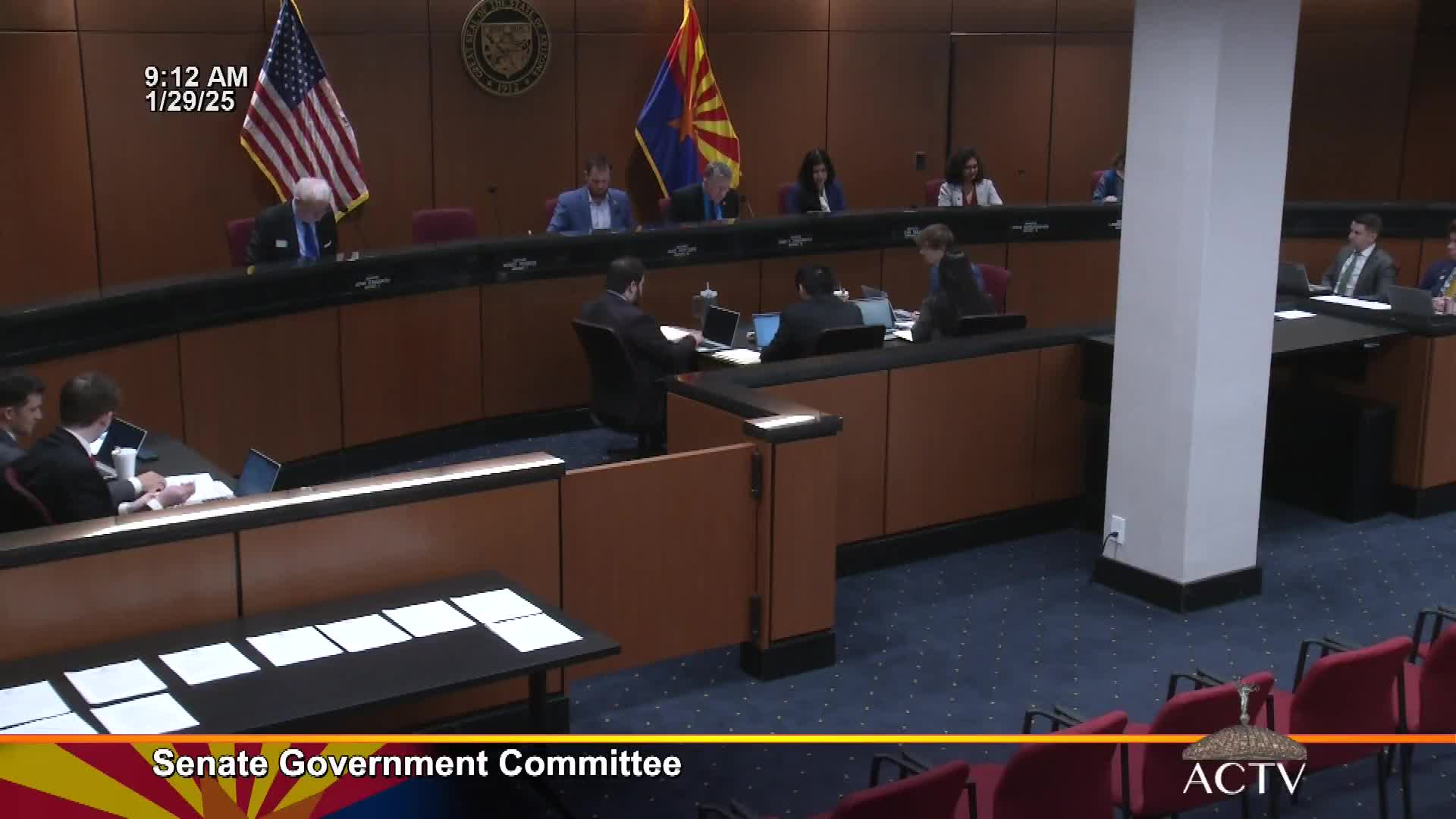
Senate Government Committee members voted to give SB 1092 and SCR 1004 a due‑pass recommendation after adopting sponsor amendments; each measure would bar VMT taxes and certain mileage tracking and passed the committee 4–3.
Senate Government Committee members voted to give a due‑pass recommendation to Senate Bill 1092 and Senate Concurrent Resolution 1004, measures that would prohibit state and local governments from adopting vehicle‑miles‑traveled (VMT) reduction targets, imposing taxes or fees based on miles driven, or using systems that track an individual’s vehicle miles without consent. The committee adopted a two‑page amendment to each measure before advancing both, and each passed the committee by voice roll calls that recorded 4 ayes and 3 nos.
The bills were introduced together as “essentially mirrors” and the sponsor described them as protections for the “freedom to move.” The sponsor said the measures would prevent public entities from “tracking or taxing the miles that you travel” and framed the measures as a safeguard against what he described as government interventions to change individual behavior. He also referenced other jurisdictions such as San Diego as places where VMT proposals had been discussed.
Environmental and public‑health groups and local advocates urged the committee to oppose the bills. Sandy Barr, chapter director for the Sierra Club’s Grand Canyon chapter, told the committee that travel‑reduction measures are part of state implementation plans to meet air quality standards and that removing VMT targets would shift the burden of reducing pollution to other sectors. Barr said reducing vehicle travel can help lower ozone levels and improve public health, particularly for children, the elderly and people with respiratory illness: “We encourage you to choose clean air and public safety, and to oppose both Senate Bill 1092 and SCR 1004.”
Vania Guevara (as transcribed), representing a community group, and Antonio Ramirez, political and policy director for Rural Arizona Action, testified in opposition to the bills and argued that denying local governments tools to plan for and reduce travel could limit options for people without vehicle access and hinder funding approaches for rural roads. Ramirez said VMT fees are a fairer long‑term user fee given increasing fuel efficiency and electric vehicles.
Proponents told the committee the measures protect personal privacy and economic freedom. Amy Yantez of the Arizona Free Enterprise Club described the bills as a “Freedom to Move Act” and framed VMT proposals as intrusive and regressive; she urged passage and a ballot referral for the constitutional amendment.
After public testimony the committee adopted the sponsor’s two‑page amendments to both measures and voted them out of committee by recorded roll calls. The committee chair announced the votes: SB 1092 as amended and SCR 1004 as amended each received a due‑pass recommendation by a committee vote of 4 ayes, 3 nos.
Votes at a glance: - SB 1092 (prohibit VMT reduction targets, VMT‑based taxes/fees, and mileage tracking by public entities): amendment adopted; bill advanced 4–3. - SCR 1004 (constitutional referral to prohibit VMT taxes/fees and tracking, subject to voter approval): amendment adopted; resolution advanced 4–3.
What the measures would do: SB 1092 would bar state and political subdivisions from considering or establishing vehicle‑miles‑traveled reduction goals, from imposing a tax or fee based on vehicle miles traveled, and from tracking person‑level vehicle miles by odometer readings, cameras or third‑party means that allow mileage tracking; the committee amendment adds several exemptions. SCR 1004 would refer a constitutional prohibition to voters with similar prohibitions and exemptions and would require voluntary consent for any program that monitors or limits VMT.
Next steps: Both measures advanced from committee and, if they continue to pass later committees and both chambers, SCR 1004 would require voter approval to amend the Arizona Constitution. The committee record shows differing views on policy tradeoffs: supporters focused on privacy and individual liberty; opponents highlighted air quality planning, public health, and local planning tools.
(End)