Get Full Government Meeting Transcripts, Videos, & Alerts Forever!
Get email alerts on the Human Equity And Diversity topic
No spam. Unsubscribe anytime.
Waverly Human Equity and Diversity Commission outlines outreach, listening sessions and events
Summary
At the Jan. 27 City Council study session, the Human Equity and Diversity Commission reviewed last year’s activities—book discussions, neighborhood block parties, student welcome events and Juneteenth outreach—and previewed listening sessions, naloxone training and community events for 2025.
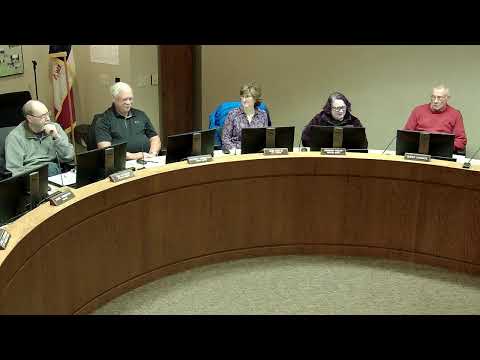
Dennis Hanson, chairperson of the Human Equity and Diversity Commission, presented the commission’s annual report to the City Council during the Waverly study session on Jan. 27, 2025.
The commission described four pillars—education, connection, collaboration and advocacy—and summarized 2024 work including book discussions, workshops, neighborhood block parties and outreach events. Commissioners also outlined plans for 2025: a series of listening sessions on social isolation and loneliness, a Pathways partnership to provide naloxone training, a glow-float pride event, and a variety show during Heritage Days in Coleman Park.
Hanson framed the commission’s mission in civic-growth terms: “Our vision … is to strive for a thriving community where all people can feel safe, welcomed, and valued, and can expect to be embraced in their uniqueness with equitable access to all of Waverly's opportunities.” He said the commission uses that vision to guide collaboration, advocacy and programming.
Under the education pillar, commissioners said they host regular book discussions and occasional workshops to build public understanding. The commission chose the book Unrig for a recent discussion; commissioners noted the book shifted partisan late in the text but said the meeting still prompted useful conversation. A separate workshop led by commission member Shar Rorta offered free instruction on caring for Afro-textured hair for caregivers.
On connection, the commission reported six neighborhood block parties organized with the public library in 2024, and described a collaboration with Wartburg College to run an international student welcome scavenger hunt in Coleman Park. For Juneteenth, the commission staged a scavenger hunt that highlighted five community members who identify as Black; participants followed poster clues and could claim refreshments at the farmers market.
Ashley Smiley, who is leading the social loneliness and isolation project, said the initiative will gather ground-level input through listening sessions. “The heart of the project … is we’re building connected communities,” Smiley said. The commission plans one two-hour listening session in council chambers for interested council members and staff, and then multiple small-group listening sessions in the community between mid-April and the end of May; commissioners said they expect to report findings back within a year.
Commissioners also described a planned Pathways training on naloxone to include background on opioid overdose and hands-on instruction; attendees will be able to take a naloxone kit home. The training was scheduled for Feb. 18 at the library.
Commission members repeatedly described their work as volunteer-driven and said staffing and volunteer capacity limit how many initiatives they can run. Hanson asked council members and staff to refer residents with interest in volunteering or collaborating. Several council members responded with praise and said the commission’s focus on community connection helps the city welcome people from diverse backgrounds.
The commission requested ongoing communication with council members and invited them to the planned listening session; commissioners said the sessions are intended to surface assets and barriers to connection and to identify community groups that are not currently engaged.
The council took no formal vote on the report during the study session; commissioners described plans and sought council engagement and referrals.