Get Full Government Meeting Transcripts, Videos, & Alerts Forever!
Get email alerts on the Information Technology Strategy topic
No spam. Unsubscribe anytime.
State IT strategy board frames near-term priorities: broadband, citizen portal, cybersecurity and AI
Summary
Members of the state Information Technology strategy board said they will focus in the coming year on expanding affordable connectivity, building a single citizen-facing portal, strengthening cybersecurity and preparing for artificial intelligence, while pressing for better procurement, shared services and clearer statewide IT spending data.
The state Information Technology strategy board said on Friday it will concentrate its near-term work on expanding affordable broadband access, creating a single statewide portal for citizens, and tightening cybersecurity — and that artificial intelligence (AI) and procurement reform would be high on its list of follow-ups.
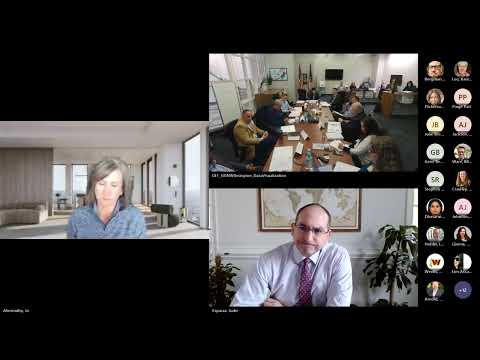
The board discussed its priorities during an extended framing session led by the board chair, Jeff, who said the group’s purpose is to “provide advice and guidance to ensure excellence in our IT initiatives.” He told members the board should emphasize practical deliverables in the coming year rather than long-range plans.
Tina, a board member, outlined three priorities she wanted the board to tackle immediately. “We have to get connectivity that’s affordable to all parts of every North Carolinian because that sets the foundation from an education perspective, from a health care perspective, for equitable access,” she said. She also urged a consolidated online portal so “all of your information is in 1 spot,” and listed cybersecurity as the third core priority.
State Auditor, speaking for the auditor’s office, urged more statewide cooperation on common enterprise tools and data storage. “It would be very helpful to have a statewide strategy for simple enterprise utilization,” he said, adding that quicker, standardized access to agency data would speed audits and make auditors more productive.
Jeff framed the board’s role as strategic and oversight-focused rather than operational: the body will not run projects but is expected to review and guide DIT (Division/Department of Information Technology) priorities, identify where to apply limited funds, and use its relationships to push priorities to the governor’s office and the General Assembly.
Secretary Piccione, who represents the executive branch on the board, said the board’s communications to the governor should flow through her office while also cautioning that the board must avoid running into other executive-level efforts. “I don’t see us — there’s no caucus with the governor,” she said, adding that the board and DIT should coordinate so their work does not conflict with existing executive initiatives.
Members discussed AI as an urgent, cross-cutting topic. Several board members and staff noted the proliferation of AI-related bills in other states and signaled intent to educate legislators and the public about what AI tools mean for state government and cybersecurity risk.
Procurement, shared purchasing and the lack of a single, reliable figure for statewide IT spending drew sustained discussion. Jeff said his past effort to compile statewide IT spending showed a much larger total than DIT’s budget suggests and that “we’re well over $3,000,000,000” in aggregate IT spending, though he acknowledged that a formal, validated total does not yet exist. The board flagged opportunities to leverage enterprise licensing and discounts and to reduce duplicative purchases, while recognizing the need to balance centralization with agencies’ operational needs.
Board members proposed creating standing committees and smaller work groups to advance specific priorities — for example, cybersecurity and digital transformation standing groups and potential standing work or committee focused on AI. Jeff asked members to propose committee preferences and to identify work groups they would like to lead or join.
Why it matters: Board members said they want the group to be a visible, data-driven advocate for major statewide IT investments and policy changes to improve service delivery and security. The board plans monthly meetings, targeted work groups, and regular updates to the legislature and governor’s office to build credibility for its budget and policy requests.
Looking ahead: Members asked staff to provide briefings at future meetings on the state’s current innovation resources, enterprise architecture and the existing population of agency CIOs and shared services so the board can identify specific, achievable pilots and budget requests.