Get Full Government Meeting Transcripts, Videos, & Alerts Forever!
Get email alerts on the Land Bank Mou topic
No spam. Unsubscribe anytime.
Commission deadlocks on $2 million land‑bank MOU; sends proposal back for revision
Summary
The commission debated how $2 million in American Rescue Plan Act funds should be directed through the Albany‑Dougherty Land Bank for a homeownership incentive program. Commissioners split over whether to restrict funds to the medical district and two neighborhood clusters or leave the allocation broader; after substitute motions and debate, the
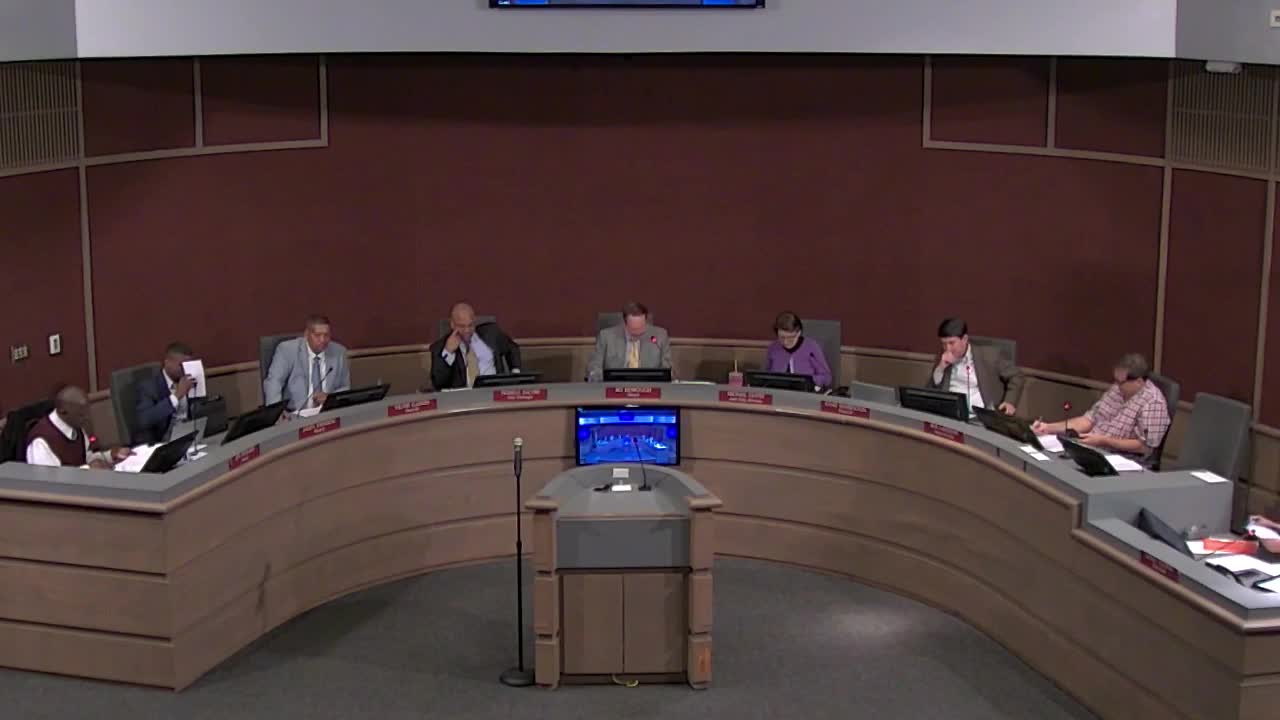
The Albany City Commission on Tuesday did not adopt a memorandum of understanding (MOU) that would direct $2 million in American Rescue Plan Act funds to the Albany‑Dougherty Land Bank for a homeownership incentive program.
City staff presented an MOU drafted to support Resolution 24R187, which would make $2 million available for land-bank activities intended to spur homeownership — including property acquisition, down‑payment assistance and incentives tied to city‑owned investments. At a work session staff reported that the original land-bank proposal would prioritize projects “near city‑owned assets and investments.”
During the commission meeting commissioners debated two options: leave the language broad so the funds could be used near any city investments, or explicitly split the funds so 50% supported development in the medical district and 50% supported Ragsdale/Driscoll and nearby areas. Supporters of the latter said the medical district is a strategic priority where public investment could unlock new housing and that Ragsdale and Driscoll are areas recently targeted for improvements.
City Attorney Miss Custer and staff explained the practical mechanics: the land bank would administer award procedures and drawdown requests, with standard reporting to the city. Staff also said the MOU’s original language was designed to avoid unduly restricting where buyers or builders could use incentives, while ensuring funds support neighborhoods adjacent to city investments.
Commissioners repeatedly referenced prior planning work on the medical district and the presence of developers expressing interest in city‑owned lots. Some commissioners argued the money should be tightly targeted to get projects started in specific districts; others argued that handing the land bank too many constraints would slow deployment and limit flexibility for developers across neighborhoods.
After discussion Commissioner Howard offered a substitute motion that would split the funds (50% medical district, 50% Ragsdale/Driscoll). Commissioners voted on the substitute and then on the broader motion; neither produced a binding MOU amendment. The substitute motion failed in roll call, and commissioners ultimately directed staff to return to the land bank with revised language for further consideration.
Commissioners and staff noted practical matters: the MOU term is 18 months and can be extended or renegotiated if funds are not spent in the period. Staff said developers and city housing partners have expressed interest in several city parcels (including River Road and lots identified near Ragsdale/Driscoll) and that some have indicated readiness to proceed if incentives become available.
No funds were disbursed at the meeting; instead the commission asked staff to work with the land bank on clearer guardrails and return a revised MOU for a future vote.