Get Full Government Meeting Transcripts, Videos, & Alerts Forever!
Get email alerts on the Housing Incentives topic
No spam. Unsubscribe anytime.
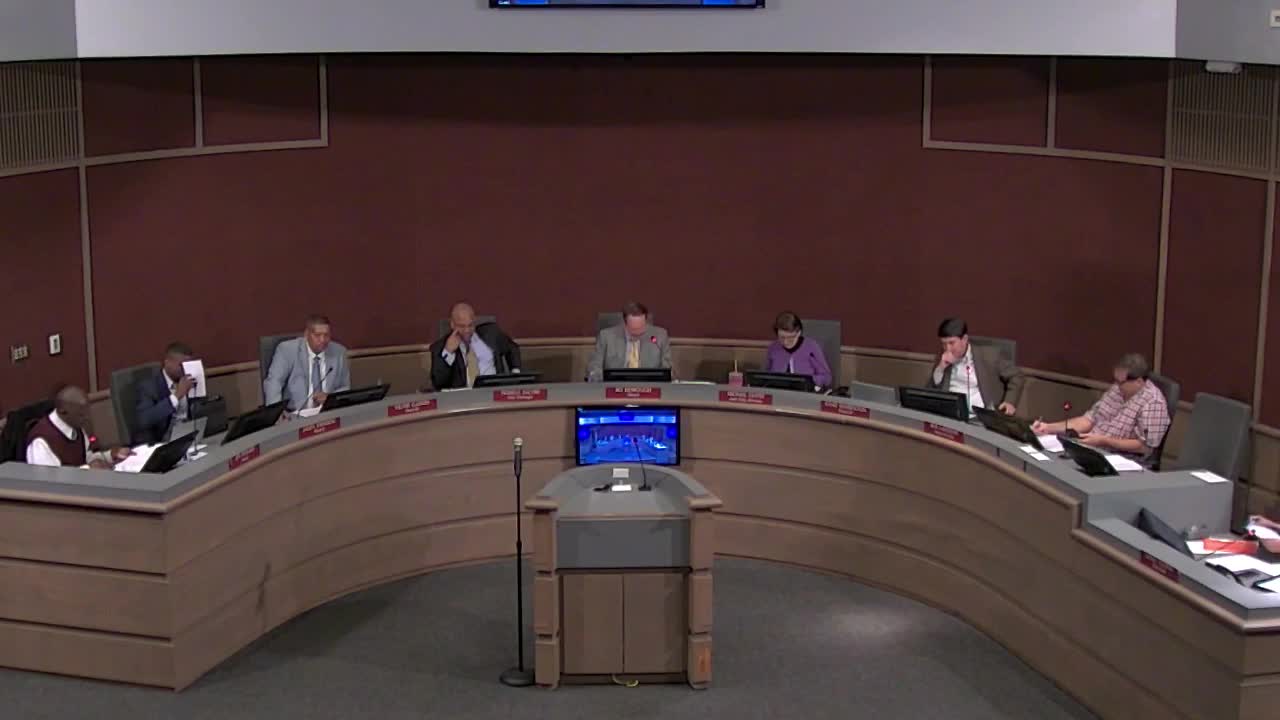
Albany commission declines final vote on $2 million land-bank MOU, asks staff to renegotiate details
Summary
The commission asked staff and the Albany-Dougherty Land Bank to return with clarified terms after commissioners split over whether to earmark $2 million in ARPA funds for the medical district or to keep the appropriation broader; a substitute motion to split funds 50/50 failed and the item was sent back to the land bank for revision.
The Albany City Commission decided against a final vote on a proposed memorandum of understanding (MOU) with the Albany-Dougherty Land Bank that would make $2 million in federal American Rescue Plan Act funds available for a home-ownership incentive initiative.
Commissioners debated whether to require that 50% of those funds be used in the medical district and 50% in the Ragsdale and Driscoll Park area, or to leave the city funds available more broadly near city-owned assets and investments as the original MOU proposed. After extended discussion and a substitute motion to divide the funds 50/50 failed, the commission instructed staff to return with revised language and additional guardrails.
Why it matters: Staff said the land bank MOU was intended to help generate homeownership — down-payment assistance, support for new construction, or other incentives — in areas near city investments so housing and public improvements reinforce one another. Some commissioners argued the medical district requires focused incentives to catalyze dozens of small, affordable single-family homes; others warned the city should not delegate programmatic control without stronger conditions.
What was discussed: City Attorney counsel and staff described the original MOU as written to focus spending in proximity to city-owned facilities and investments while allowing flexibility across multiple neighborhoods. Commissioners asked for clarity about whether the land bank would spend funds only on land-bank-owned parcels, whether the money could be used for in-kind contributions (for example, city-owned lots), and whether the 18-month term in the draft was sufficient.
Several commissioners urged a more prescriptive approach that would identify priority parcels and link incentives to concrete construction commitments from developers. Staff said developers are already in discussions about several city-owned lots and that the land bank has interest from private developers, but commissioners sought stronger guarantees and reporting requirements before transferring funds.
Decision and next steps: The commission voted to send the draft MOU back to the land bank for revision and to return to the commission with clearer terms, including geographic priorities and program guardrails; the commission did not adopt the MOU at the meeting.