Get Full Government Meeting Transcripts, Videos, & Alerts Forever!
Get email alerts on the Appeal Mootness Structure Drainage topic
No spam. Unsubscribe anytime.
Gorge Commission denies motion to dismiss appeal, keeps dispute over drainage ditch and consent decree alive
Summary
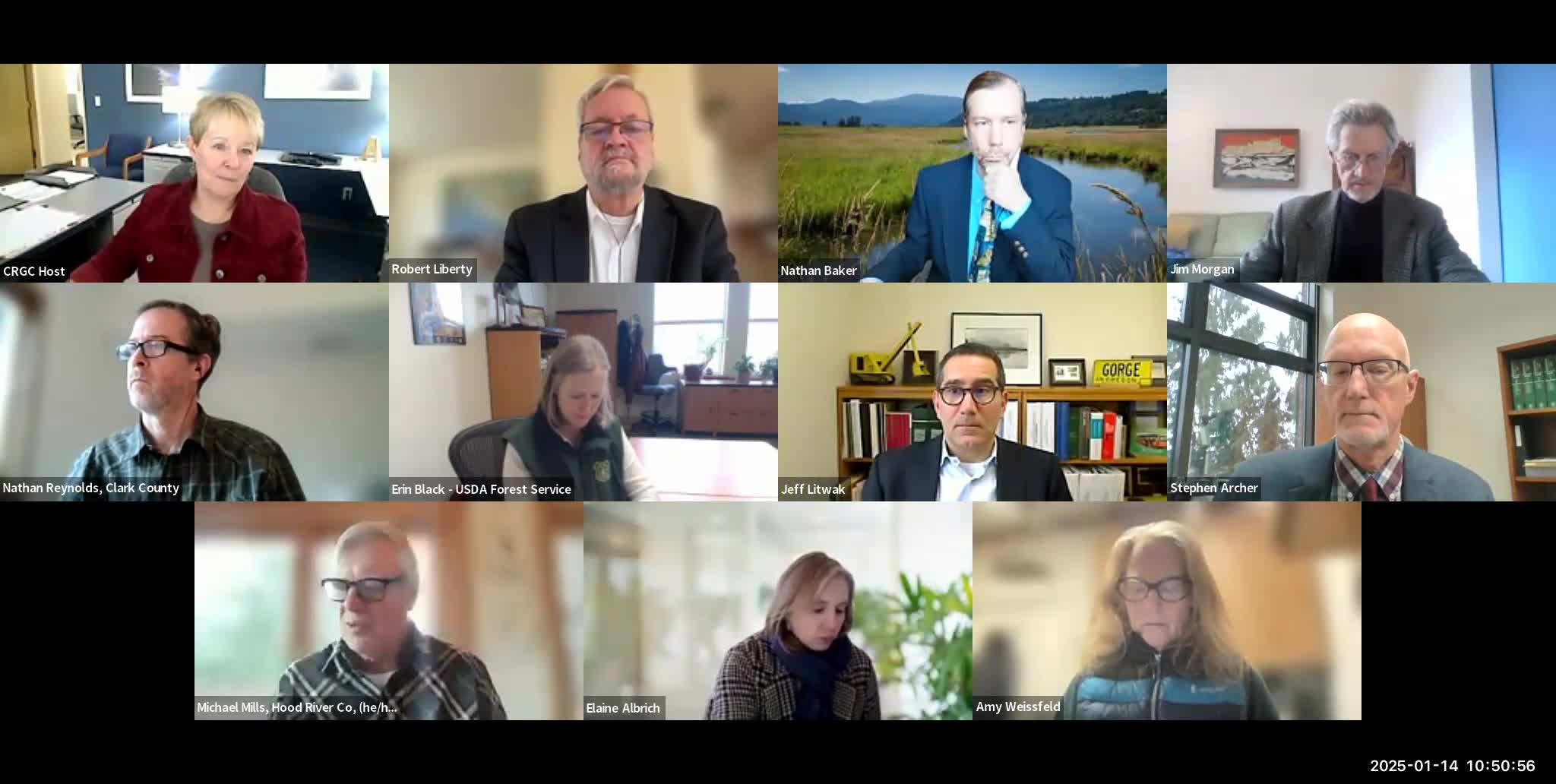
The Columbia River Gorge Commission voted 8-3 on Jan. 11 to deny a motion to dismiss an appeal of Clark County’s land‑use denial, keeping live questions about whether an unpermitted drainage ditch and related stormwater facilities qualify as a “structure” under county code and whether a 1997 consent decree prevents the case from becoming moot.
The Columbia River Gorge Commission voted 8-3 on Jan. 11 to deny a motion to dismiss an appeal challenging Clark County’s denial of a mining-related land-use application, keeping the case alive and allowing commissioners to consider whether the commission should apply a public‑interest exception to mootness.
The action matters because the appeal raises two recurring issues in the Gorge: whether an unpermitted drainage ditch and associated stormwater facilities must be treated as a “structure” in the county’s content requirements for site plans, and whether a 1997 consent decree concerning earlier work on the property keeps the dispute from becoming moot.
Commissioner Patrick Liberty, who moved to deny the motion to dismiss, argued the commission should decide the legal question about the meaning of “structure” and said the record, including a 1997 consent decree, shows a long‑running dispute that could recur in future permitting. “The record has our consent decree from 1997, and its relevance was debated,” Liberty said, and later argued the hearing examiner “erred in interpreting the code in finding that the drainage ditch was not an existing structure on the undisputed facts in the record.”
Commission legal counsel Jeff Litwack told commissioners they have discretion: they may dismiss the appeal, decide assignments of error, or—if they find the case is moot—retain and decide it under a public‑interest exception. Litwack cited prior case law and told the commission it could frame guidance within its authority. “If you feel that guidance would be appropriate, you can do that. You can find that this case satisfies the public interest exception to mootness,” he said.
Several commissioners flagged enforcement history and practical monitoring challenges. Commissioner Liberty read from the Clark County hearing examiner’s decision describing an email from county code administration director Mitch Nichols that said county code enforcement staff lack specific training and resources to confirm compliance with surface mining conditions. The hearing examiner also noted prior fines totaling roughly $200,000 and found some on‑site improvements were made after flood events.
Opponents and supporters of keeping the appeal alive framed their views differently. Commissioners who supported denial on mootness said the dispute involves public interests and is likely to recur—citing both the pending pre‑application and past appeals—so the commission should resolve the legal questions now to give guidance to county officials. Those who opposed using commission time to revisit the county’s interpretation urged deference to the hearing examiner’s factual application and warned against setting a precedent of re‑litigating county fact‑finding.
The commission explicitly referenced two court decisions as governing tests for the public‑interest exception—Sorensen and Hernandez v. City of Kent—and the Norway Green proceeding, a prior commission decision that was upheld by Clark County Superior Court and was cited as precedent for retaining moot issues when substantial public interests continue.
The formal vote to deny the motion to dismiss passed 8‑3. Roll call as read on the record: Brennan Bissle (no); Fowler (no); Liberty (yes); Morgan (yes); Pitts (yes); Reynolds (yes); Thompson (no); Weisfeld (yes); Miller (yes); Aldridge (yes); Chair Mills (yes). After extended deliberation, the commission also voted 8‑3 to continue the remainder of the hearing and deliberations to its regular meeting on Feb. 11, 2025.
Chair Mills closed the session by reminding commissioners not to discuss the matter outside the public hearing. Counsel Litwack said staff would circulate a written staff report and reminded commissioners they should not engage in ex parte communications while the matter is continued. The commission’s Feb. 11 meeting will resume deliberations on both the standing and the substance of the appeal; parties indicated availability for that date.
The record before the commission includes the Clark County hearing examiner’s decision, briefing that cites Sorensen and Hernandez, a 1997 consent decree, and submitted pre‑application materials. Commissioners asked staff and counsel for additional references and for clearer transcripts and records ahead of the next session.
The commission’s next public action on this appeal is scheduled for Feb. 11, 2025, when members will continue deliberations and may vote on assignments of error, standing, or issue guidance interpreting county code.