Get Full Government Meeting Transcripts, Videos, & Alerts Forever!
Get email alerts on the Zimmerli Mine Drainage Appeal topic
No spam. Unsubscribe anytime.
Columbia River Gorge Commission hears appeal over Zimmerli mine drainage, disputed water resources
Summary
The Columbia River Gorge Commission convened oral arguments on an appeal of a Clark County hearing‑examiner decision over a proposed Zimmerli‑property mining operation, with central disputes about an unpermitted drainage ditch and whether multiple on‑site seeps and springs constitute protected water resources that the applicant needed to include and evaluate in its permit materials.
The Columbia River Gorge Commission convened an oral-argument hearing on an appeal of a Clark County land‑use decision on a proposed mining operation at the Zimmerli property, focusing on whether an unpermitted roadside drainage ditch and multiple on‑site seeps and springs must have been included and analyzed in the applicant’s land‑use filings.
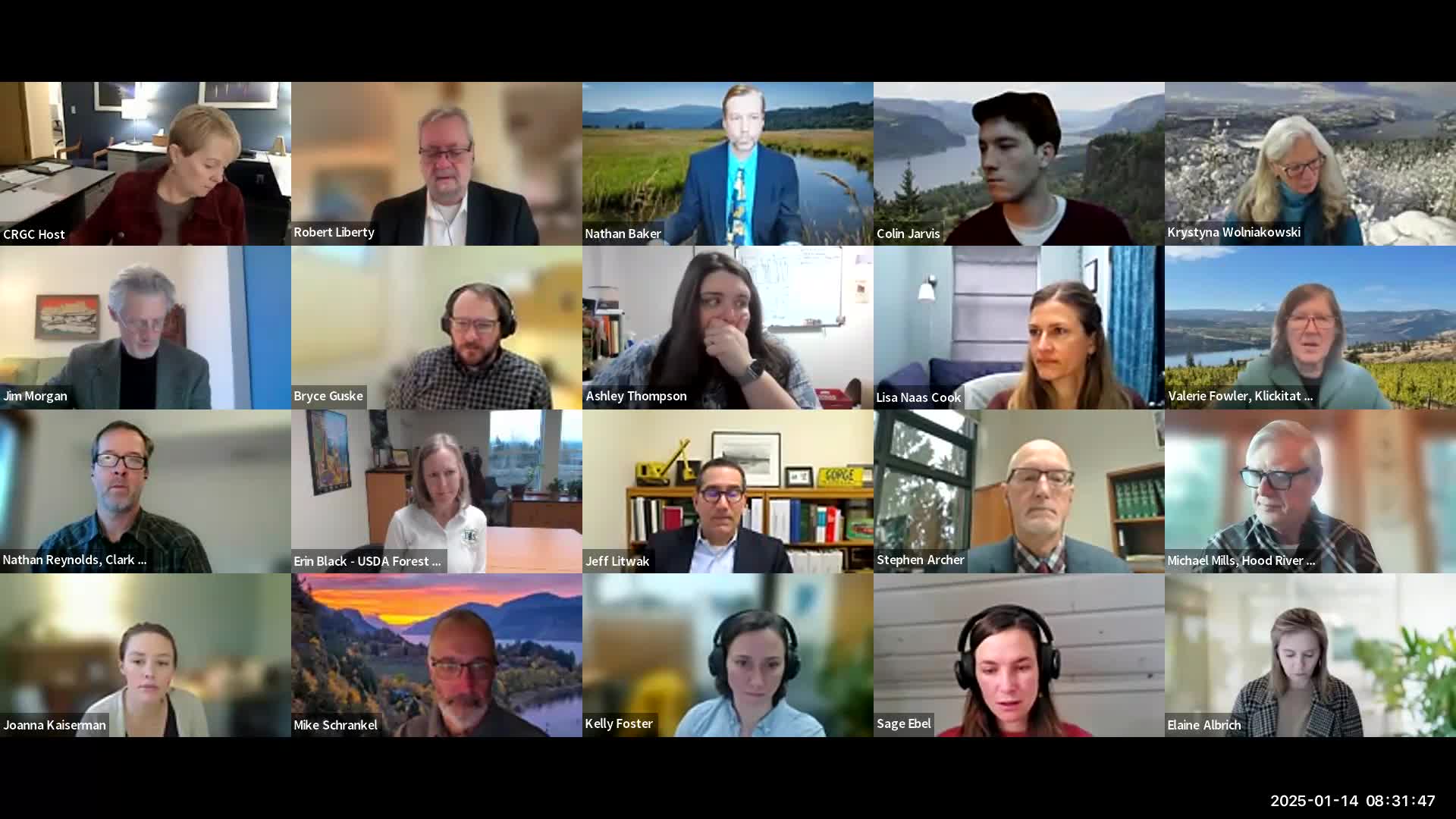
Nathan Baker, senior staff attorney for appellant Friends of the Columbia Gorge, told the commission that "the ditch was constructed without the required land use permits" and that the ditch and related drainage features were hydrologically connected to the mine and therefore should have been treated as structures and included in the application. Baker cited a 1997 consent decree and maps in the record he said show the ditch, culverts and ponds are part of a single drainage system that has carried muddy mining water off site in the past.
Baker said the hearings‑examiner decision erred in several ways: treating the drainage features as "existing" so they need not be part of the application; concluding the stormwater facilities are "not structures" under the Scenic Area rules; and relieving the applicant of the obligation to provide the plans and drawings required by the National Scenic Area and Clark County application rules. He also argued the examiner improperly shifted the burden to appellants to show whether on‑site seeps and springs generate protected water resources such as wetlands or ponds, when that burden lies with the applicant.
Jamie Housley, who identified himself as the applicant’s representative and attorney, said the underlying land‑use application was denied by the hearings examiner and therefore "this thing needs to be dismissed because it is moot." Housley and Clark County deputy prosecuting attorney Steve Archer argued the appeal lacks a live controversy: the application at issue was denied, any future application is a separate matter, and a remand would be inappropriate. Archer said the county limited its briefing to standing and mootness and told the commission it could provide interpretive guidance if it chose, but that factual issues belong to the county record.
Commissioners pressed both sides on the controlling code sections and on whether the examiner addressed wetlands and "water bodies" in the applicant’s materials. Commissioner Robert Liberty quoted Clark County Code section 424050 (subsections on existing conditions) and asked whether the record evaluated potential impacts to wetlands. Baker said the record did not resolve whether the seeps and springs generate wetlands or ponds and that a late filing by the applicant identified potential wetlands but did not cure the lack of investigation or required plans.
Housley and Archer maintained the examiner found no evidence of a defined stream channel and that isolated seeps do not meet the county definition of a stream. Housley pointed to the examiner’s findings that the roadside ditch would serve only as an emergency outfall in extreme storms and concluded the ditch was not relevant to the denied mining application. Baker replied in rebuttal that even an emergency outfall is part of the drainage system and that the consent decree specifically linked the ditch to prior mining operations and required after‑the‑fact approval.
Parties also debated whether the county decision — even if final and based on the earlier application record — could bind future county proceedings under doctrines like issue preclusion or res judicata. The county argued those doctrines should not bar future review; appellants warned that prior legal conclusions could nevertheless affect later processes and urged the commission to resolve the challenged legal findings. Baker asked the commission to reverse the four challenged findings and provide guidance; respondents asked the commission to dismiss the appeal as moot or, at most, to issue narrow interpretive guidance if the commission chose to exercise the "public interest" exception to mootness.
No formal decision or vote was taken at the hearing. Commissioners asked a limited set of follow‑up questions and then recessed for deliberations. The commission’s counsel and the parties indicated commissioners would have an opportunity to discuss legal questions and procedural options during deliberations after the break.