Get Full Government Meeting Transcripts, Videos, & Alerts Forever!
Get email alerts on the Communications Outreach topic
No spam. Unsubscribe anytime.
Gorge commission communication push aims to correct public misconceptions on metal roofs, solar and wildfire guidance
Summary
The Columbia River Gorge Commission’s communications committee plans website updates and outreach to clarify rules on metal roofs, solar panels and wildfire mitigation; staff will produce a Firewise handbook and work with local media and counties on outreach.
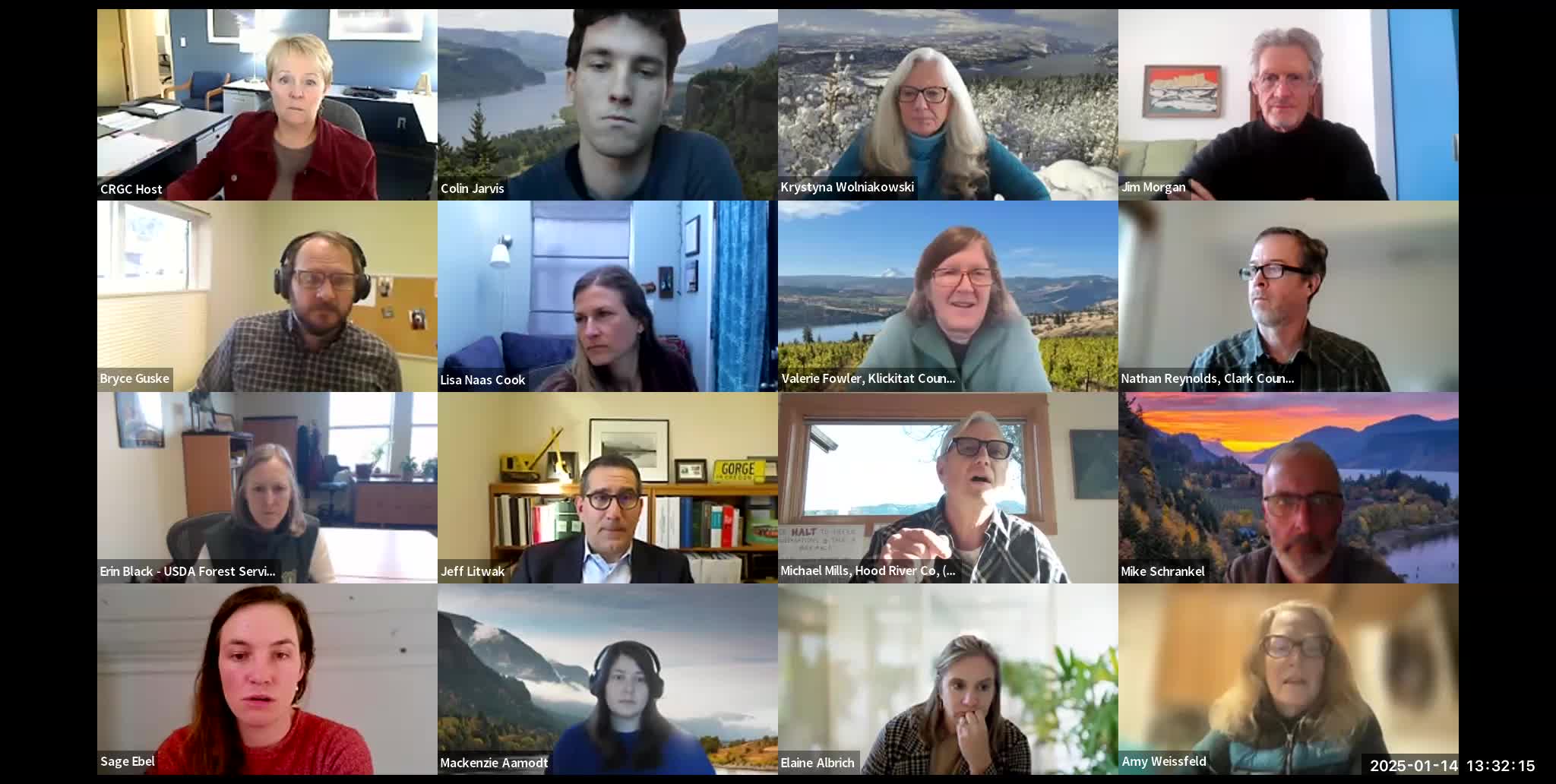
Communications committee members at the Columbia River Gorge Commission meeting on an early 2025 date said they will pursue proactive public outreach to correct misunderstandings about what the National Scenic Area allows, including metal roofs and solar panels.
The committee’s leaders said public comments and social-media posts show confusion about whether certain options — such as metal roofs and solar installations — remain prohibited in the National Scenic Area. Commissioner Wiesfeld, chair of the communications committee, said the group will start with a website review and then pursue targeted outreach through local outlets such as Columbia Insight and Columbia Gorge Happenings. “We are formed to improve our communication with the public,” Wiesfeld said. “We are gonna be focused on reviewing and revising the website for starters.”
Committee members said they saw three broad public reactions to a recent Columbia Insight article: concern that development would be allowed; gratitude for protections; and persistent misunderstandings that a wide range of features are still banned. Commissioner Fowler noted the volume of social‑media comments and suggested the commission explain changes made over time to permit items such as metal roofs and solar panels when allowed with conditions. “I thought that we could… engage the public on the ways that the Gorge Commission has changed its decisions, rulings… to include things like metal roofs and solar panels,” Fowler said.
Staff and Forest Service partners described how the permitting process already evaluates metal roofs on a case‑by‑case basis, including restrictions on reflectivity and siting when a roof would be visually prominent. Bryce, a commission staff member working on defensible‑space guidance, described options such as matte or textured finishes and said staff “really try to work with everyone” to find acceptable solutions. He also said the commission is updating the Scenic Area handbook and producing a handout on defensible space and home hardening that will align Firewise, conservation district and state guidelines.
Commissioners asked staff to coordinate outreach with counties before publication. Commissioner Aldridge specifically requested county review of the handbook and rollout materials. Staff indicated drafts with images will be shared for input before a broader release.
Ending: The Communications Committee will meet bimonthly while it develops a six‑month review plan for the website and the Firewise/defensible‑space materials. Staff will reach out to Columbia Insight and other outlets as requested, and will seek county input on handbook drafts before public distribution.