Get Full Government Meeting Transcripts, Videos, & Alerts Forever!
Get email alerts on the School Budget topic
No spam. Unsubscribe anytime.
Cheshire schools propose $95.9 million budget with 7.09% increase; medical costs drive much of the rise
Summary
Cheshire School District administrators on Tuesday presented a $95,892,631 recommended budget for 2025–26, an increase of $6,350,000 (7.09%) that they said is driven mainly by salary and benefit costs and by higher projected medical claims.
Cheshire School District administrators on Tuesday presented a $95,892,631 recommended budget for 2025–26, an increase of $6,350,000 (7.09%) that they said is driven mainly by salary and benefit costs and by higher projected medical claims.
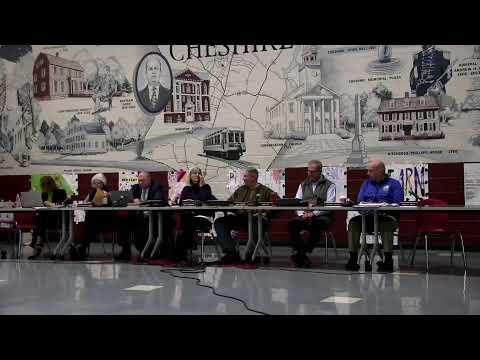
At a public workshop, Chief Operating Officer Mr. Massiano walked the Board of Education through enrollment projections, staffing additions and the district's benefits and pension outlook. "The majority of our budget, as you know, is salaries. It represents about 80% of our total budget," he told the board as he outlined assumptions and line-item changes.
The budget proposal assumes a net increase of roughly 70 students districtwide for 2025–26 (25 additional in pre-K–6, 43 in grades 7–8 and 2 at Cheshire High School). Administrators included funding for a net one new elementary classroom teacher, a 0.5 school counselor to replace an expiring ARPA-funded position, two full-time speech and language assistant positions, a 9–12 science and math curriculum coordinator, a K–8 health education teacher, a districtwide art teacher and a 0.5 TESOL position, among other changes. The presentation stated the districtwide average class size is projected at about 18.8 students.
Administrators emphasized that most salary projections come from existing payroll records and collective-bargaining agreements; more than 90% of staff are in bargaining units. The recently mediated teachers' contract (pending town council approval) was included in the figures; paraeducator wages were budgeted using a 4% placeholder pending February negotiations.
Employee benefits were the largest single driver of the increase in percentage terms. The budget shows net medical benefits budgeted at $15,958,339 — an approximate $1.5 million increase — and employee benefits overall representing about 20% of the total budget. Mr. Massiano said the medical projections are based on claims data through October provided by the benefits consultant USI and that the district budgets a net amount after employee cost-sharing and anticipated stop-loss reimbursements. He noted the district's reserve for medical claims stood near $1.5 million as of Nov. 30 and said stop-loss reimbursements yet to be received would raise that balance; the board’s target is roughly two months of claims (about $2.2 million).
On medical trends, administrators said the district's claim experience has generally trended below national averages but that high-cost claims remain concentrated in a relatively small number of cases. The presentation highlighted a recent uptick in childbirth- and fertility-related claims and cited rolling increases in prescription costs and other high-cost categories that contributed to the medical line increase.
On revenue, administrators projected approximately $9.5 million from the state educational cost-sharing grant and $1.1 million from IDEA special education funding; combined with other grants and revenues, the presentation listed roughly $10.9 million in revenue the town can expect from those sources. The district also flagged uncertainty in reimbursements for special-education excess cost, noting the budget assumes a 70% reimbursement rate though the actual share could be lower depending on statewide applications and allocations.
Pension and retirement costs were also discussed. The town pension plan is closed to new employees (district staff who remain in it have fallen over time), while a growing number of non-certified staff participate in defined-contribution accounts; the district budgeted for defined-contribution funding (presented as $420,000 in the materials) and an increase in pension contribution consistent with actuarial assumptions.
Board members and administrators discussed operational issues tied to staffing: paraeducator recruitment and turnover, substitute pay related to rising Connecticut minimum wage, and bus-driver shortages managed by contractor DATCO. Transportation manager Luther Miller was cited as an active part of the district response for occasional shortfalls. Administrators said they use a mix of internal drivers for specialized routes and temporary measures such as having dispatchers or managers drive when necessary.
Administrators said the budget presentation and supporting documents will be posted online and that the board will hold further budget workshops (next sessions were listed for Jan. 21 and Jan. 23) before the board must approve a budget to the town manager by Feb. 17. Town council approval is required by April 30, and any council changes would return to the board for final line-item approvals prior to the June 30 completion deadline.
The board took no final votes on the budget at the workshop. The only formal action recorded in the transcript from the meeting was a motion to adjourn, which members voted to approve unanimously at the close of the session.