Get Full Government Meeting Transcripts, Videos, & Alerts Forever!
Get email alerts on the Timber Relief Disaster Response topic
No spam. Unsubscribe anytime.
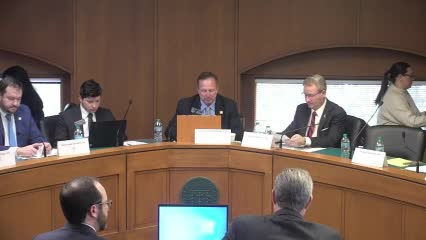
Senate debate centers on timber relief bill to aid counties hit by storm; sponsors seek tax suspensions and grants
Summary
Senator Goodman presented SB 52 (LC 500970), the TREEES Act, proposing a temporary suspension of the timber severance tax and a grant program to help FEMA‑declared counties recover from a major storm that damaged timberland statewide.
Senator Goodman (sponsor) presented SB 52 (LC 500970), the Timberlands Recovery Exemption and Earnings Stability (TREEES) Act, describing it as a legislative response to a recent storm that caused widespread damage to timber and agricultural assets.
The bill would, for counties declared disaster areas by FEMA, suspend the timber severance (ad valorem) tax for the last quarter of 2024 and for all of 2025 while landowners try to harvest storm‑damaged wood. It also would create a state grant program allowing eligible counties to apply for compensation based on their three‑year average timber tax collections, aiming to stabilize local government revenues hit by sudden reductions in timber receipts.
Sponsor remarks and supporting testimony emphasized the scale of the loss. The sponsor said timber losses in the state totaled about $1,280,000,000, noting the state has roughly 38,000,000 acres of land, of which about 24,000,000 acres are forest land and approximately 37% of that timberland was damaged or destroyed in the storm. He also described the downstream budgetary impact on small counties: in a typical rural county the timber tax can account for roughly $700,000 of a $7,000,000 county budget, and the sudden collapse in timber prices is reducing those receipts.
Several senators and witnesses urged caution about the constitutional limits on direct transfers to private parties. James Beal, who said he previously served in the Pro Tem’s office and assisted in drafting the legislation, told the committee the people of the state approved a 2022 constitutional amendment authorizing the suspension or removal of ad valorem taxes on properties that are destroyed and subject to disaster declarations. He said the bill attempts to implement that change in a manner that fits how timber taxes are collected (the ad valorem tax is triggered at severance/harvest and is therefore unique in timing).
Lawmakers asked for fiscal details and discussed alternative mechanisms: Senator Albers suggested routing funds through the Georgia Emergency Management and Homeland Security Agency (GEMA) or setting up grants/insurance through GEMA to expedite relief; other senators mentioned using existing programs such as GDA low‑interest loan funds. ACCG and other county representatives raised questions about local authorization and which entities would need to consent, and the committee repeatedly requested a fiscal note.
The committee did not take final action on SB 52; members signaled support for seeking an expedited, legally sound approach but asked sponsors and legal staff to refine constitutional and fiscal analyses before returning with detailed numbers or alternative mechanisms.