Get Full Government Meeting Transcripts, Videos, & Alerts Forever!
Get email alerts on the Special Education topic
No spam. Unsubscribe anytime.
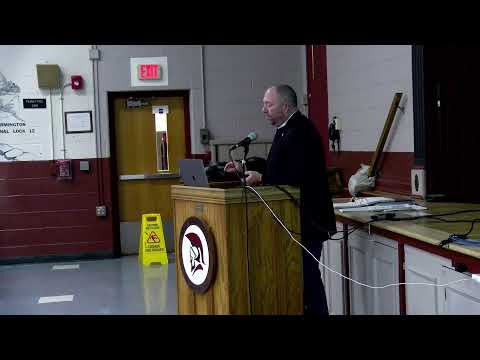
Cheshire board hears rising special-education costs, requests for counselors and speech assistants
Summary
Presenters told the Board of Education that special-education spending will rise next year because enrollment and student needs are increasing; administrators requested a half-time counselor and two speech‑language assistant positions and outlined out‑of‑district costs and reliance on IDEA grant funding.
Superintendent Dr. Solon and special-education presenter Robin Ann Carey told the Cheshire Board of Education during a public budget review that rising special-education enrollment and higher per‑student costs are driving an increase in next year’s special‑education budget.
Carey said the district’s total special‑education costs this year are about $22.3 million and the administration is projecting roughly $23.3 million for the coming year. She said special‑education students will make up an estimated 16.1% of enrollment next year and that about 0.4% of students are placed out of district, with average out‑of‑district tuition and services averaging roughly $122,705 per student plus about $37,503 for transportation.
The district plans to request several personnel additions to keep more services in‑district and ease caseload pressures: a 0.5 full‑time equivalent (FTE) school counselor (currently funded in part by expiring ARP mental‑health grant money) and two part‑time speech‑language pathology assistants (SLPAs). Carey said the SLPA hires would allow speech‑language pathologists to focus on assessments, Individualized Education Program (IEP) writing and meetings while assistants provide small‑group and push‑in supports.
Carey also described program expansions made since 2020: two new intensive education classrooms at Norton, additional intensive classrooms at Highland, a high‑school Aspire program for students affected by anxiety or trauma, expanded transition programming for 18‑ to 22‑year‑old students, and a transition coordinator position required by state regulation. She said the district added a speech pathologist in 2022 (largely funded by IDEA) and a half‑time board certified behavior analyst (BCBA) in 2020, and that most IDEA grant funds are dedicated to salaries.
Board members asked for clarifications on federal funding and IDEA. Jeff (district staff) pointed to the budget book’s grant section for total federal grants and identified IDEA funding at roughly $1,000,000 in the grant table as an estimated figure; Carey said IDEA funding is a substantial source and that elimination would significantly affect school systems statewide.
Carey described staffing shortages affecting both paraeducators and certified staff and said some positions have remained open since September; she called the current candidate pool “a puddle” and said districts are competing for the same limited applicants. She also described increased demand for AAC (augmentative and alternative communication) devices and services for students with hearing impairments and cochlear implants, which she said adds time requirements for speech and technical support.
Carey asked the board to consider a replacement 12–15 passenger van for the Community Life and Bridge to Life transition programs; she said the current vehicle is a 2016 Ford that no longer meets program needs. She noted the van purchase was not included in the current operating budget request but said she would like the board to consider it when numbers are finalized.
The board asked follow‑up questions about program exits vs. new identifications, the district’s percentage of students spending time with non‑disabled peers, and potential inter‑district collaborations for specialized programs. Carey said the district is recognized as increasing time with non‑disabled peers and that about 65.9% of students (most recent public reporting) spent 79% or more of the day with non‑disabled peers; she said she would try to locate updated figures.
Nut graf: The presentation framed the increase in special‑education spending as driven by rising enrollment and higher per‑student costs for specialized placements and services, and it included specific staffing requests (0.5 counselor, two SLPAs) and program needs (replacement van, AAC support) the administration says are necessary to serve students and contain out‑of‑district placements.
Carey repeatedly stressed that keeping students in district when appropriate both improves students’ experience and is often less expensive than long‑term out‑of‑district placements. She said the district continues to prepare families for adult services and that the transition coordinator holds parent information nights and agency fairs to help families access state services such as the Department of Developmental Services (DDS) and Bureau of Rehabilitation Services (BRS).
The board did not vote on any staffing requests at the meeting; members asked for further breakdowns and historical data (e.g., numbers of students exiting versus entering special education year to year, more detail on per‑student out‑placement costs) before formal decisions. Administration said those data points and grant line‑item totals appear in the budget book and will be shared again for the next session.
Ending: Administrators said they will return with the requested details at a future budget session this week; Carey emphasized the district’s goal to increase students’ time with non‑disabled peers while addressing staffing and equipment shortages that she said limit the district’s capacity to keep all students in district.