Get Full Government Meeting Transcripts, Videos, & Alerts Forever!
Get email alerts on the K12 Budget topic
No spam. Unsubscribe anytime.
Madison school board tables vote on 2025-26 budget after workshop; administration adds language, arts and literacy items
Summary
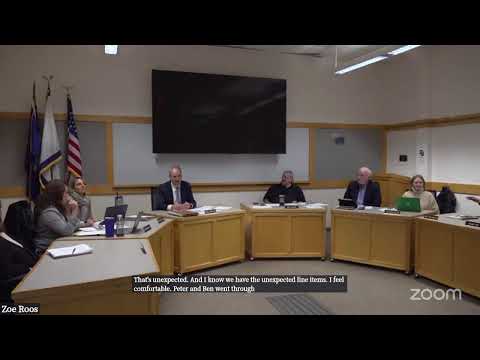
Madison Public Schools Board of Education members at a workshop meeting (date not specified) voted to table a final vote on the administration's recommended 2025-26 budget until Jan. 21, 2026, after a lengthy presentation and discussion of staffing, curriculum and materials requests.
Madison Public Schools Board of Education members at a workshop meeting (date not specified) voted to table a final vote on the administration's recommended 2025-26 budget until Jan. 21, 2026, after a lengthy presentation and discussion of staffing, curriculum and materials requests.
The superintendent, Dr. Cook, presented the recommended budget and described several targeted additions the administration is asking the board to approve if the budget is adopted. "What I am recommending'...is a full world language teacher for the elementary levels," Dr. Cook said, adding that the district would restore Spanish instruction, add 0.3 FTE for theater and increase instrumental music instruction.
Why it matters: the proposed additions affect elementary scheduling and staffing, classroom materials tied to the state's literacy requirements, and recurring operating costs. Board members and administrators discussed how the changes would interact with the district's pre-K-to-5 schedule model, teacher assignments and planned school consolidations.
Key budget items and discussion points
- Staffing and related-arts restoration: Administration proposed 1.8 FTE additions (described in the meeting as "1.8 ad per FTE") to restore or expand elementary world language (Spanish), theater and instrumental music. The administration estimated the staffing cost impact at about $121,000 for those 1.8 FTE additions, though that figure is subject to normal personnel changes (resignations, hires) during the budgeting process.
- Elementary schedule: Board members pressed on how the district would preserve the "team" teaching model for grades 4-5 while reintroducing related-arts time. Dr. Cook said the team model remains in place and that related-arts minutes would be shifted from some core-extension time and from a library-block adjustment to preserve continuity and reduce transitions for students moving between buildings.
- GEODES literacy purchase: Curriculum staff recommended buying GEODES classroom sets for K-2 (described in the meeting as "GEODES" and spelled that way in the transcript). Gail (staff member) said teachers who piloted the materials recommended purchasing them for classrooms and described the resource as "heavy in nonfiction" and engaging for students. The administration estimated the GEODES implementation and training at about $109,000; staff said that amount covers initial classroom sets and training for the K-2 span and does not yet cover grade 3 materials.
- Budget percentages and overall change: The superintendent walked the board through percentage changes in the proposed operating budget: earlier drafts showed a 2.27% increase; with the newly requested additions and adjustments the administration reported a 2.46% increase (including debt). The figures reported by the administration for comparisons when debt is excluded were: previously 2.87% and a revised 3.06% (administration-provided figures).
- Other operational questions: Board members asked about school nurses (administration said the district will maintain the current number of nurses and that some schools, including the new TCLC site, will have two nurses because of student needs), substitute pay (the administration said substitute pay was increased), and food service (administration said the renegotiated cafeteria contract reduced district employer exposure and contributed to improved food-service budget outcomes, though food service budgets commonly show a planned operating loss in many districts).
- STEAM/materials and facilities maintenance: The administration budgeted roughly $13,000 as an initial materials outlay for STEAM in lower grades; board members asked whether that amount was sufficient compared with the staffing costs for added language/music/theater. Facilities staff and finance committee members explained reductions in some repairs/maintenance lines were tied to moving out of or closing older buildings and to one-time issues that will not recur after construction finishes.
- Accreditation and membership: The agenda discussion included the district's membership with NESC (the accreditation/membership process noted as NESC/NEASC in the discussion). Administrators said a recurring membership fee (described in the meeting as roughly the mid-thousands) is charged annually and that decennial or collaborative visits require larger, episodic expenses; staff described a recent decennial/visit-related outlay in the $15,000 range when the full visit and related costs are included.
Board reaction and next steps
Several board members praised administrators for keeping the budget increase low relative to peer districts and for responding to parent and student feedback on related-arts time. Diane (board member) moved to table the budget vote until the Jan. 21 meeting to allow members more time to review final materials and for administrators to circulate a finalized elementary schedule and PowerPoint; Christine (board member) seconded the motion.
Votes at a glance
- Motion: "Move to table the budget discussion and vote until January 21, [2026]." Moved by Diane (board member); seconded by Christine (board member). Outcome: motion to table carried. The public record in the meeting audio shows vocal "aye" and a recorded verbal indication of a "nay" during the roll call; the exact numerical tally as read aloud at the meeting was not fully specified in the transcript excerpt.
What was not decided
The board did not take a final adoption vote on the 2025-26 recommended budget at the workshop. The administration said the finalized elementary schedule materials and a one-page summary would be sent to board members and to the community ahead of the Jan. 21 meeting. Union contract negotiations that the administration said remain pending were not finalized and are budgeted based on trend estimates; administrators described standard practice of estimating those costs conservatively at this stage.
Ending
The board will reconvene on Jan. 21 (date stated in the meeting motion) to consider final approval of the 2025-26 budget after administrators circulate the finalized elementary model documentation, related budget spreadsheets, and answers to follow-up questions that board members raised during the workshop.