Get Full Government Meeting Transcripts, Videos, & Alerts Forever!
Get email alerts on the Vapor Product Directory topic
No spam. Unsubscribe anytime.
Lawmakers weigh vapor‑product registry proposal as alternative to flavor ban
Summary
House Bill 1534 would require manufacturers to certify products for a state vapor product directory tied to FDA premarket decisions; supporters say a registry helps retailers avoid illegal products, while public‑health groups say the bill would leave many illegal flavored products on shelves and waste state resources.
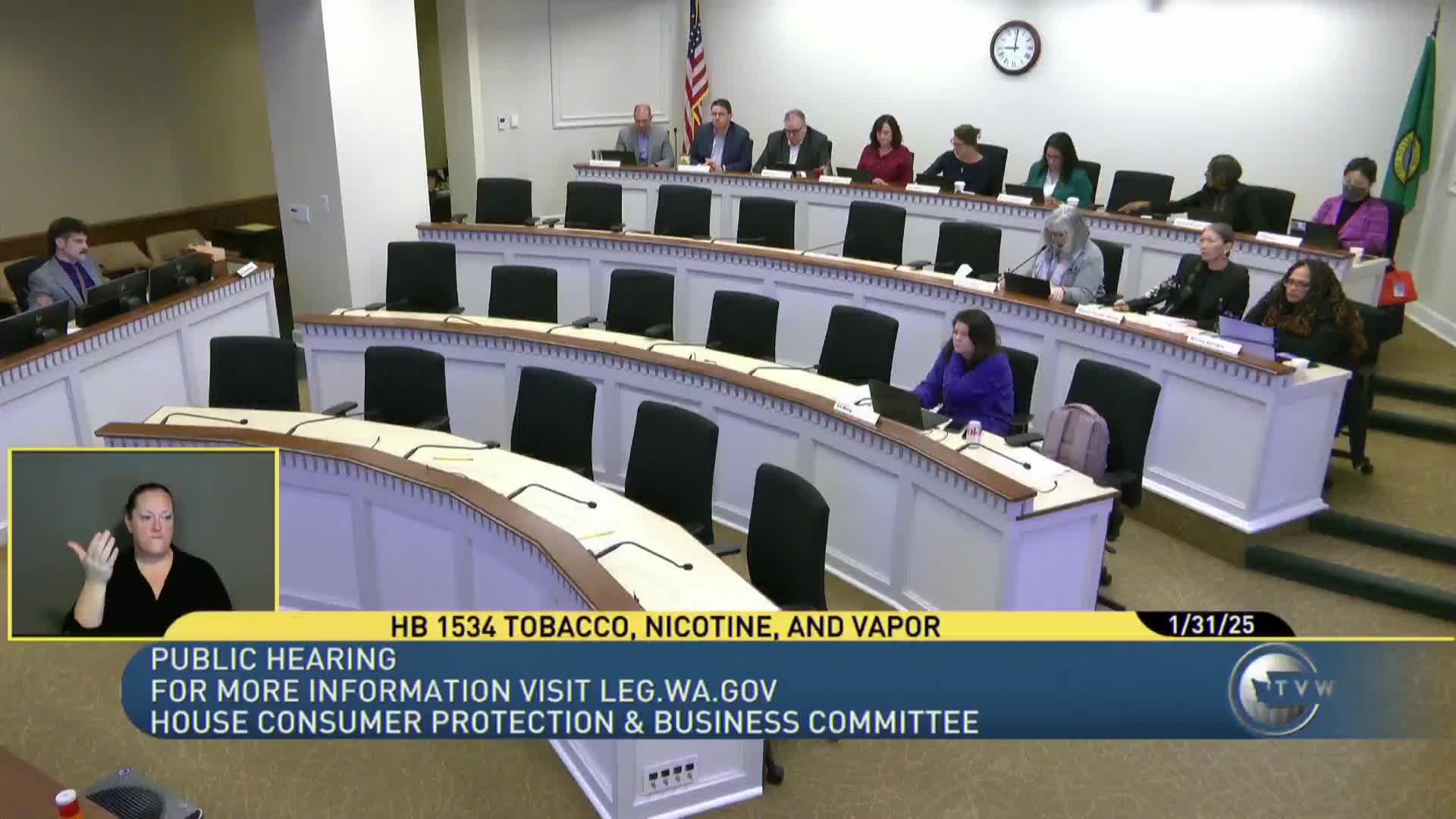
The Consumer Protection & Business Committee opened a public hearing on House Bill 1534 on Jan. 31, 2025. Peter Klotfelter, committee staff, described the bill as a mandate for the Liquor and Cannabis Board to establish a state vapor product directory. Manufacturers would certify annually that each product sold to Washington consumers either has a marketing granted order from the Food and Drug Administration or has timely submitted a premarket tobacco product application (PMTA), staff said.
Representative Emilio Santos, prime sponsor, said the directory is intended as a pragmatic alternative to a full flavor ban and would enlist manufacturers, distributors and retailers in compliance efforts to choke off illicit products. "This proposal adopts a different approach," Santos said, calling it a way to "deputize the entire supply chain" and to define what is legal so legitimate sellers can comply.
Supporters: Retail and wholesale groups, small store owners and some wholesalers supported the bill. Crystal Leatherman of the Washington Retail Association said the directory would provide clarity and fairness to businesses currently left to guess which products are legal or illegal. Several store owners and trade group representatives said state directories in other jurisdictions (examples cited included Alabama and Louisiana) list compliant products and help retailers avoid carrying illicit disposables or non‑compliant imports.
Opposition and public‑health concerns: Public‑health organizations and some health advocates opposed or expressed significant reservations about 1534 as written. Megan Moore, executive director of the Washington State Public Health Association, said section 7 of the bill — which allows products that have only submitted a PMTA to remain on shelves while that application is under review — would leave thousands of products that the FDA deems illegal available to consumers in Washington. Audrey Miller Garcia of the American Cancer Society Cancer Action Network and allied groups added that directories have not been shown to reduce tobacco use and cautioned against diverting limited state resources from enforcement and proven interventions.
Industry and legal context: Industry witnesses noted that the FDA premarket process and PMTA regime have faced legal challenges and that only a small number of products have received marketing orders; critics argued that restricting shelf space to products that filed PMTAs before a particular date could favor large tobacco companies that have the resources to file timely applications. Aaron Holmes of the Vapor Technology Association and industry witnesses told the committee courts have scrutinized the federal process and litigation is ongoing.
Policy tradeoffs and enforcement: The bill would require two unannounced compliance checks annually and would create penalties for violations. Staff said the directory could include a public‑records exemption for certain manufacturer submissions and would also define a new category of “alternative nicotine product” and prohibit sale of nicotine analogs that purport to have central nervous system effects similar to nicotine. Committee members asked staff whether the PMTA/marketing order process demonstrates product safety; staff responded that FDA determinations are made under a public‑health standard considering population risks and benefits.
Procedure and next steps: The committee heard a mix of in‑person and remote testimony, with retailers and wholesalers generally supporting HB1534 and many public‑health groups urging stronger, more restrictive language or opposing the measure entirely as written. The committee did not take a vote during the public hearing.