Get Full Government Meeting Transcripts, Videos, & Alerts Forever!
Get email alerts on the Flavored Tobacco Vape Ban topic
No spam. Unsubscribe anytime.
Committee hears hours of testimony on bill to ban flavored tobacco, vape entertainment products
Summary
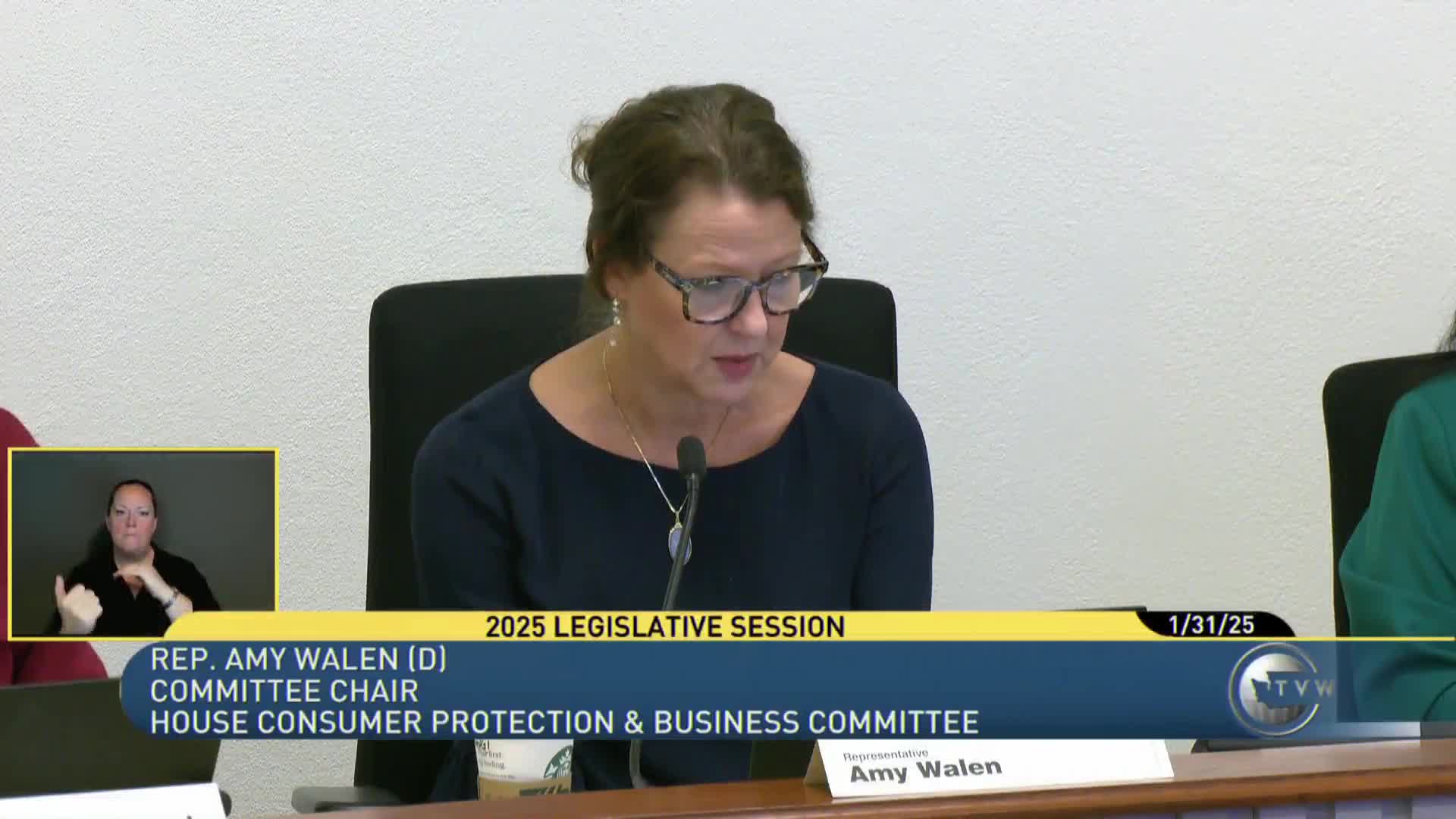
Representative Christine Reeves opened a Jan. 31, 2025, public hearing on House Bill 1203, which would prohibit the sale, display and advertising of flavored tobacco, flavored nicotine and certain entertainment vapor products in Washington beginning Jan. 1, 2026.
Representative Christine Reeves, prime sponsor of House Bill 1203, opened the committee’s public hearing on Jan. 31, 2025, saying the bill would “end the sale of flavored tobacco in the state of Washington” to reduce youth nicotine uptake and lifelong addiction.
The bill would prohibit sale, display and advertising of flavored tobacco, flavored nicotine and flavored vapor products, and would also cover so‑called entertainment vapor products — devices that include gaming, audio or video features, staff said. Peter Klotfelter, staff to the committee, summarized the bill’s provisions, including a required statewide prevention and awareness campaign by the Department of Health and new retailer signage and penalties enforced by the Liquor and Cannabis Board.
Why it matters: health experts, school leaders and dozens of students and parents told the committee that flavored products and brightly packaged vapor devices are driving high rates of youth use and addiction. Chris Reykdal, Washington superintendent of public instruction, called youth vaping “an epidemic” that reaches late elementary and middle school students and said schools struggle to police use on campus. Michelle Roberts, assistant secretary for prevention and community health at the Washington State Department of Health, cited the state Healthy Youth Survey and national findings on nicotine’s effects on adolescent brain development and youth preference for flavored products.
Supporters’ case: Representative Christine Reeves (D‑30) framed the bill as a youth‑protection measure. "I fundamentally don't believe that nicotine products add value to our society or to our communities," Reeves said, adding she introduced the bill as a parent and citing family experience with addiction. Students and young people gave personal accounts: Julian Jansen, a student from Eatonville High School, told the panel he first tried a vape at 11 and said, “These products are designed to attract kids, and it's working.” Josephine (Josie) Shapiro, a college student, said social media and flavors normalized vaping and led to addiction in her peer group.
Public‑health witnesses urged the prohibition or similar policies. "A US surgeon general report found nicotine as highly addictive and can harm adolescent brain development," Michelle Roberts said, and she noted that 55% of Washington 10th graders who reported vaping said they used a flavored product. Chris Reykdal added: "If you talk to your local principals, they will tell you what a problem this is." Several health witnesses said flavors are a primary reason youth initiate vaping and endorsed prohibitions on flavored products as an effective intervention.
Opposition and economic, enforcement concerns: Convenience‑store and independent retailer groups, vape industry representatives and some business owners opposed the bill. They warned a statewide flavor ban would push consumers to an unregulated black market, cost small stores and jobs, and eliminate legal harm‑reduction options such as nicotine pouches and some vapor products that adult smokers use. Katie Beeson of the Washington Food Industry Association said flavored products make up roughly half of some retailers’ sales; Doug Ball of Jackson’s Food Stores and others cited post‑ban surveys from other states suggesting a portion of products in the market lacked tax stamps or were destined for other markets.
Industry witnesses and some retailers urged alternative approaches such as a state product directory and stronger enforcement against illicit disposables rather than an outright flavor ban. Crystal Leatherman of the Washington Retail Association and several store owners said retailers are the “firewall” to prevent underage sales and asked for clearer tools and a registry to identify banned or non‑compliant products.
Education, treatment and enforcement questions: Committee members asked agency witnesses whether education alone is sufficient and how the state should pair regulations with prevention and cessation supports. Michelle Roberts and others said education is necessary but not sufficient; they urged a mix of policies, improved access to treatment, and enforcement. When asked about cost, witnesses from state agencies said they would follow up with budget figures.
Equity and policing concerns: Several public commenters expressed concern that bans on menthol or flavored products could have disproportionate impacts on Black and Brown communities or increase law‑enforcement contacts. Speakers urged careful policy design to avoid unintended harms.
Procedure and next steps: The hearing drew more than 250 pro witnesses signed in and hundreds of written comments; public testimony in the hearing record was reported as signed in pro 251, con 447, other 10. The committee did not take a vote during the hearing. The staff presentation placed the bill’s effective date as Jan. 1, 2026, if enacted.
Ending: Lawmakers heard more than two hours of public testimony and agency comment before closing the hearing and moving to a second bill on the agenda (House Bill 1534). No committee action was recorded at the hearing.