Get Full Government Meeting Transcripts, Videos, & Alerts Forever!
Get email alerts on the Freedom Of Information topic
No spam. Unsubscribe anytime.
Bridgeport school board receives Freedom of Information Act training from state commission
Summary
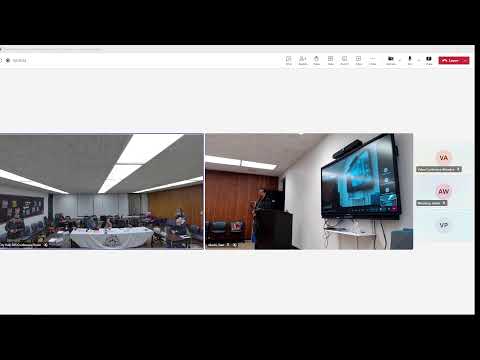
Russell Blair, director of education and communications for the Connecticut Freedom of Information Commission, gave the Bridgeport Board of Education a two‑hour training Jan. 15 on the Freedom of Information Act, covering public‑meeting notices, records requests and exemptions.
Russell Blair, director of education and communications for the Connecticut Freedom of Information Commission, gave a training to the Bridgeport Board of Education on the Freedom of Information Act on Wednesday, Jan. 15, outlining meeting and records requirements, notice timelines and common exemptions.
Blair told the board that FOI “is the law” and emphasized the commission’s role as an independent enforcement and education agency: the commission investigates complaints, can subpoena witnesses and, in some cases, nullify votes taken at improperly noticed or held meetings. “We can nullify votes that were taken out of meetings,” he said, warning that such orders can require boards to repeat prior votes.
The presentation covered the two main parts of FOI: meetings and records. Blair summarized the meeting rules the board must follow, including the definition of a meeting (a quorum convened to discuss or act on board business), the prohibition on deliberation by a quorum outside public meetings, and the difference between regular, special and emergency meetings. He noted that regular meeting agendas generally must be filed 24 hours before the meeting during regular business hours and that special-meeting agendas must additionally be posted to the board’s website 24 hours in advance.
Blair reviewed executive‑session law and its limits, saying executive sessions require a two‑thirds vote to convene, cannot be used to conduct votes and may only include non‑members when their participation is necessary. He described the statutory reasons for executive session — personnel (with the employee able to demand open session), pending litigation, security, real‑estate negotiations and records exempt from disclosure — and advised specificity on executive‑session agenda entries (for example, “discussion of security upgrades to Harding High School” rather than a one‑word label).
On records and requests, Blair stressed that FOI covers recorded information relating to the conduct of public business regardless of format, including emails and texts on personal devices when they concern board business. He said agencies must acknowledge records requests within four business days and urged responsive, ongoing communication with requesters. Blair discussed common exemptions — preliminary drafts, personnel and medical privacy, attorney‑client communications, trade secrets, and FERPA protections for student records — and noted a process for asserting safety/security exemptions in consultation with state police.
Blair encouraged board members to err on the side of transparency while using the statute’s exemptions appropriately. He also advised practical steps: post agendas and materials when feasible, file minutes on time (seven calendar days for regular meetings, seven business days for special meetings; 72 hours for emergency meeting minutes), and, his desk motto aside, “when in doubt, don’t press send,” referring to written communications that may become public records.
During the meeting’s public‑comment period, board member Joseph Sikalovic spoke as a member of the public and said his recent FOI complaints against the board and a former chair “settled the last 2 FOIA complaints I filed against the board of education and and the former chair.” He added that the training “was very, very good, very, very informative” and said he hopes the board moves forward “in a more transparent manner.”
The meeting concluded with a procedural motion that was moved and seconded and carried by voice vote; the transcript records the mover and seconder and the chair calling the vote, then announcing the time as 8:18 p.m. The transcript does not include a full roll‑call tally of votes for that motion.