Get Full Government Meeting Transcripts, Videos, & Alerts Forever!
Get email alerts on the Health Care And Wellness topic
No spam. Unsubscribe anytime.
Committee hears broad support for bill to create statewide cardiac and stroke registry
Summary
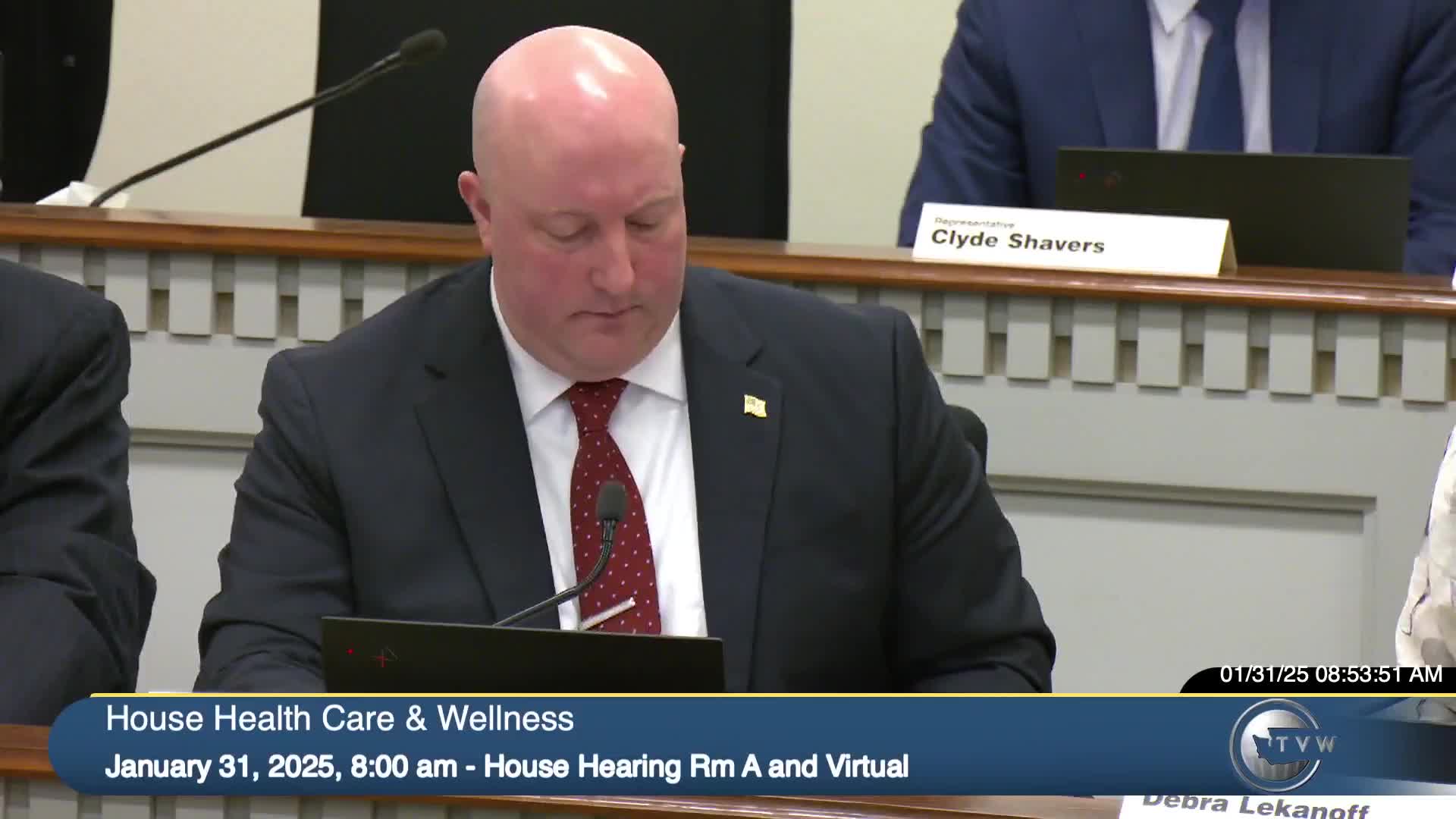
The House Health Care & Wellness Committee on Jan. 31 heard public testimony on House Bill 1545, which would establish a statewide cardiac and stroke registry and require hospitals and emergency medical services to begin reporting data to the Department of Health on Jan. 1, 2027.
The House Health Care & Wellness Committee on Jan. 31 heard public testimony on House Bill 1545, which would establish a statewide cardiac and stroke registry and require hospitals and emergency medical services to begin reporting data to the Department of Health on Jan. 1, 2027. The bill directs the department to report annually beginning July 1, 2028, and — subject to appropriations — to assist rural hospitals and prehospital agencies with data platforms, equipment and training.
Supporters told the committee the registry would fill gaps in fragmented data and help reduce deaths and disability from heart attack and stroke. "Evidence shows that coordinated systems of care improve survival and outcomes for these emergencies," said Katie Holstein, Executive Director overseeing the Emergency Medical Services and Trauma Program at the Department of Health. "Systematic data collection and quality improvement programs help us identify gaps in care and implement targeted interventions."
Survivor accounts and clinical testimony underscored the urgency. Karen Dion described being airlifted to Harborview after a hemorrhagic stroke, saying rapid transfer and care were "crucial for my treatment." Brian Burns, president of the Washington State Council of the Emergency Nurses Association, said HB 1545 prioritizes rural hospitals and would align Washington with other states that operate statewide registries.
Hospital representatives said they support the registry's goals but raised practical questions about implementation and cost. "We have questions about the significant amount of data to be collected by the Department of Health," said Katie Cohen of the Hospital Association. She asked how required reporting would interact with existing reporting platforms and whether smaller hospitals have the personnel and systems to comply.
Clinical experts who led the system assessment told the committee the registry should be built to allow linkage across prehospital, hospital and post-discharge care, and that existing state trauma infrastructure provides a model. Amber Sabatini, who led last year’s assessment, said the registry could be integrated incrementally with the trauma registry.
The hearing closed without a committee vote. Committee members and witnesses requested follow‑up on interoperability, specific metrics, and funding sources, and several witnesses urged the Legislature to provide the appropriations the bill contemplates so the system can support rural and critical access hospitals.