Get Full Government Meeting Transcripts, Videos, & Alerts Forever!
Get email alerts on the Avian Influenza Hpai topic
No spam. Unsubscribe anytime.
State veterinarian updates committee on avian influenza spread, dairy testing and surveillance needs
Summary
Washington State veterinarian briefed the committee on continued spread of highly pathogenic avian influenza (HPAI), surveillance findings in wildlife and domestic animals, dairy testing, and needs for lab capacity, composting infrastructure and mental‑health support for producers and responders.
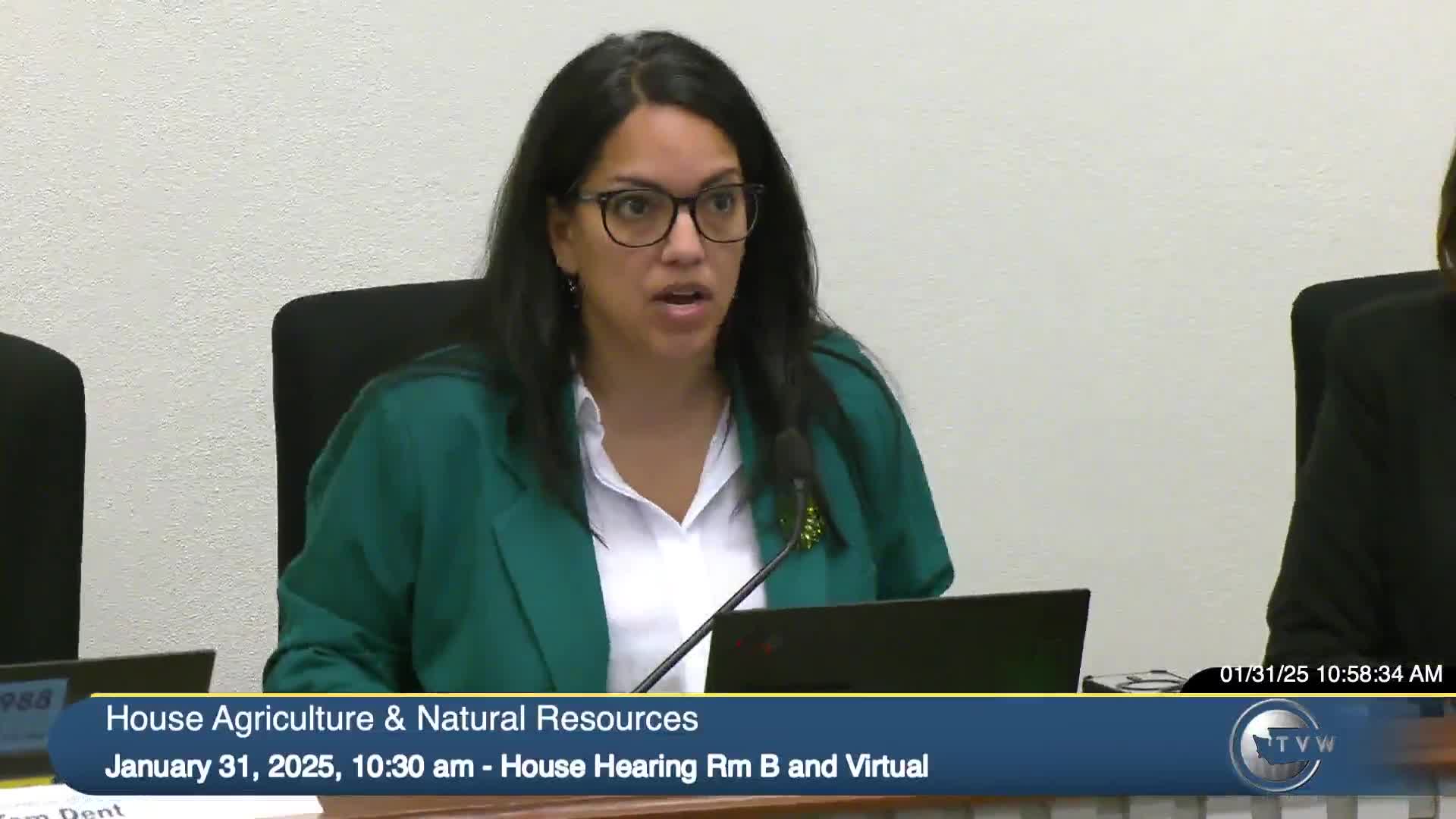
Dr. Amber Ittle, the Washington state veterinarian at the Washington State Department of Agriculture, gave the committee a wide‑ranging update on highly pathogenic avian influenza (HPAI) during a Jan. 31 work session, summarizing surveillance, recent spillovers to mammals, dairy testing and response needs.
Ittle emphasized surveillance importance and that migrating waterfowl are the principal reservoir; she said Washington’s wildlife sampling found substantial prevalence in hunter‑harvested birds and warned that wildlife detections often presage spillover into domestic poultry. “We rely on producers, veterinarians and wildlife partners to report things that don't look right,” she said.
State counts and detections: Ittle told the committee that nationwide surveillance has identified widespread HPAI and that “139,000,000 birds have died at this point from the disease.” She said that in Washington state there have been detections across wildlife and domestic sectors: 51 backyard flocks and three commercial flocks in 19 counties, and “over 2,000,000 birds have died” domestically in the state to date. She reported the most recent commercial detection in Franklin County on Jan. 22 and said that incident remains in response.
Ittle described troubling spillovers beyond birds: USDA testing after a Washington dairy response found 33 peri‑domestic species (mice, starlings, sparrows, pigeons) positive for HPAI at one affected farm, raising questions about those species’ roles in on‑farm transmission. She also discussed mammal infections nationally, noting hundreds of detections in carnivorous mammals that likely consumed infected birds; she said these appear to be “dead‑end hosts” with no confirmed mammal‑to‑mammal spread so far.
On cattle and dairy: Ittle explained that a distinct HPAI genotype associated with dairy cows (described in federal sequencing reports as a dairy‑linked genotype) has been reported in multiple states and that the principal concern is farm‑to‑farm transmission once that strain is introduced. She said Washington requested federal status under the national milk testing strategy after conducting tests at most state dairies and noted the state hopes to secure USDA recognition to manage trade and movement concerns.
Response, risks and needs: Ittle described the federal framework for foreign animal diseases, the lengthy depopulation and restocking process for commercial flocks, and the emotional toll on producers and responders. “If you drink pasteurized milk, it's safe,” she added when addressing food‑safety concerns. She urged continued support for surveillance, lab capacity (WADDL), composting and disposal infrastructure, interagency “One Health” collaboration, and rural veterinary workforce development. She also flagged mental‑health and responder‑fatigue impacts and asked legislators to consider long‑term investments in preparedness and infrastructure.
Committee members asked about mental‑health support and workforce shortages; Ittle said current resources (WSU extension programs and local health partners) are being used but more support and targeted outreach are needed. The presentation concluded with a request that the Legislature consider funding and policy measures to strengthen surveillance, lab and disposal capacity and to support workforce recruitment and retention in rural veterinary medicine.
No committee action or vote was taken; the briefing was part of a longer work session on sustainable agriculture and livestock health.