Get Full Government Meeting Transcripts, Videos, & Alerts Forever!
Get email alerts on the Central Office Positions topic
No spam. Unsubscribe anytime.
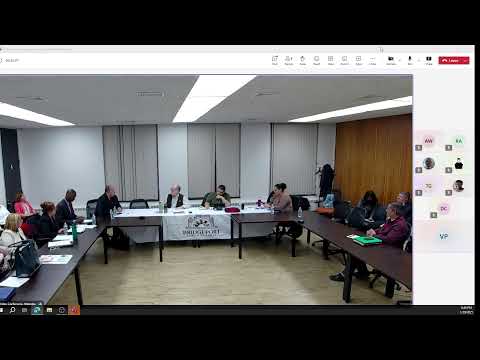
Committee tables proposals to eliminate athletics, SEL and turnaround leadership positions after sustained questioning
Summary
The committee discussed proposed eliminations of three central‑office positions (athletics director; director of social‑emotional learning and student affairs; executive director of school turnaround) and voted to table those items in committee pending further information and state engagement.
The Instruction & Support Services Committee considered proposals to eliminate three central‑office positions but voted to table the items after extended testimony from staff and members about the roles’ impact on students.
Chair Rob Treiber said the referrals originally came from the finance committee and were sent to instruction for detailed review of student‑service impacts. Speakers included the district’s director of athletics and Cheryl Vega, who described the director of SEL and student affairs’ responsibilities. “The goal to this whole department is to make sure students feel safe, healthy, supported, and engaged,” Vega said while outlining home‑visiting, attendance and community‑partner work overseen by the position.
Nut graf: Committee members and some administrators urged caution before cutting roles that, they said, support attendance, crisis response, community partnerships and state‑monitored school improvement work. After discussion the committee tabled the three items — athletics director, director of SEL/student affairs, and executive director of school turnaround — and requested additional information and follow‑up reporting.
The athletic director, Paul Cucicchio, outlined program‑level work including middle‑school outreach, transportation and scheduling for schools that are not in a league (he noted Harding and Bassick face particular scheduling costs). Cucicchio said athletics provide structure and belonging for students and suggested internalizing some outsourced middle‑school programs to save money. Committee members and attendees described athletics as a retention and attendance tool.
For SEL and student affairs, Cheryl Vega detailed family resource centers, teen‑parent programming, attendance teams and community partnerships that included free parent workshops and expanded FAFSA support. Vega said the position coordinates crisis response and coordinates community providers to reduce pulling counselors away from school sites.
Mark Hughes, executive director of school turnaround, described work with principals in 13 turnaround‑ or focus‑status schools, in‑classroom coaching, grant management and state liaison responsibilities. He said the role covers roughly 40% of Bridgeport students and a large share of multilingual learners and students with special needs. Interim Superintendent David Avery (speaking in support) said the state’s planned involvement and the position’s role in coordinating with the state were reasons to retain the role for now.
Ending: After the discussion, a motion to table the three position eliminations in committee passed; members asked the administration to supply additional documentation and state‑liaison details for the next committee meeting before the items go to the full board.