Get Full Government Meeting Transcripts, Videos, & Alerts Forever!
Get email alerts on the Strategic Planning topic
No spam. Unsubscribe anytime.
Partner Ed outlines strategic planning process to ROCORI school board
Summary
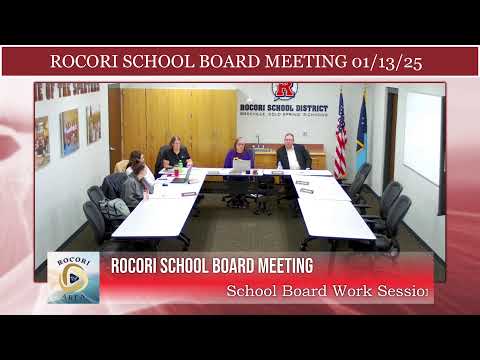
Paula O’Loughlin of Partner Ed told the ROCORI Public School District school board that her firm’s strategic planning process centers on data gathering, stakeholder engagement and a 20–30 person core planning team that synthesizes priorities into a board-adopted plan.
Paula O’Loughlin of Partner Ed described a multi-step strategic planning process to the ROCORI Public School District school board, saying the work begins with broad data gathering and community engagement and culminates in a board-adopted plan.
"Your strategic plan is really your North Star," O’Loughlin said, outlining steps that include community and staff surveys, in-person and virtual focus groups, and convening a core planning team to synthesize findings and recommend priorities. She said the typical core planning team size is 20 to 30 people and that the majority of surveys are conducted online with supplemental mailed options when needed.
O’Loughlin and her colleagues explained that Partner Ed’s role is to lead high-level strategy and engagement while the superintendent and administrative team handle day-to-day implementation of adopted priorities. She said Partner Ed can provide a final report and, if requested, help the district translate priorities into concrete action plans for administrators.
Board members asked how Partner Ed recruits the core planning team, how the group handles dominant voices in focus groups, what survey methods are used, how language barriers are addressed and the firm’s capacity and timeline. O’Loughlin said the district typically identifies planning-team members (through existing committees or by superintendent/board designees) and Partner Ed can advise on applications and outreach. On focus groups, she said facilitators aim to be intentional about process design and sometimes hold smaller, dedicated sessions to ensure underrepresented voices are heard.
On surveys, O’Loughlin said most responses come from an online link, with a mailed paper option for households without reliable email; she noted phone-call surveys are possible but she would check with colleagues about that method. For language access, she said Partner Ed can outsource translation services and that districts sometimes provide translated materials locally. On timeline, O’Loughlin and a colleague said projects they had led averaged 10–12 weeks, with some examples stretched to about four months depending on community engagement goals and scheduling.
Board members raised local concerns Partner Ed has seen in other districts, including balancing input from resident taxpayers and families of open-enrolled students, and the challenge of scheduling engagement work around sports and spring activities. O’Loughlin said Partner Ed has worked with districts facing similar issues and would tailor the engagement plan to ROCORI’s context. The board will discuss and may decide whether to engage Partner Ed at its Feb. 3 meeting; if approved, Partner Ed indicated a final report could be available by June under a timeline that begins in February and continues through the spring.