Get Full Government Meeting Transcripts, Videos, & Alerts Forever!
Get email alerts on the Open Meetings Ethics topic
No spam. Unsubscribe anytime.
DRC annual training emphasizes open-meeting rules, recusal and conditions-of-approval limits
Summary
Attorney Josh Whitehead led the commission through Tennessee open-meetings rules, ex parte communications, disclosure/recusal standards and the legal tests (nexus and rough proportionality) that underlie conditions of approval.
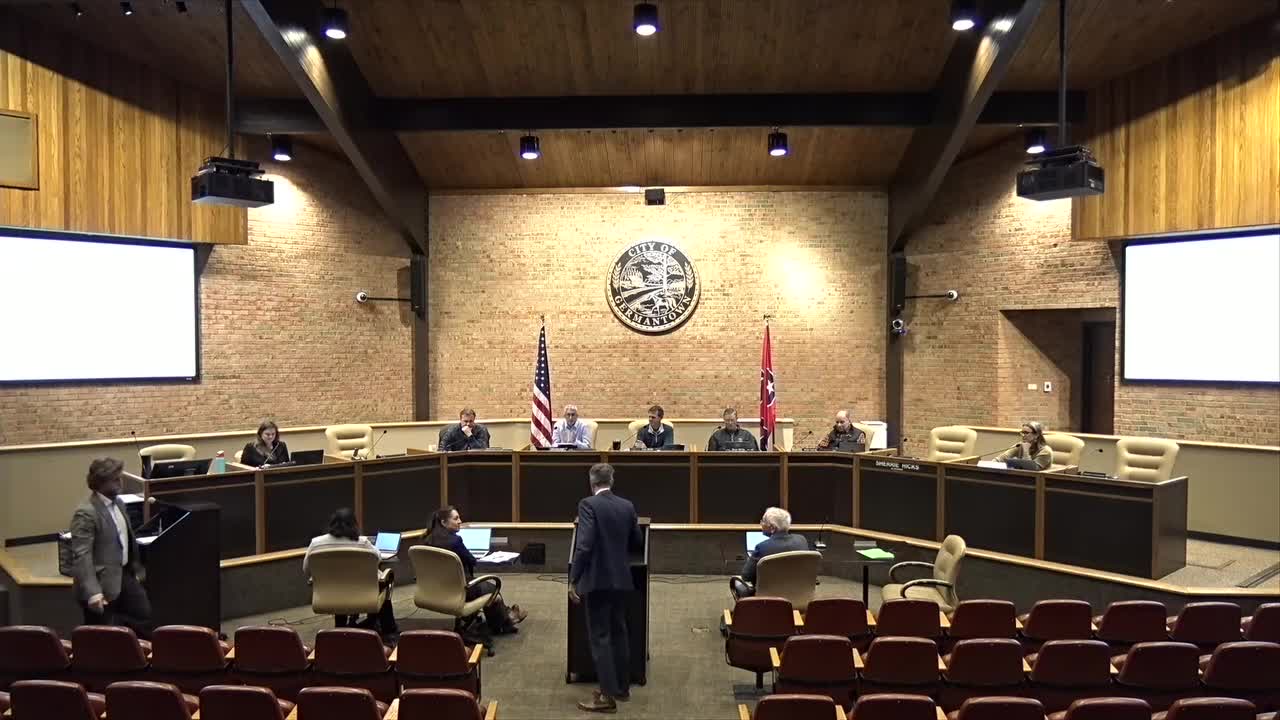
Josh Whitehead, planning and appeals counsel, delivered the Design Review Commission’s annual training during the Jan. 28 meeting, reviewing state open-meetings law, ethics and the legal limits on conditions the commission can attach to approvals.
Nut graf: The training covered three areas commissioners may encounter frequently: (1) Tennessee open-meetings requirements and the risk of pre-deliberation or private communications; (2) conflicts-of-interest, financial disclosure and the proper use of abstentions versus recusal; and (3) the legal standard for conditions of approval — the nexus and rough-proportionality tests — illustrating when a condition may exceed the commission’s legal authority.
Key points from the training: - Open meetings: Whitehead reminded commissioners that Tennessee’s open-meetings law requires notice and public accessibility whenever a quorum discusses public business and advised commissioners to avoid pre-deliberation in private settings. He said written minutes and publicly archived video reduce risk during later appeals. - Ex parte communications: As a quasi-judicial body, commissioners should avoid one-sided private conversations with applicants; if such contacts occur, commissioners were advised to disclose them on the record and offer the other side equal access. - Disclosure, abstention and recusal: The code of ethics forbids votes when a commissioner or a family member has a direct financial interest. Whitehead explained recusal is a two-step process (announce and remove oneself) and suggested abstention as a narrow alternative when a recusal would destroy quorum — but emphasized abstention is not deliberation. - Conditions of approval: Whitehead described the legal standard that conditions must have a nexus to the development action and be roughly proportional to the project’s impacts. He illustrated the concept with the U.S. Supreme Court’s treatment of similar conditions, emphasizing that disproportionate demands can be invalidated on appeal.
Why it matters: Commissioners frequently make quasi-judicial decisions that can be appealed to the Board of Mayor and Aldermen and potentially to court; understanding statutory limits protects both the city and commissioners’ decisions.
No formal action was required; the session served as refresher training for the commission.