Get Full Government Meeting Transcripts, Videos, & Alerts Forever!
Get email alerts on the Water Supply topic
No spam. Unsubscribe anytime.
Spring Hill considers 34.3% cost share for Mallory Valley finished‑water pipeline feasibility study
Summary
City staff briefed the Board of Mayor and Aldermen on a regional finished‑water pipeline feasibility study led by Mallory Valley Utility District and asked the board to consider a 34.3% cost share—about $140,000—to join the study.
City staff presented a proposal for Spring Hill to join a cost‑share for a feasibility study of a finished‑water pipeline led by Mallory Valley Utility District and other regional partners. The study would evaluate a pipeline able to move up to 50 million gallons per day of finished water, and Mallory Valley requested Spring Hill participate at a 34.3% share of the study cost—described in staff materials as roughly $140,000 (rounded).
Mr. Allen (staff) summarized the multi‑agency proposal, saying the pipeline would largely follow an existing TVA easement and could deliver finished water to the west side of Spring Hill; early outreach found TVA open to the concept. Allen said Mallory Valley’s board had approved the study request and that Brasfield & Gorrie had provided preliminary estimates for engineering. He told the board the full pipeline project would be large—likely in excess of $1 billion—and would require substantial federal and state funding if pursued beyond the feasibility stage.
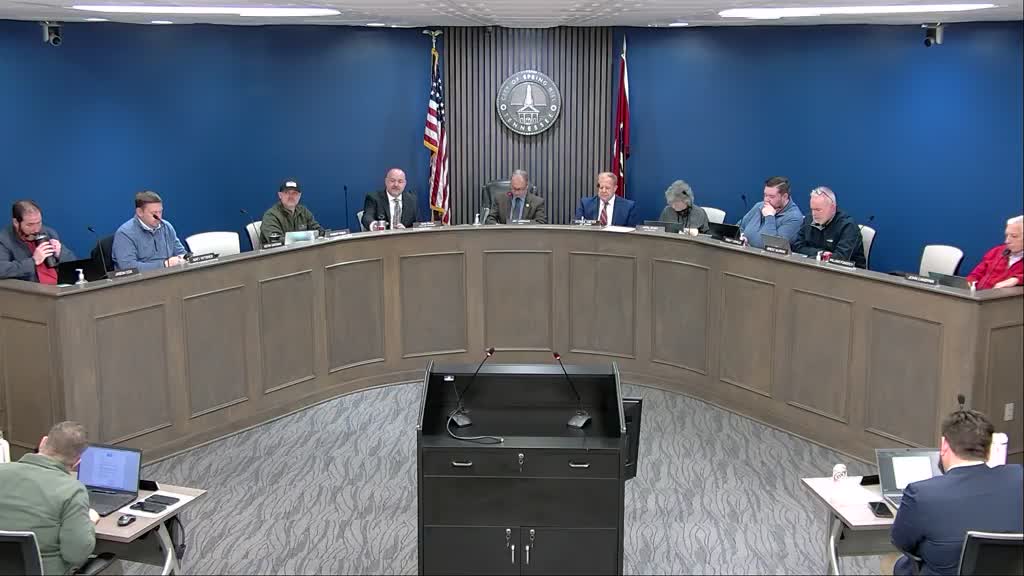
Board members discussed timing, contractual options and how the project would relate to Spring Hill’s existing partnerships. Alderman Murray asked whether the $140,000 request had been budgeted; Allen responded it had not and recommended placing the request in an upcoming budget amendment. Alderman Cox asked if the study would affect Project Swift; Allen said Project Swift must continue but the pipeline would be a supplemental water source. City Attorney Patrick Carter said he had reviewed the agreement and was “ready to go.”
The board concurred with staff’s recommendation to bring a resolution for BOMA approval at the next meeting to authorize the cost‑share payment if the board chooses to participate. No binding contract was approved at the work session; staff will prepare a resolution for the next regular meeting.