Get Full Government Meeting Transcripts, Videos, & Alerts Forever!
Get email alerts on the Pardons And Parole Rule Update topic
No spam. Unsubscribe anytime.
Committee approves rule aligning pardons timeframe with 2024 law; director flags workload and transparency issues
Summary
The Senate committee approved a rule adding felony domestic violence and attempted strangulation to offenses requiring a 15-year wait before a pardon application, aligning commission rules with 2024 legislation.
The Senate Judiciary & Rules Committee approved Docket 500-101-24001, updating the Commission of Pardons and Parole rules to align the commission’s pardon-application timeframe with changes enacted by House Bill 600 (2024).
Christine Starr, executive director of the Idaho Commission of Pardons and Parole, told the committee the rule change specifically adds felony domestic violence and attempted strangulation to the list of offenses for which an applicant must wait at least 15 years before applying for a pardon. Starr said the amendment was needed to conform the commission’s rules to statutory changes and cited the Idaho Supreme Court’s Winkler decision (2020) as a related legal context that affects how pardons interact with penalty enhancements.
Starr described operational pressures facing the commission: she said commissioners reviewed more than 6,000 cases last year, that a daily hearing calendar can list about 23 cases and some files include up to 40 pages of reading material, and that commissioners are compensated only for hearing time — not for preparation reading. She told senators those workloads and the largely executive-session nature of commission decisions make the process feel opaque to the public and said the commission is examining ways to increase transparency and public information on its website.
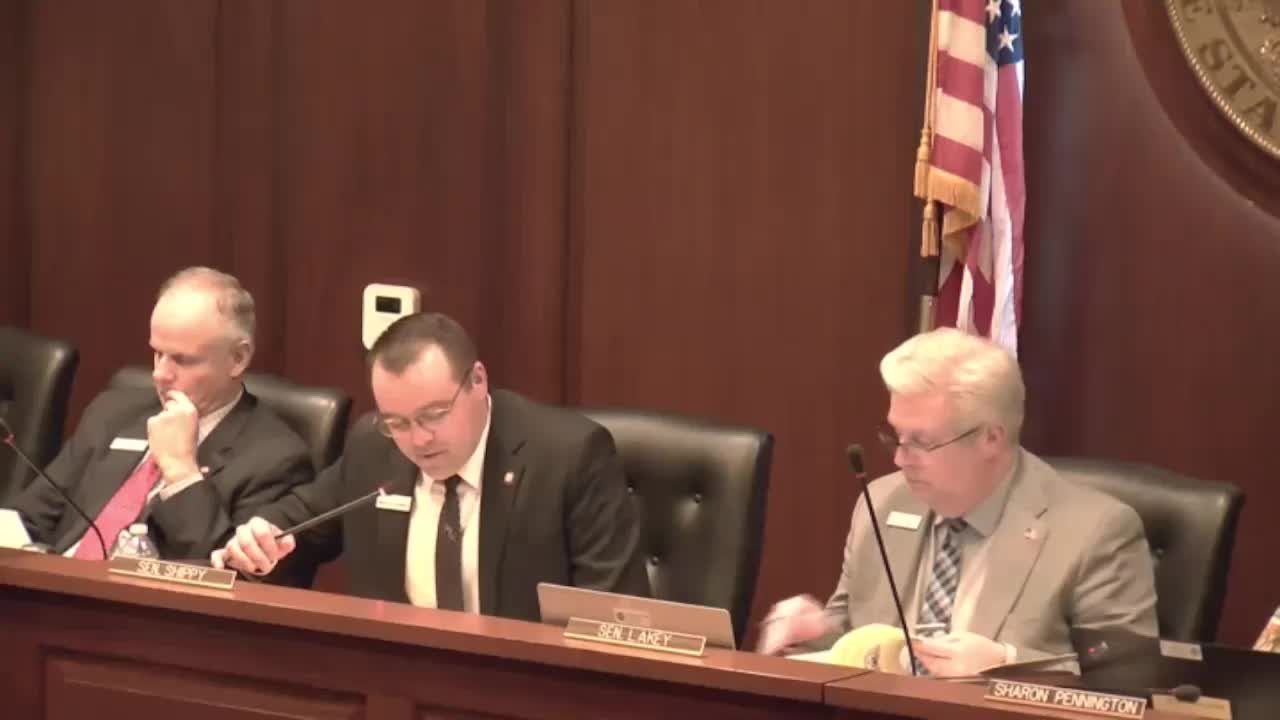
The committee debated the rules briefly and then moved to a vote. Senator Foreman moved to accept Docket 500-101-24001; the motion was seconded by Chairman Lakey and carried on a voice vote.
Mary Martin, who is also being considered for a commissioner seat on the Commission of Pardons and Parole, described her background in the FBI and said she has focused on victims’ issues. In response to questions from senators, Martin said commissioners must weigh criminal history, prior paroles, public-safety risk and signs of rehabilitation when deciding releases; she described the role as part time in name but said review work and preparation make it effectively much more time-consuming.
Why it matters: The rule clarifies when people convicted of certain domestic-violence offenses can seek pardons, reflecting a statutory change intended to affect penalty enhancement calculations. The committee-approved docket moves the rule forward in the administrative process; the rule will proceed according to the state’s rulemaking timeline.
What’s next: The committee approved the docket; the rule will follow the standard promulgation process. The committee also heard testimony from two nominees and said it will take up gubernatorial appointment votes at a subsequent meeting.